Ask what an investment bank or a private equity firm actually sells and you will get answers about relationships, execution, access. Underneath all of them is one word: judgment. Which buyer to call first. Which pass is really a “not yet.” Which management team is hiding a problem and which one is just bad at telling its own story. A firm is a compounding stock of judgments about companies, people, and processes, and almost none of the software the industry runs on was built to capture any of it.
The CRM was supposed to be that memory. It became a compliance chore instead. When a third of the firm's knowledge lives in one VP's head and another third in a spreadsheet only she can parse, the CRM is a museum of stale fields with a login page. Independent research says the same thing politely: in Validity's 2025 survey of 602 organizations, 76 percent said less than half of their CRM data is accurate. The system of record records less than half the record.
The associate who left
Every firm has this story. An associate spends three years learning which sponsors actually close, which lawyers slow-play, what the founder in that lost auction really objected to. Then a bigger platform calls, and in two weeks the person is gone. The CRM still has the contact records. The shared drive still has the decks. But the part that was worth something (the reasons, the reads, the pattern of a hundred small calls that went one way instead of the other) walks out the door in one head.
The firm kept the system of record and lost the knowledge. That sentence describes most of the industry, most of the time. And it is not a discipline problem. Nobody was ever going to type “here is my accumulated judgment about this sponsor” into a text field at 11pm. The capture mechanism was wrong.
Judgment is captured at the point of decision
Here is the mechanism the industry has been missing. Judgment is not captured in retrospectives or data-entry sprints. It is captured at the moment someone decides: approves, rejects, edits, overrides. That moment is where the expensive knowledge lives, and until now it evaporated the instant it happened.
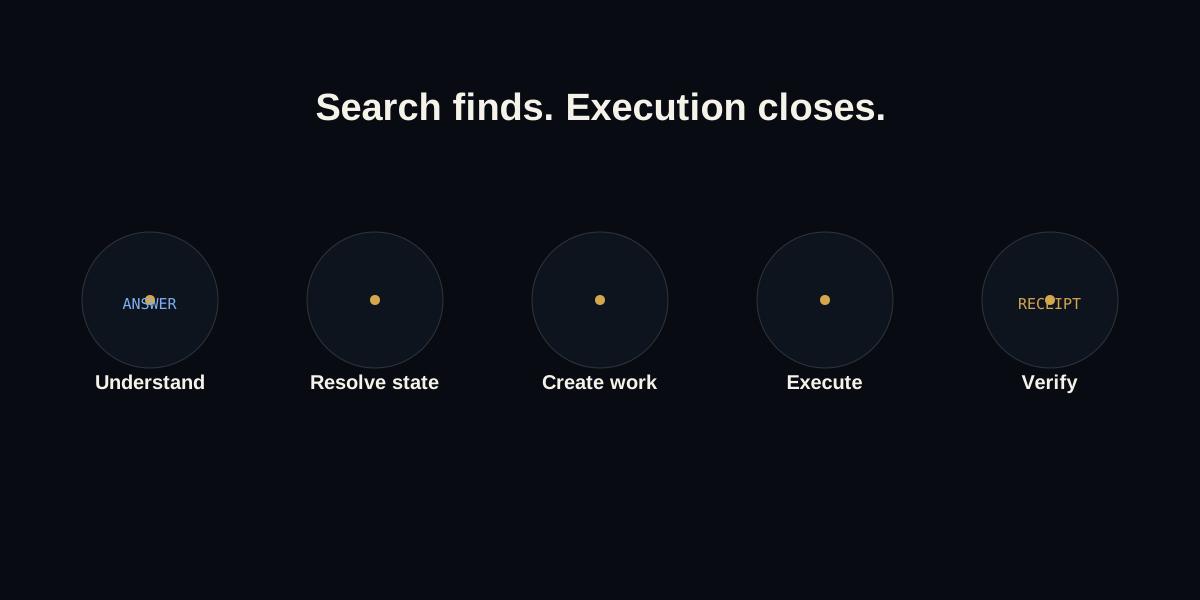
This is why Arvya is built around an approval gate rather than around autonomy. Agents read the inbox, the transcripts, the data room, the CRM, and propose updates, each one carrying the evidence it came from. A human approves, edits, or rejects. On approve, the write lands in the CRM and the tracker with a receipt: read back after writing, confirmed it matches. Most vendors treat that human step as friction to be engineered away. We think it is the product. Everything is built around that yes.
Because every approval is two things at once. It is a verified fact landing in the system of record. And it is a judgment, captured with its evidence and its context, at the only moment it was ever going to be captured. One is hygiene. The other is an asset. When a banker rejects a suggested stage change, that rejection says something no CRM field ever held: the model read the situation one way, and a person who knew better read it another. Approvals, edits, and rejections are the firm teaching its own memory, without anyone doing a minute of extra work.
“But doesn't our CRM already have the data?”
It has fields. It does not have judgments, and it cannot get them retroactively. A stage value of “IOI received” tells you nothing about why the other four buyers went quiet or what the MD decided to do about it. You cannot scrape human judgment out of data that never recorded it. The only way to get it is to be standing at the gate when the decision happens, which is an architectural position, not a feature that ships in a release.
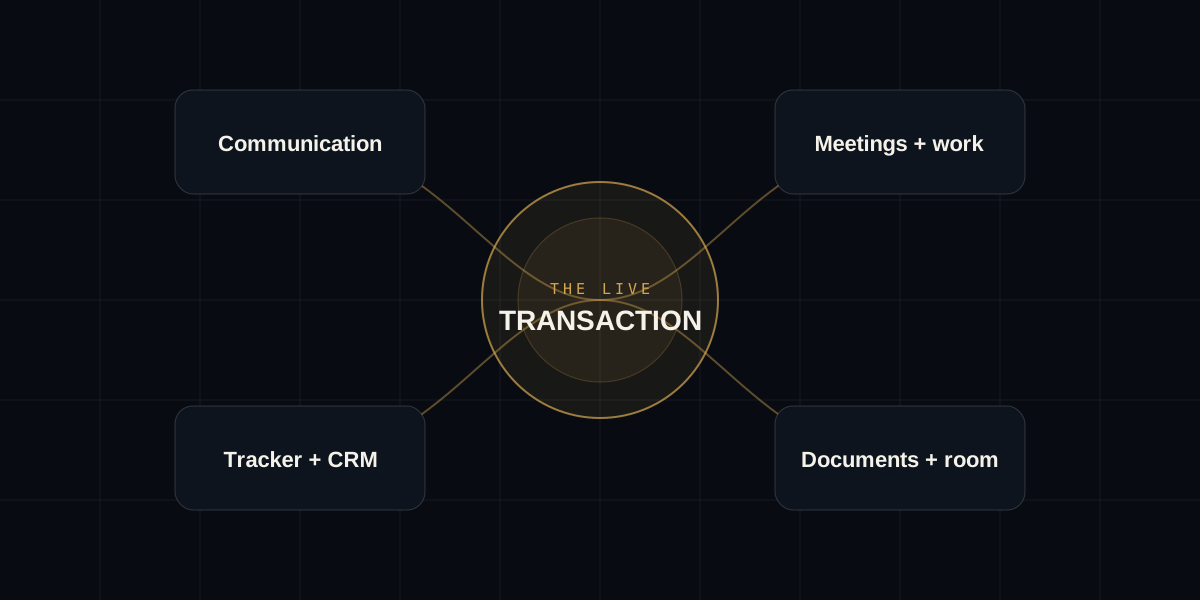
“Won't the CRM vendors just add AI?” They already are, and for pure data entry that race is over: auto-logging emails and meetings is becoming a free checkbox everywhere. But a CRM vendor's AI is an accessory to its own database. It exists to keep you filling in that vendor's fields. A trust layer sits above all of the systems, on the deal team's side of the table, and treats the CRM as what it actually is: one projection of the process record, next to the Excel tracker and the Monday update. The model was never the moat. The captured judgment is.
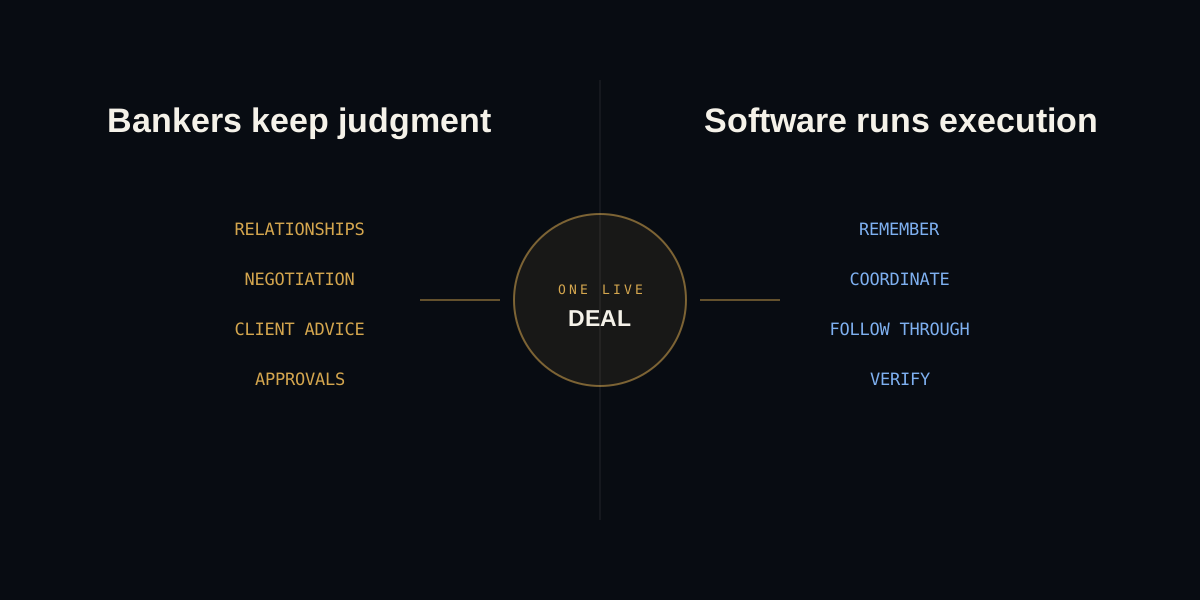
“Is this just human-in-the-loop as a safety disclaimer?” No. The loop is the capture device. Remove the human and you do not get a faster product, you get a system that writes confidently into your system of record while learning nothing about how your firm actually thinks. The agents do the work. The firm keeps the judgment.
What compounding looks like
In one 60-day deployment at a mid-market advisory firm on DealCloud (~25 bankers), a single banker approved 145 verified updates, a 96 percent approval rate on what the agents proposed. Each of those was a small judgment: yes, this is true, this is the right field, this is how we describe it. Multiply that across a team and a year and you have something no departing associate can take with them: pass reasons recorded verbatim, re-engagement triggers that actually fire, buyer behavior remembered across processes instead of re-learned in each one.
We are building that compounding layer now: the Process Room for running the deal, and the firm-level memory that gets smarter with every process the firm runs. The verified write path underneath it (evidence, approval, receipt) is live today. If you want to see where it stands, call us.
The old advice was to be more disciplined about the CRM. The new advice sounds like a paradox: stop typing into the CRM. Typing was always the wrong capture mechanism. It recorded fields and discarded judgment. Put an approval gate where the decisions happen instead, and the byproduct of doing the work becomes the firm's memory. Stop typing into the CRM. Get a firm that remembers.