The weekly client update is the most expensive recurring document in a sell-side process. Every Friday, an analyst or VP rebuilds it from scratch: the buyer tracker, the inbox, the CRM, meeting notes, the calendar, and last week's deck, cross-checked against each other because no single source is trusted on its own. The report exists precisely because the underlying data cannot be trusted, which is why automating the report never works until you fix what it reads from. When the update is generated from CRM records a banker has already approved, with evidence attached and receipts confirming every write, it stops being a document someone assembles and becomes a view of the deal's verified memory. In one live deployment, that shift produced 15 client-ready weekly coverage report exports in a single week.
The Friday-night assembly ritual
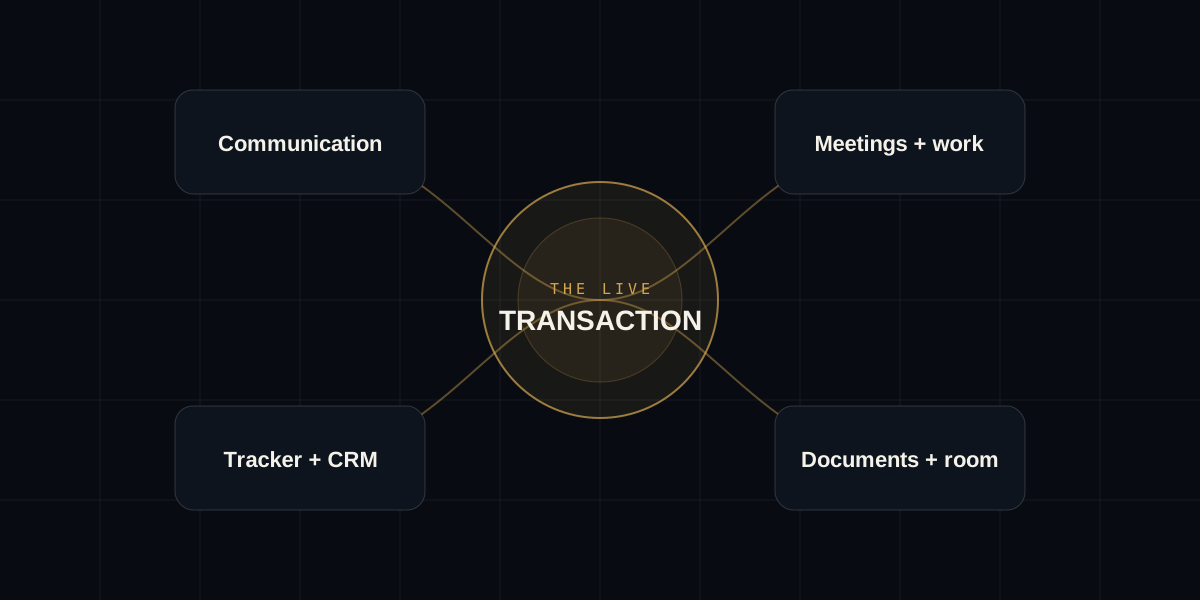
Anyone who has run a sell-side process knows the ritual. The client expects a weekly status update: which buyers have the CIM, who signed the NDA, who passed and why, what is scheduled next week. Producing it means reconciling at least six sources, and the reconciliation, not the writing, is where the hours go:
- The buyer tracker. Usually a spreadsheet, usually the freshest source, usually maintained by exactly one person.
- The inbox. Where buyer state actually changes: the pass emails, the “can we get another week” asks, the diligence questions that signal real interest.
- The CRM. Nominally the system of record; practically the source everyone checks last and trusts least.
- Meeting and call notes. Scattered across notebooks, docs, and the memory of whoever ran the call.
- The calendar. The only reliable record of what is actually happening next week.
- Last week's deck. The de facto database, diffed by eye to figure out what changed.
Multiply that by every live mandate, every week, for the duration of a six-to-nine-month process, and the weekly update quietly becomes one of the largest line items of junior and mid-level time on the deal. And it is senior-reviewed time too, because a wrong status in front of a client is not a typo. It is a credibility event.
Why report automation keeps failing
The obvious fix, “have the CRM generate the report,” has been possible for a decade and almost nobody uses it. The reason is simple: garbage in, formatted garbage out. A report generator faithfully renders whatever the record says, and the record is stale. At one mid-market advisory firm on DealCloud (~25 bankers), the baseline before automation was 77% of buyer records unmatchable to live processes and over 50,000 blank fields. Generate a client update from that and you get a beautifully formatted fiction, which is worse than the spreadsheet, because the spreadsheet at least had a human vouching for it. The banker knows this, so the ritual continues: rebuild from six sources, trust none of them fully, reconcile by hand. This is not a niche condition; in Validity's 2025 survey of 602 organizations, 76% said less than half their CRM data is accurate and complete.
The lesson: the weekly update is not a formatting problem. It is a trust problem wearing a formatting costume. Any automation that starts at the template is starting at the wrong end.
Start from records the banker already approved
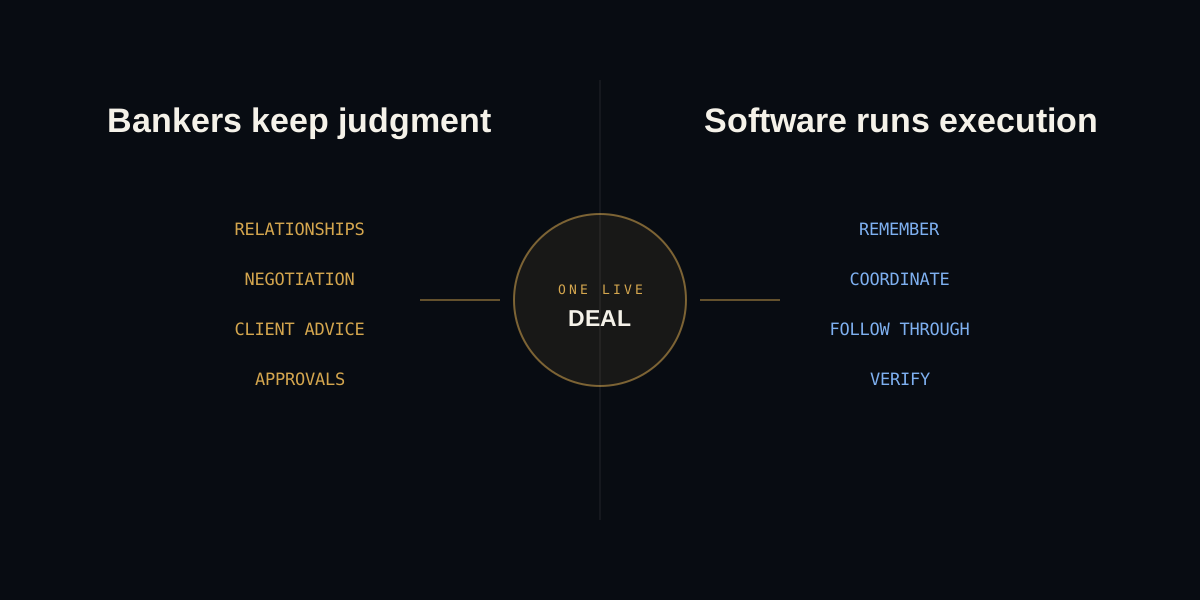
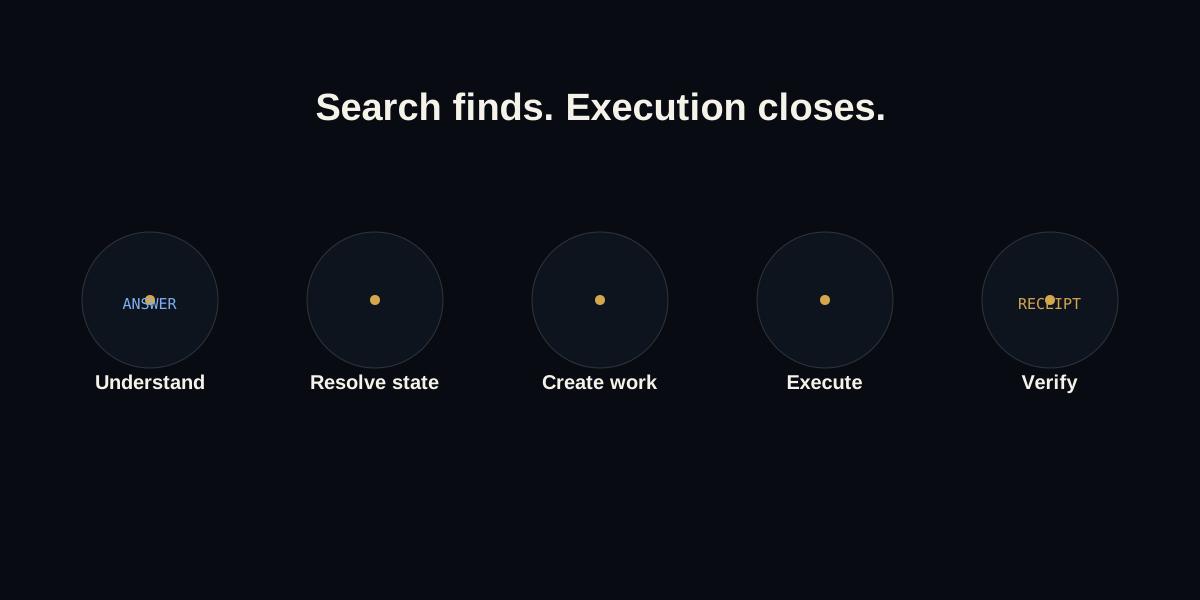
The report changes character when the pipeline underneath it changes. Arvya's loop works upstream of the document: pre-call briefs before each buyer conversation, a notetaker on the calls, and then evidence backed CRM updates (each with the quote or source that justifies it) that a human approves before anything writes to DealCloud or Salesforce. After the write, the record is read back as a receipt. (The mechanics are covered in how the notetaker updates the CRM and buyer tracker automation.)
Now the Friday report is reading from a different substrate. Every buyer status in it was approved by a banker during the week, at the moment the information arrived, with evidence attached. The six-source reconciliation already happened incrementally, in seconds-long approval decisions, instead of in a three-hour Friday block. The report generator is no longer formatting guesses; it is rendering decisions the deal team already made.
What the generated update actually contains
- Buyer-by-buyer status with evidence. Each state (contacted, NDA signed, passed) is traceable to the email or call that established it, so a partner reviewing the draft can check any line in one click instead of re-deriving it.
- Week-over-week carry-forward. Open tasks and key follow-ups roll forward automatically until resolved, so nothing silently falls out of the deck between versions, the classic failure mode of the diff-by-eye method.
- Upcoming events from the calendar. Next week's management meetings and buyer calls, pulled from the same verified memory rather than pasted in by hand.
- The firm's own format. Export as PDF or PowerPoint matching the template the client already knows. The client should see continuity, not a new tool.
The volume this enables is the point of the measured stat: 15 client-ready weekly coverage report exports in one week, from one live deployment. That is not one heroic Friday; it is the report becoming cheap enough to produce on demand (for the client, for the MD, for the Monday internal meeting) because the expensive part already happened upstream.
The compounding effect: a view, not a document
The deeper shift is in what the report is. Today it is a document someone owns: a snapshot that starts decaying the moment it is sent, maintained by the one person who knows how it was assembled. When the data underneath is verified, the report becomes a view of the Deal Brain: a rendering, at a moment in time, of memory that keeps updating after the export. Ask for it Tuesday and it is current as of Tuesday. The document stops being the place where deal state lives and goes back to being what it should have been all along: a communication.
And each week compounds. Every approved update that feeds Friday's report also enriches the firm's permanent record of that buyer (what they looked at, what they said, how they behaved in-process), which sharpens the next mandate's buyer list before it is even drafted. The weekly update, historically pure cost, becomes the mechanism by which the firm's memory gets better. That inversion (the report as a byproduct of trusted data rather than a substitute for it) is the difference between automating a document and fixing the process that made it expensive. For the rest of that loop, see the investment banking overview.