Ask a banker where a live process actually stands and watch where they look. Not at the CRM. They open a personal Excel tracker (buyer names down the left, stages across the top, color-coded cells, a notes column in shorthand only they can read) or a OneNote page that has quietly become the deal's real system of record. Almost every bank we talk to runs this way. The firm pays six figures a year for a CRM, and the process state lives in files the firm cannot see, cannot search, and loses entirely when the banker leaves.
We call these shadow trackers, and the first thing to understand about them is that they are not a compliance failure. They are a product review. People build the tool the CRM should have been, because the CRM's cost of writing is high and its payback is zero.
“The bane of my existence”
A VP at a roughly fifteen-person M&A firm described his CRM to us as the bane of his existence. He is not a laggard. He actually enters his call notes, which puts him ahead of most of the industry. But listen to how he describes it: he types the notes in, “but I don't know if anyone reads them.” He maintains his own buyer tracker in Excel because that is the only place he can see a process the way he thinks about it. And his sharpest complaint was not about data entry at all. It was about visibility: his director should be able to see where every workstream stands, he said, “without me telling him.”
That one sentence contains the whole economics of the problem. The CRM asks him to pay twice (once to do the work, once to describe the work) and then fails to deliver the single thing the payment was supposed to buy: his boss knowing where things stand without a status conversation. When writing costs real minutes and reading returns nothing, a rational professional stops writing. The shadow tracker is not laziness. It is arbitrage.
What the CRM looks like after years of this
Multiply that individual decision across a firm and a decade, and you get a record that is not merely incomplete but structurally unusable. At a mid-market advisory firm on DealCloud (~25 bankers), the measured baseline before any automation: 77% of buyer records unmatchable to any live process, 58% of records stale for over a year, more than 50,000 blank fields, and an average criteria fill of 7% on the fields that drive buyer matching. Seven percent. The firm's buyer universe, the asset a sell-side shop is theoretically built on, was 93% empty where it mattered.
This is not an outlier firm with unusually bad habits. It is what the incentive structure produces everywhere: the bankers with the freshest knowledge have the least reason to type it in, so the freshest knowledge accumulates in shadow trackers and inboxes while the shared record decays. Then a new mandate kicks off, someone pulls a buyer list from the CRM, and the list is built from the 7%.
Why “make them use the CRM” always fails
The standard institutional response is enforcement: mandates from the COO, adoption dashboards, CRM hygiene as a line item in reviews. It fails every time, for a reason worth stating plainly: the shadow tracker is better. It is faster to update, shaped exactly like its owner's mental model of the process, and always open. You cannot enforce your way past a superior product with a memo. Every crackdown produces a few weeks of compliance theater, and then the real state quietly moves back to Excel.
The failed fix misdiagnoses the problem. The problem was never that bankers refuse to keep records. The shadow trackers prove the opposite, since every one of them is a meticulously maintained record. The problem is that keeping the shared record current requires manual duplicate work, and humans do not do unpaid duplicate work indefinitely.
The fix: the record updates as a byproduct of work
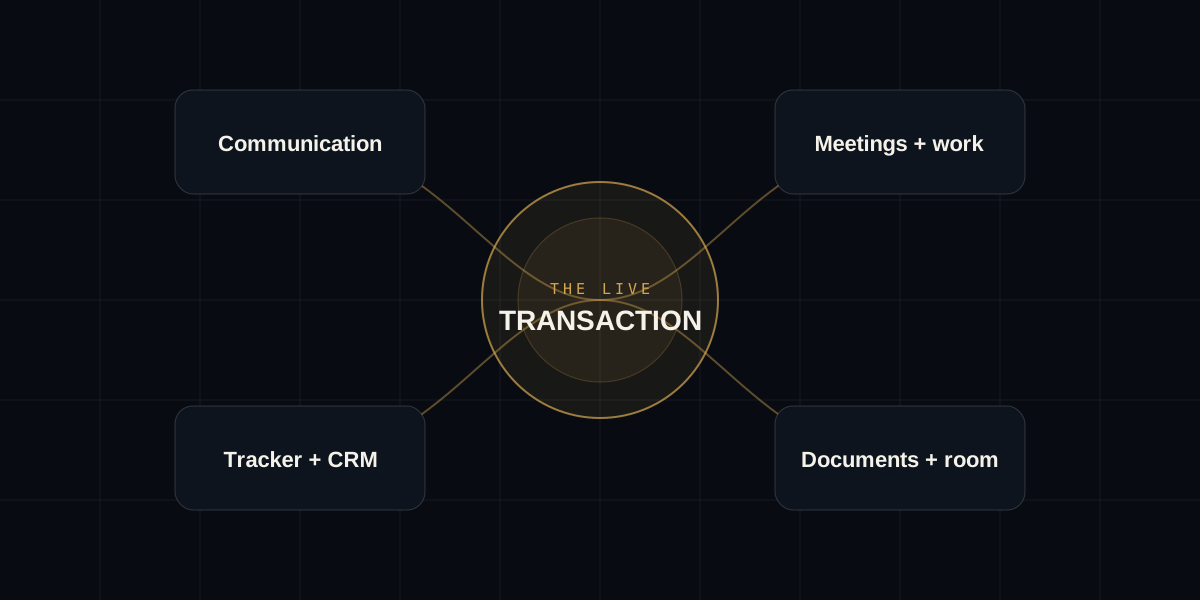
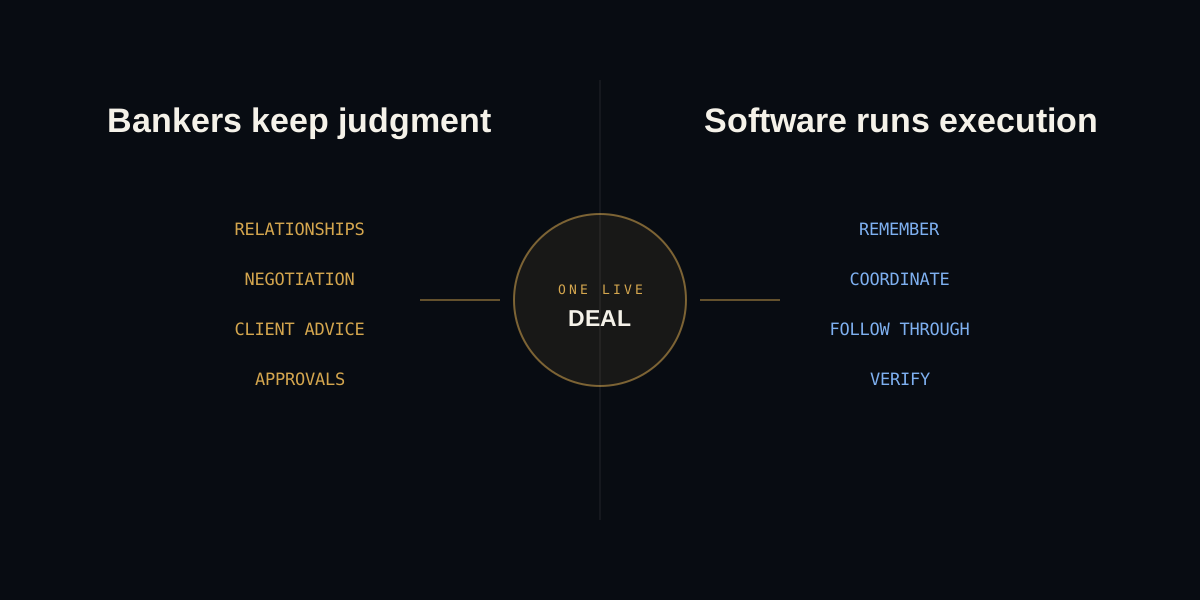
The only durable fix is to remove the second payment entirely. The banker's actual work (the emails, the meetings, the documents) already contains the process state. So capture it there:
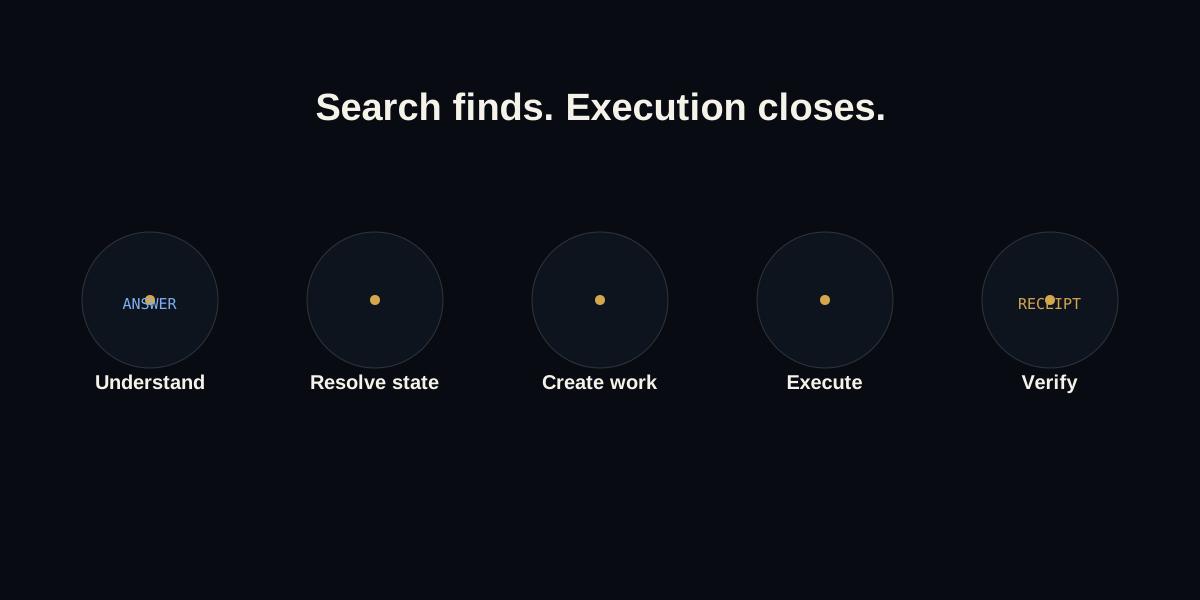
- Work generates proposals, not tasks. A buyer call happens, an NDA lands in the inbox, a CIM goes out. Arvya turns each into a proposed record update with the evidence attached: the quote, the email, the document.
- A human approves in seconds. The banker reviews a batch of proposed updates and approves or edits them. Nothing writes without approval, and every write comes back with a read-back receipt.
- Both records stay current at once. The approved fact lands in DealCloud or Salesforce and in the banker's own tracker format: same truth, two projections.
That last point deserves emphasis, because it is where most tools get this wrong. The instinct is to treat the Excel tracker as the enemy and replace it. We do the opposite: keep your format. The tracker's columns encode years of hard-won judgment about what actually matters in a process. Arvya learns those columns and keeps them filled, rather than asking the banker to abandon a tool that works for a tool that might. The shadow tracker stops being shadow the moment it and the CRM are fed from the same approved facts. How this works in practice is on the buyer tracker automation page.
What the director gets
Return to the VP's actual ask: his director seeing where things stand without being told. Once the record updates as a byproduct of work, that visibility falls out for free. The director reads live, evidence backed state instead of scheduling a call to extract it, and the VP's call notes stop disappearing into a database nobody reads, because the buyer list, the weekly update, and the partner's view are all rendered from them. We wrote about that leadership view in The MD Who Can See Everything.
Shadow trackers are the most honest feedback the CRM industry has ever received. The answer is not to outlaw them. It is to make the shared record earn its place the way the private one did. If your firm's real process state lives in Excel files the firm cannot see, book a demo and we will show you the record keeping itself current.