A managing director's view of their own firm is assembled by hand. It arrives as Monday-meeting decks built the night before, hallway answers to “where are we with the buyer?”, side trackers that contradict each other, and a CRM nobody trusts enough to open. Software teams stopped working this way years ago: in their tooling, status is a byproduct of the work itself, visible the moment it happens. Deal teams can get the same property, but only if the underlying record is verified, because an always-on dashboard over bad data is just a faster way to be wrong. When the firm runs on verified deal memory, the MD sees every deal, every owner, and every next step, current and cited, without anyone building a deck. The verified memory and the workflows that feed it are live today; the process-management layer on top is in development.
The most senior person has the worst information
This is the strange inversion at most advisory firms: the person with the most accountability has the least reliable picture. The analyst knows the truth about the buyer log because they live in it. The VP knows most of it. By the time status reaches the MD, it has been compressed into a deck, filtered through what each person wants to report, and aged three to six days. The MD's actual sensing tools are interrupts (walking the floor, pinging the deal lead at 9 p.m., asking the same question in three meetings), and each interrupt taxes the very people doing the work.
The CRM was supposed to be the answer, and MDs are right not to trust it. At one mid-market advisory firm on DealCloud (~25 bankers), 77% of buyer records were unmatchable to live processes and 58% of sponsor records were more than a year stale before anything changed. An MD who opened that system got a confident, wrong picture, which is worse than no picture. So the firm falls back to decks and hallways, and the reporting chore consumes exactly the junior hours that were supposed to go into the deals. Intapp's 2024 survey of deal professionals documented the same burden industry-wide: data entry and status reporting eat time that never touches a client.
What software leaders figured out
A modern engineering leader does not commission a weekly deck about what the team shipped. They open the tool. Every merged change, every open issue, every review is visible because the work itself happened in the system. Status is exhaust, not a deliverable. Nobody “updates the record” as a separate chore at 11 p.m.
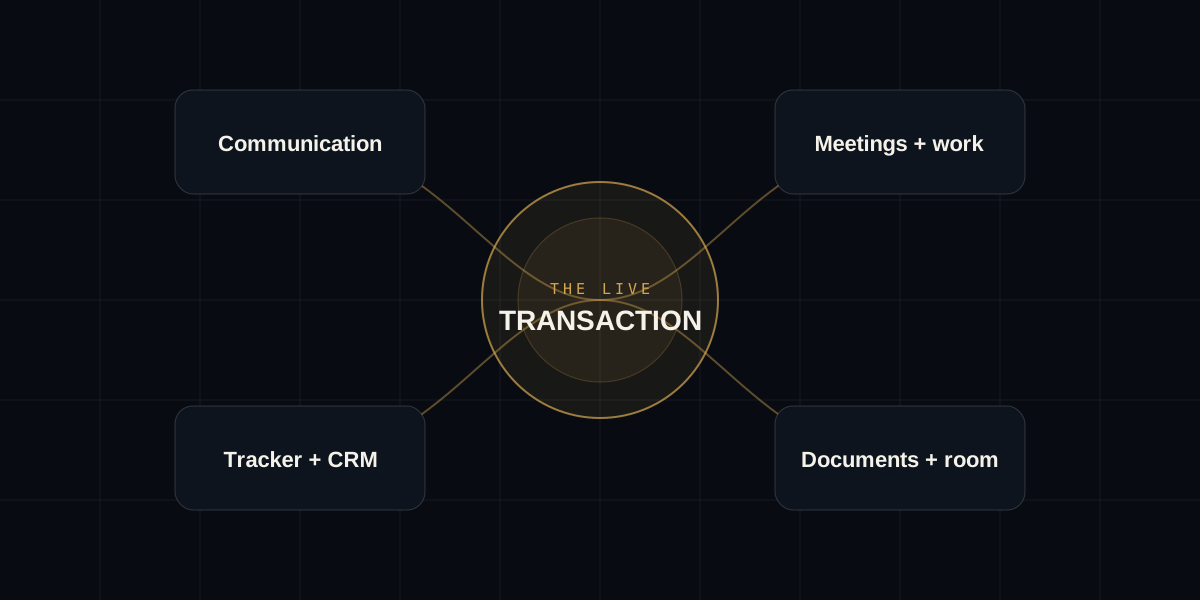
Deal teams never got this, and the reason is instructive. Code has a natural home; deal work is scattered across calls, email threads, spreadsheets, and a data room, and the CRM only knows what someone retypes into it. The fix is not asking bankers to type more; two decades of CRM adoption campaigns prove that fails. The fix is capturing the work where it already happens and making the record a byproduct:
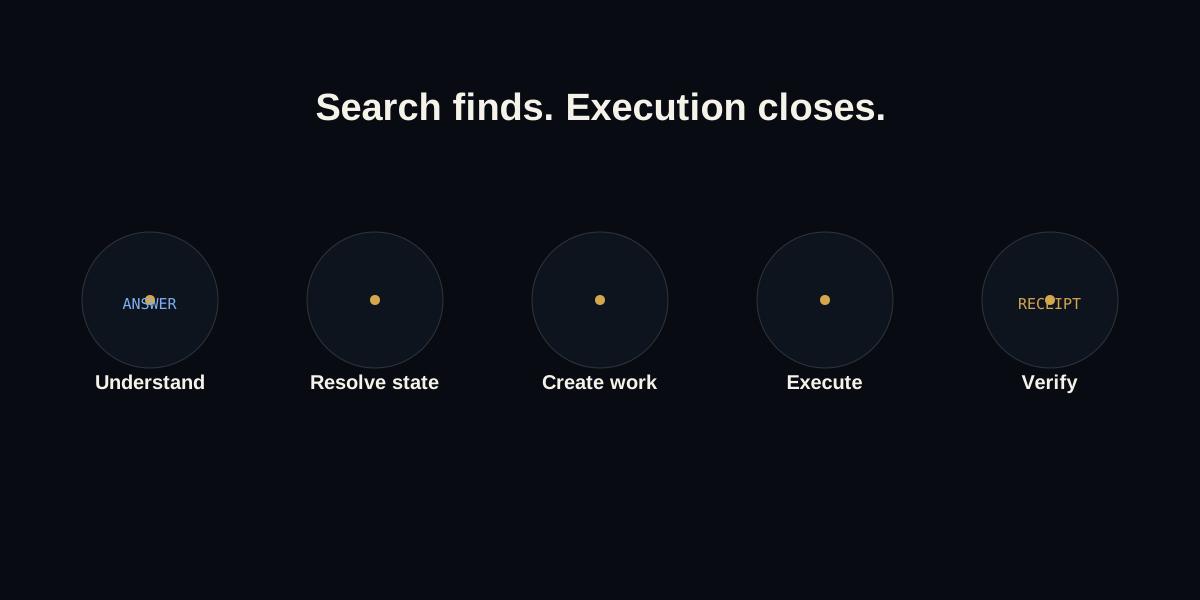
- Calls update the record. A notetaker captures the buyer call and proposes evidence backed CRM updates; the banker approves, and the update lands with a receipt. See the notetaker-to-CRM loop.
- Trackers stop being spreadsheets. The buyer tracker reads from the same approved record the CRM does: one truth, not three versions in three inboxes.
- Every fact carries its source. The record is a Deal Brain: each field cites the quote, document, and date behind it, so a challenged number answers with evidence instead of a shrug.
- Every write is human approved. Nothing changes the system of record autonomously. In one live deployment (one seat, 60 days of daily use), 145 CRM updates were approved at a 96% approval rate, with roughly 73.5 hours of work automated, measured from completed logged work items.
What the MD actually sees
On top of a record like that, the MD's questions stop requiring meetings. Where is every live process, and what moved this week, answered from approved updates, not recollection. Which buyers have gone quiet, and who owns the follow-up. What did that sponsor actually say on Thursday's call, with the line from the call it came from, not a paraphrase of a paraphrase. Which client updates went out: in that same deployment, 15 client-ready weekly coverage report exports in a single week, each generated from approved records rather than assembled by hand.
The “cited” part is what makes this usable at the MD level. Senior people are professionally allergic to unsourced numbers, and they should be. They are the ones who repeat them to clients. A dashboard where every figure can be traced to its evidence is a different instrument from a dashboard that merely renders whatever is in the database.
Fewer status meetings, better judgment
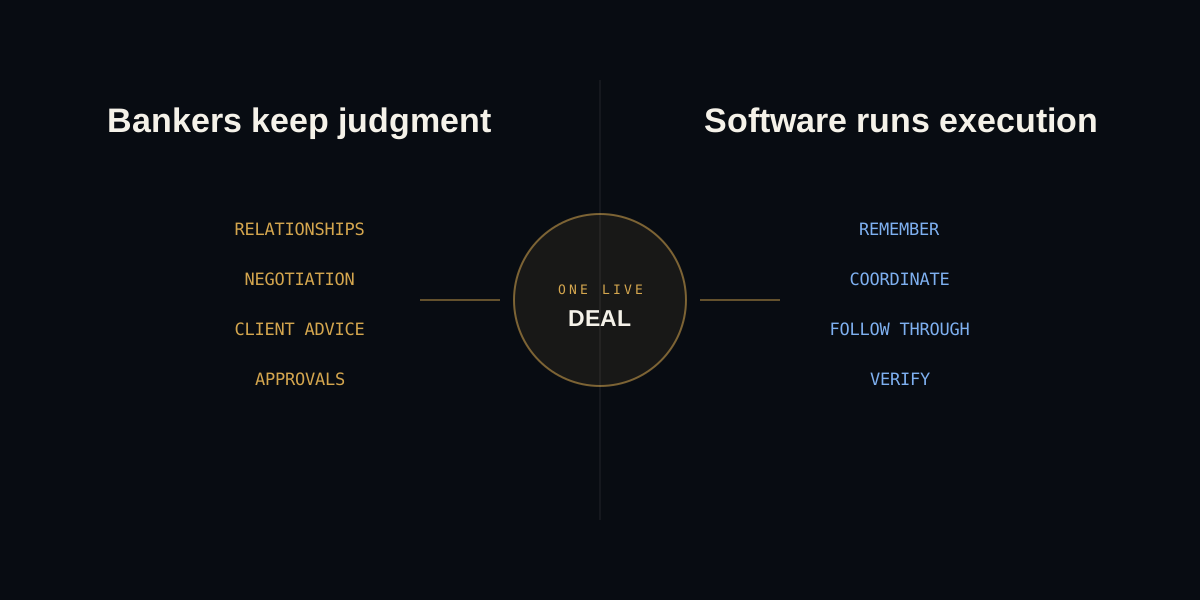
None of this replaces the Monday meeting's real function: judgment, prioritization, coaching. It removes the first forty minutes of it: the reconstruction of what happened. When status is ambient, meetings start at the decision instead of the recap, the 9 p.m. pings stop, and junior bankers get their reporting hours back for actual deal work. The MD's attention shifts from collecting information to acting on it, which is, in theory, the job.
What is live and what is being built
Precision about shipped-versus-building matters here, so: the foundation is live today. Per-deal verified memory, sourced pre-call briefs, the notetaker-to-CRM loop, buyer trackers, bulk enrichment, cited buyer lists, weekly client updates, and approval-gated writeback with receipts, all running against Microsoft 365, Salesforce, and DealCloud, inside the firm's own tenant.
The full MD view (a process-management layer across every deal, with owners, next steps, and cross-deal roll-ups, plus a firm-wide Company Brain connecting each deal's memory) is in development, not shipped. We build it in that order deliberately: the dashboard is the easy part, and it is worthless until the record beneath it is true. Firms running their deals on verified memory today are building the substrate the full view will read from. For the underlying platform, see how Arvya works. If you want to see where the MD view stands, call us.