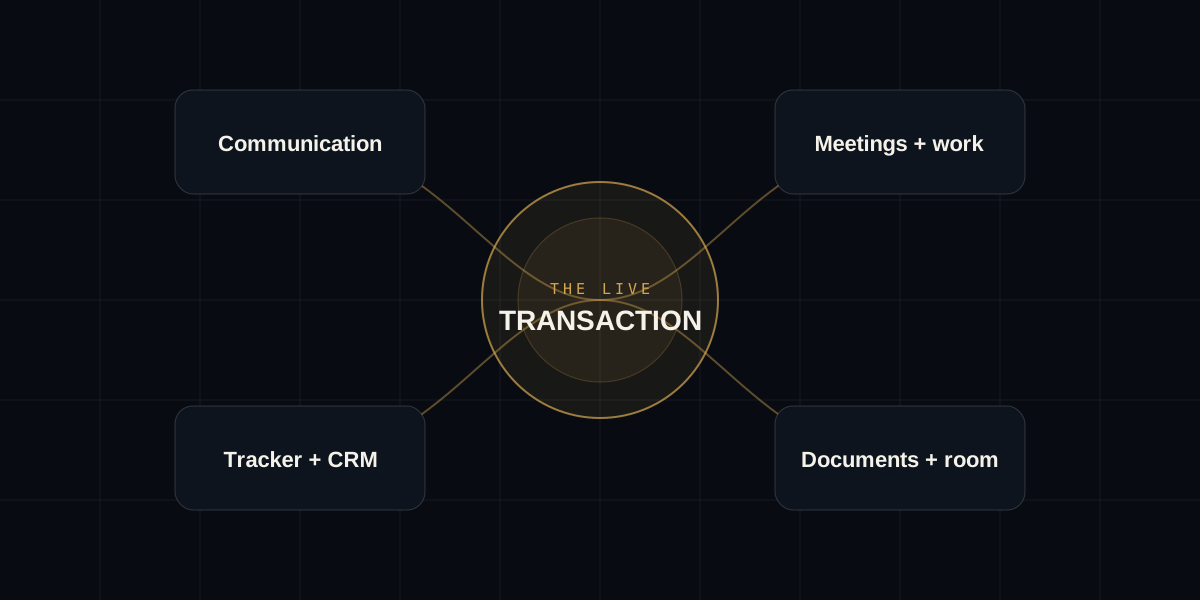
The deal stack (CRM, data room, buyer trackers, notetaker, reporting) was never designed as a stack. It is five separate products from five separate vendors, each holding a fragment of the same deal, with the deal team acting as the integration layer between them. AI is now collapsing that stack, but not the way most people expect: not by replacing the CRM or the data room, but by collapsing the context underneath them into one verified deal memory that every tool becomes a view over. The note from the call, the tracker row, the CRM field, and the line in the weekly client report stop being four documents someone maintains by hand. They become the same fact, rendered four ways.
The stack was organized around vendors, not deals
A deal is one continuous thing: a company, a set of buyers or targets, a sequence of conversations, and a running state of who knows what and what happens next. The software industry sliced that one thing into categories because categories are how software gets sold. Relationship data went to the CRM. Documents went to the data room. Process state went to Excel trackers that live in someone's OneDrive. Conversations went to a notetaker, or to nobody. Status went into a deck assembled every Sunday night.
None of those boundaries exist inside an actual deal. When a sponsor says on a call that their check size moved up, that single fact needs to change the CRM record, the buyer tracker, the next outreach wave, and the update the client sees on Friday. In the vendor-organized stack, a person carries that fact between systems: four times, by hand, if it happens at all. Mostly it does not happen. At one mid-market advisory firm on DealCloud (~25 bankers), the accumulated result of years of hand-carrying was measurable: 77% of buyer records unmatchable to live processes, over 50,000 blank fields, 58% of sponsor records untouched for more than a year. The industry-wide picture matches: in Validity's 2025 study of 602 organizations, 76% said less than half their CRM data is accurate.
Why the collapse is happening now
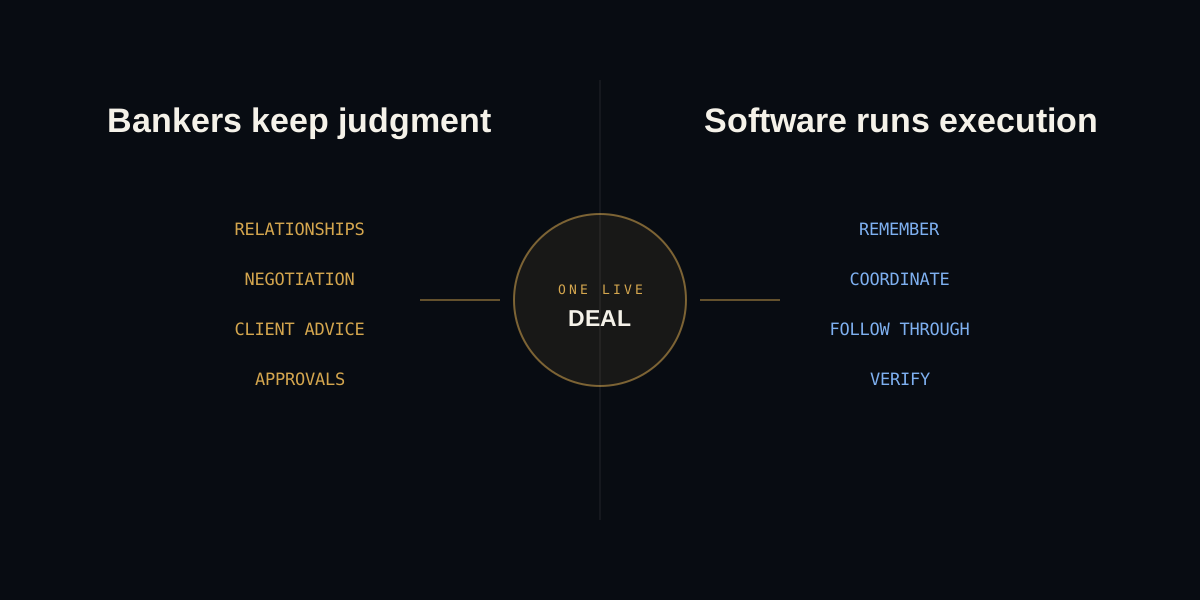
The old stack existed because the connective work between systems required a human. Reading a call transcript and deciding which CRM fields it changes, checking a buyer list against what a sponsor actually said last quarter, assembling a status report from six sources: that was judgment work, and software could only store the outputs, not do the connecting. That constraint is gone. AI can now read the email thread, the transcript, and the record, propose the specific field changes with the evidence attached, and let a human approve them. The moment the connective work is automated, keeping five disconnected copies of the same deal stops making sense.
This is why we describe the category shift as deal management, rebuilt AI native. Most professional software categories have already been rebuilt around this new capability at least once. Deal management has not. The stack a mid-market bank runs a $200M process on today would be recognizable to a banker from 2012. The rebuild does not start with a prettier CRM. It starts with the layer the old stack never had: a single, verified memory of the deal.
What “collapse” concretely means
Collapse does not mean one mega-app. It means one substrate. Every deal gets a Deal Brain: a verified, cited memory of everything that has happened on the deal, where every fact carries its source and every change to the system of record passes a human approval gate. The surfaces the team already uses then become views over that memory:
- The call note. Arvya's notetaker captures the meeting and proposes evidence backed CRM updates (the notetaker-to-CRM loop), so what was said becomes structured memory, not a transcript in a silo.
- The CRM field. Once approved, the update writes to DealCloud or Salesforce, and Arvya reads the record back as a receipt: proof the fact actually landed.
- The tracker row. The buyer tracker renders from the same memory, so it agrees with the CRM by construction instead of by someone's Sunday reconciliation.
- The weekly report. The client update is a view over approved facts. In one live deployment, 15 client-ready weekly coverage report exports went out in a single week, each number traceable to its evidence.
Same fact, four renderings, zero hand-carrying. Over 60 days of daily use on one seat at that firm, this loop produced 145 verified CRM updates approved at a 96% approval rate, and roughly 73.5 hours of work automated, measured from completed logged work items.
Collapse the context, keep the systems
Here is the part most “all-in-one” pitches get wrong: the answer is not rip-and-replace. Firms are not going to migrate off DealCloud, Salesforce, or their data room to chase a new category. The switching cost is enormous, and the compliance posture of those systems took years to establish. Arvya's position is deliberately vendor-neutral: the verified memory layer enriches and verifies the CRM and repositories you already own. Microsoft 365, Salesforce, and DealCloud integrations are live; Microsoft Dynamics 365, Affinity, and PitchBook (on customer-owned credentials) are configured per deployment. The CRM stays the system of record. What collapses is the scattered, contradictory context around it, and what the CRM holds finally becomes worth trusting, because every write into it was evidenced and approved.
Where this goes
One deal on one verified memory is the shipped foundation. The direction we are building with design partners is the layer above it: connected Deal Brains forming a firm-wide Company Brain, so an MD gets a full, current view of every deal without asking anyone to assemble it; process management for deal teams, where stages and owners live on the same memory as the facts; and relationship and warm-path mapping across the firm's entire history. None of that is shipped today, and we say so plainly. But all of it becomes tractable only after the substrate exists. You cannot build a firm-wide brain on data that is 77% unmatchable.
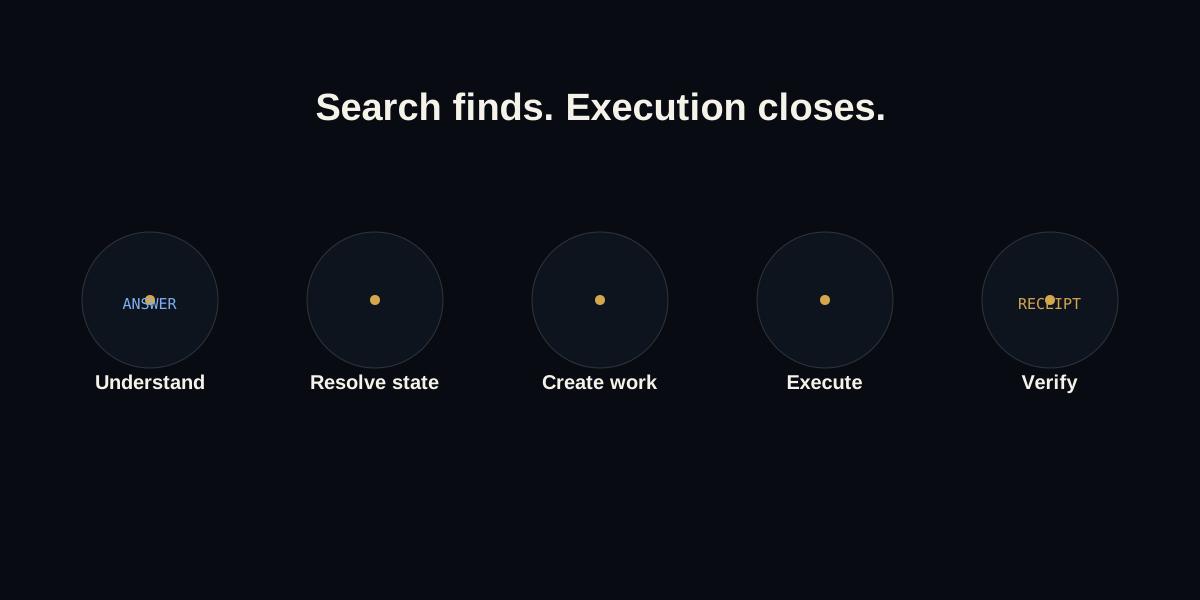
The deal stack is collapsing the way most stacks collapse: not with a migration, but with a new layer underneath that makes the seams stop mattering. For how the live loop works end to end (brief, capture, approve, write, receipt), see the platform overview.