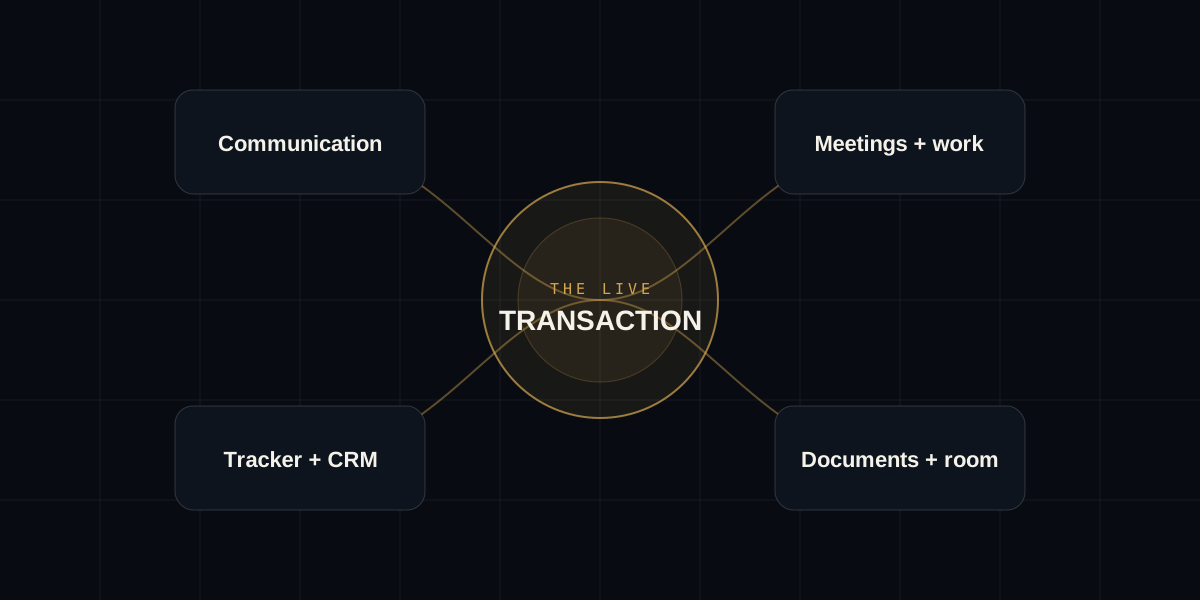
“What's the best AI tool for private equity?” is the wrong question, and deal teams that ask it end up with shelfware. The right question is: which job do you need done? The 2026 landscape has sorted itself into distinct lanes (document research, deliverable generation, meeting capture, CRM truth, sourcing, and the CRM vendors' own built-in AI), and the best tool in one lane is usually mediocre in the next. This guide maps the leading tool for each job, with honest notes on where each one stops.
How to choose an AI tool for a deal team
Three questions separate tools that get adopted from tools that get demoed. First: does it work on your firm's private context (your email, calls, and CRM) or only on public data and uploaded documents? Second: what happens when it's wrong? Does every output carry a source a banker can check, and does a human approve before anything changes? Third: does the value compound? Does using it this week make it more useful next week, or is every session a cold start?
1. Arvya: best for verified deal memory and CRM trust
The job: keep the firm's relationship and deal record true without bankers doing data entry
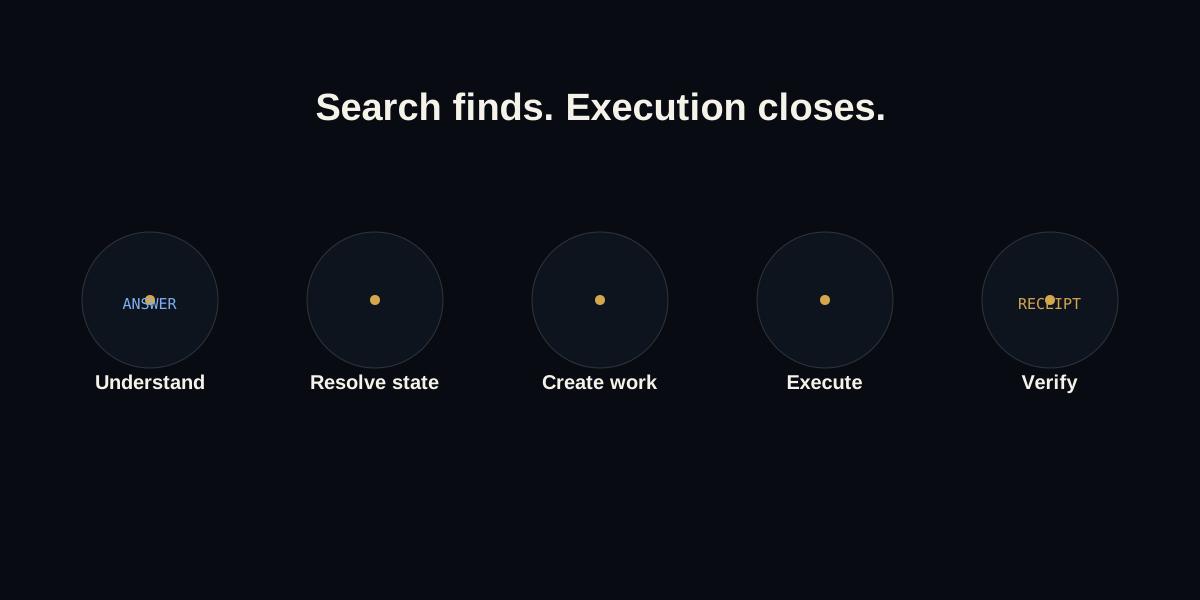
Arvya is the verified deal and relationship memory system for IB and PE. It prepares a sourced brief before every meeting, captures what changed on the call through its Notetaker, and stages field-level CRM updates (old value, new value, source, date) that a banker approves before anything is written to DealCloud or Salesforce. After each approved write, it reads the record back as a receipt. Between meetings, research agents monitor drift: people moves, fund closes, criteria changes, checked against firm websites, SEC sources, and the market data the firm already licenses.
Where it stops: Arvya is not a CRM, doesn't generate CIMs or models, and is deliberately not autonomous: every consequential write waits for approval. Microsoft 365, Salesforce, and DealCloud are live; other connectors are configured per deployment.
2. Hebbia: best for document research at scale
The job: answer hard questions across thousands of documents
Hebbia's Matrix is the strongest tool for reasoning over massive document sets (data rooms, filings, credit agreements) and returning structured, cited answers. Diligence teams use it to compress weeks of document review. Where it stops: it reads a corpus; it doesn't know what your MD promised a sponsor last Tuesday, and it doesn't maintain your systems of record.
3. Rogo: best for analyst deliverables
The job: generate finance work product fast
Rogo automates standardized analyst output (screens, profiles, first-draft materials) with premium data partnerships behind it. Firms with heavy deliverable volume get real leverage. Where it stops: it optimizes for autonomous speed on public and licensed data, not for maintaining firm memory or human-gated writes into your CRM.
4. Intapp Celeste: best for firms deep in the DealCloud ecosystem
The job: AI convenience on top of the Intapp platform
Celeste (generally available July 2026) adds briefs, relationship Q&A, and approval-gated data cleanup inside DealCloud, with 1,000+ playbooks and connectors to data products sold in the Intapp ecosystem. For firms on premium DealCloud packages it's the lowest-friction option. Where it stops: it reasons over the data already inside DealCloud (if the records are stale, the AI inherits the staleness), and it doesn't follow firms onto other CRMs. See Arvya vs Intapp Celeste.
5. Affinity (with Ascend): best for sourcing-driven VC and growth firms
The job: automatic relationship capture and network mapping
Affinity's automatic capture of email and meeting activity remains the standard for sourcing-driven firms, and Ascend (July 2026) adds agents inside the CRM, including human-approved data updates from meeting notes. Where it stops: it works on Affinity's own CRM (most IB and PE deal teams run DealCloud, Salesforce, or Dynamics), and capture logs that a meeting happened, not what it meant. See Arvya vs Affinity Ascend.
6. Generic AI notetakers: best for simple meeting summaries
The job: transcribe and summarize calls
Granola, Fireflies, Otter and peers produce good summaries cheaply. Where they stop: the summary is the end of the pipeline: someone still has to re-type outcomes into the CRM, which is exactly the step deal teams skip. If the goal is the record staying current, you need the transcript to become approved CRM updates, which is a different product category. See the notetaker that updates your CRM.
7. Sourcing and market-data AI: best for top-of-funnel
The job: find companies and enrich them
Grata, SourceScrub, and AI layers on PitchBook and Capital IQ excel at surfacing and enriching targets. Where they stop: enrichment data usually dies in an export. The structural gap in 2026 is still the last mile from data subscription into a CRM the team actually trusts, with evidence and approval rather than bulk overwrite.
The pattern across every lane
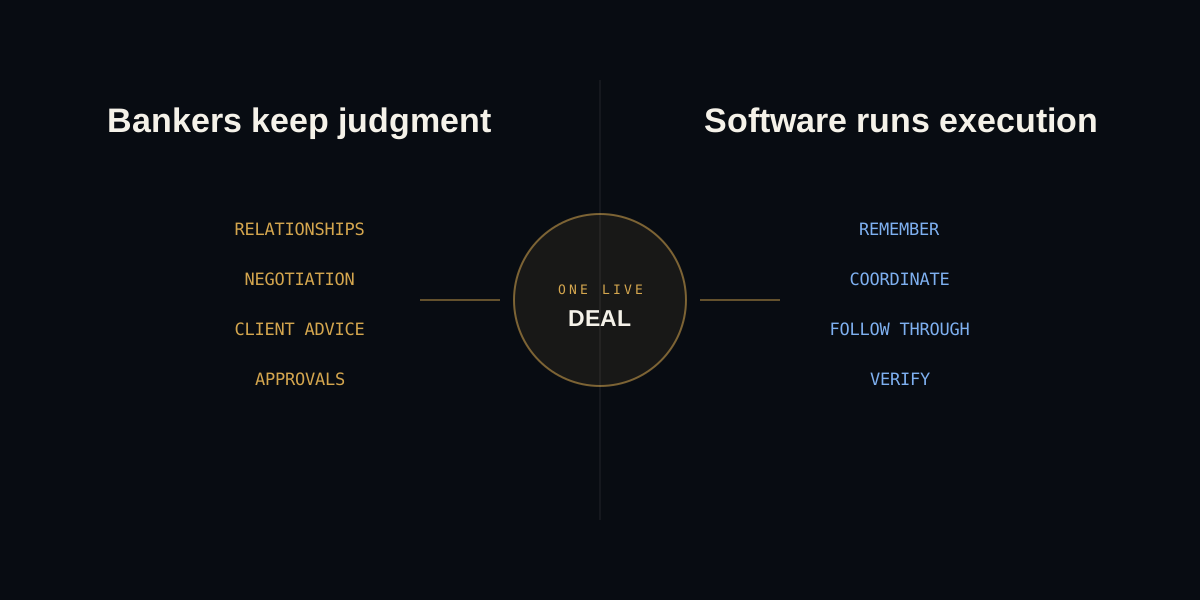
Notice what separates the lanes: tools that read (Hebbia, sourcing data) scale easily but touch nothing; tools that write autonomously (Rogo) move fast on public data but stay out of your systems of record; CRM-vendor AI (Celeste, Ascend) lives in your records but trusts them as-is. The unclaimed ground (verifying the record against outside evidence, with human approval and receipts) is where Arvya sits, and it's deliberately complementary: plenty of firms run Hebbia for diligence and Arvya for deal memory side by side.
About Arvya: Arvya is the verified deal and relationship memory system for investment banks and private equity firms: sourced pre-call briefs, a Notetaker that turns calls into approved CRM updates, and drift monitoring that keeps fund sizes, criteria, and contacts current. Request a demo on a live deal workflow.