Modern software teams run on a principle deal teams have never had access to: status is a byproduct of doing the work. On a team using Linear (the tool modern software teams use to track every piece of work) and GitHub (the system where the code itself lives), nobody assembles a Monday status deck. The work item is the record, the pull request is the evidence, and everyone from the newest engineer to the CTO looks at the same live truth. Deal teams still run on status assembly: weekly decks built by hand, “where are we with the buyer list” emails, side trackers reconciled against the CRM on Sunday night. The gap is not discipline or talent. It is that software teams got tooling where the record updates itself as work happens, and deal teams got tooling where a human retypes reality into the record after the fact, which is why the record is usually wrong.
How software teams killed the status meeting
Twenty years ago, software status looked like deal status today: weekly reports written by hand, managers walking the floor asking what shipped, spreadsheets of tasks that drifted from reality within days. What changed was not that engineers became better at filing paperwork. The tools inverted the relationship between work and record. When an engineer opens a pull request, the ticket moves itself. When the code merges, the issue closes itself. When a release ships, the changelog writes itself from the commits. Status stopped being a document someone produces and became a query anyone can run against work that already happened.
Three properties made that possible, and all three are worth naming because deal teams have none of them today. First, the work item is the record: there is no separate tracker to reconcile. Second, every state change carries evidence: a ticket closed by a merged pull request points at the actual code. Third, everyone sees the same truth: the CEO and the intern read the same board, so “alignment” stops requiring meetings.
Deal teams still run on status assembly
A live sell-side process generates enormous amounts of state: which buyers signed NDAs, who went quiet after the CIM, what a sponsor said about valuation on Tuesday, which diligence requests are blocking. Almost none of that state records itself. It lives in inboxes, call memories, and personal trackers until a human assembles it into the Monday deck, the client update, or the answer to the MD's hallway question. The assembly is unpaid, deadline-less work stacked on top of the actual job, so the record decays the moment attention moves to the next fire.
The decay is measurable. At one mid-market advisory firm on DealCloud (~25 bankers), the baseline before any automation: 77% of buyer records unmatchable to live processes, 58% of sponsor records untouched in over a year, and over 50,000 blank fields. This is the industry norm, not an outlier. Validity's 2025 study of 602 organizations found 76% saying less than half their CRM data is accurate, and Intapp's 2024 survey documented how heavily the data-entry burden falls on deal professionals. The result is a standing tax: every status question costs someone an hour of assembly, and the answer expires immediately.
Where the analogy holds, and where it breaks
The analogy holds because a deal, structurally, is the same kind of object as a software project: a process with stages, owners, blockers, and artifacts. “Buyer 14 is stuck awaiting a data room grant” is the same shape of fact as “ticket 214 is blocked on review.” There is no structural reason it cannot record itself the way the ticket does.
But copying Linear into a bank would fail, because deals differ from code in three ways that have to be designed for, not wished away:
- Evidence is contested. In software, the compiler and the test suite arbitrate truth. In a deal, “the sponsor moved their check size up” is a claim. It needs a source, a quote, and a date attached, or it is just hearsay in a database.
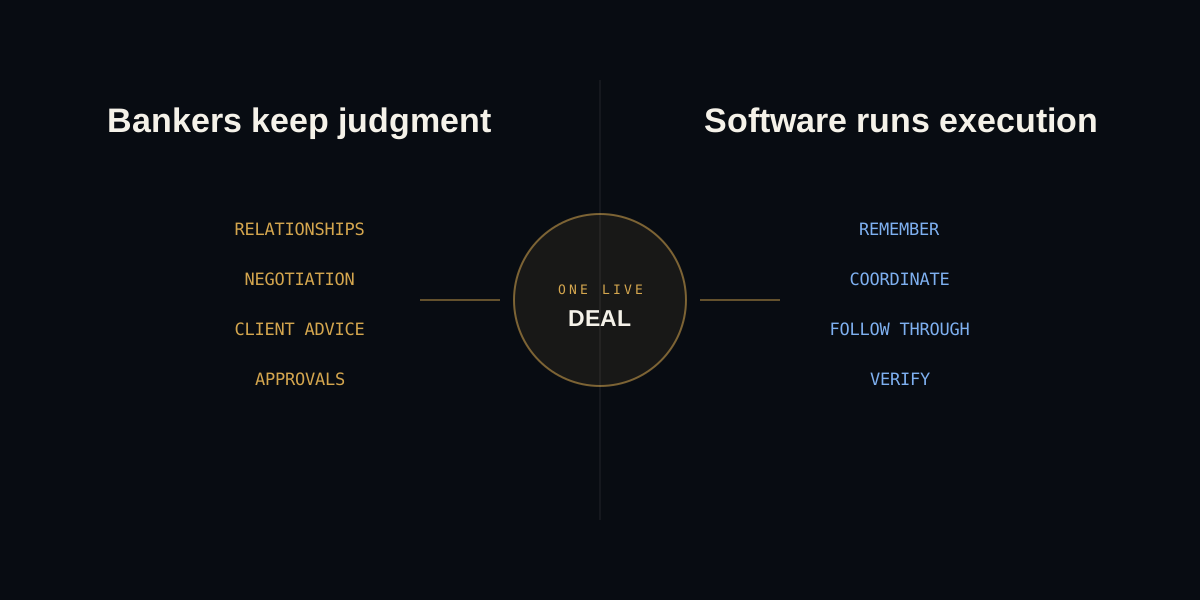
- Writes need approval gates. Code review gates code, but a wrong merge is revertible. A wrong CRM update propagates into buyer lists and client reports. Every automated write to the record needs a human approval in front of it and a receipt behind it; see how approval-first writeback works.
- Visibility has walls. Software teams default to everyone-sees-everything. Deal firms run on confidentiality and conflict walls, so “same truth for everyone” must mean “same truth for everyone entitled to it.”
Status as a byproduct, rebuilt for deals
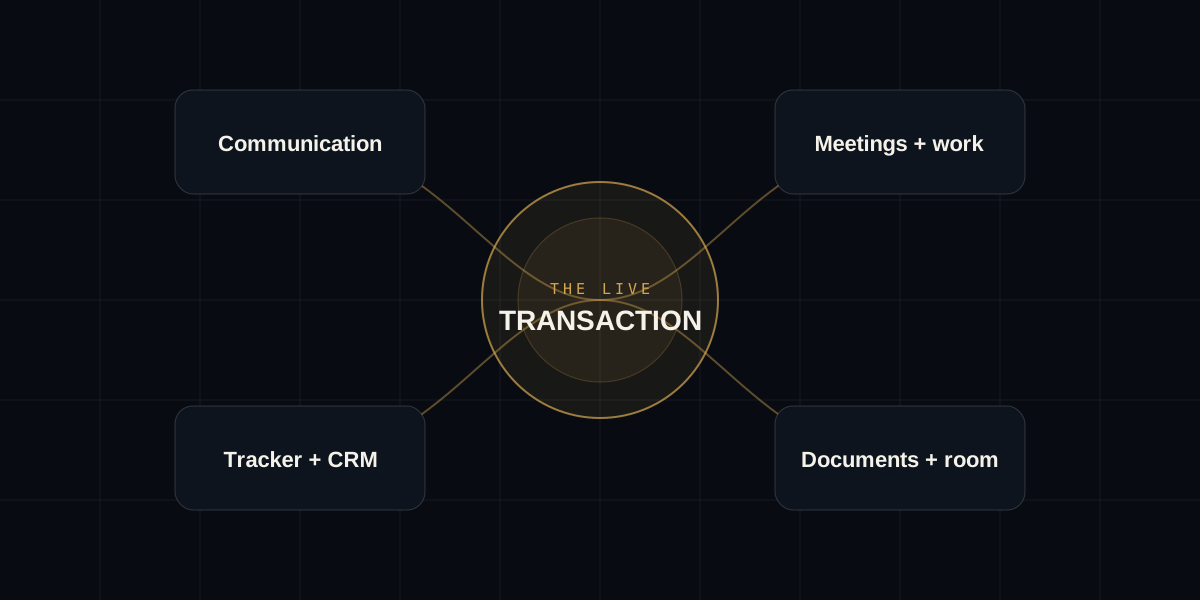
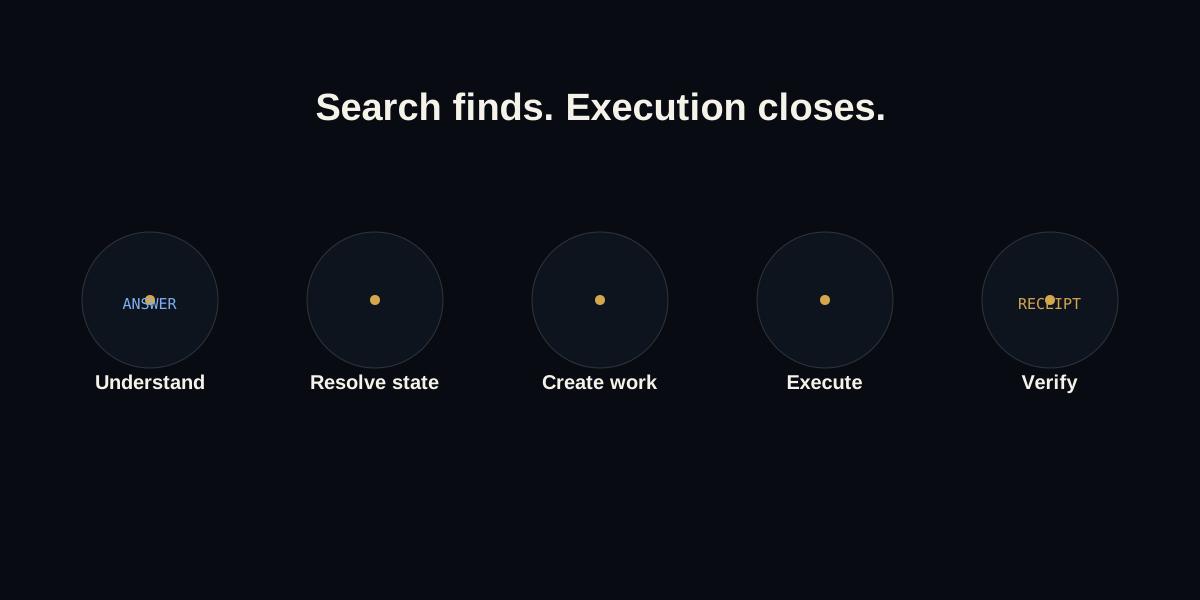
So the deal-team equivalent is not a kanban board. It is verified deal memory: a Deal Brain per deal that updates as a byproduct of work the team already does. A call happens; the notetaker captures it and proposes evidence backed CRM updates. A banker approves them in seconds; Arvya writes to DealCloud or Salesforce and reads the record back as a receipt. The buyer tracker and the weekly client update render from the same approved facts, so they agree with the CRM by construction. Nobody assembled anything. The work recorded itself, with a human gate on every write.
This loop is live, and the counts are concrete: in one live deployment on a single seat over 60 days of daily use, 145 verified CRM updates approved at a 96% approval rate, roughly 73.5 hours of work automated as measured from completed logged work items, and 15 client-ready weekly coverage report exports in a single week, each report a view over approved records rather than a Sunday-night assembly job.
The layer above: process, in development
What software teams have that deal teams still lack is the explicit process layer on top of the record: stages, owners, and blockers as first-class objects, so an MD opens one view and sees every deal's true state without asking anyone. That is what we are building now: a process-management layer for deal teams on top of verified memory, and connected Deal Brains forming a firm-wide Company Brain. To be direct about status in a post about status: that layer is in development, not shipped. The memory, the capture, the approval-gated writeback, and the reporting underneath it are shipped and in daily use. If you want to see where it stands, call us.
The sequencing is the lesson software teams learned the hard way: process tooling on top of an untrustworthy record just makes the wrong status easier to read. Get the record true first (evidence on every fact, approval on every write) and status stops being a job. For what the live loop looks like on a sell-side mandate, see the investment banking overview.