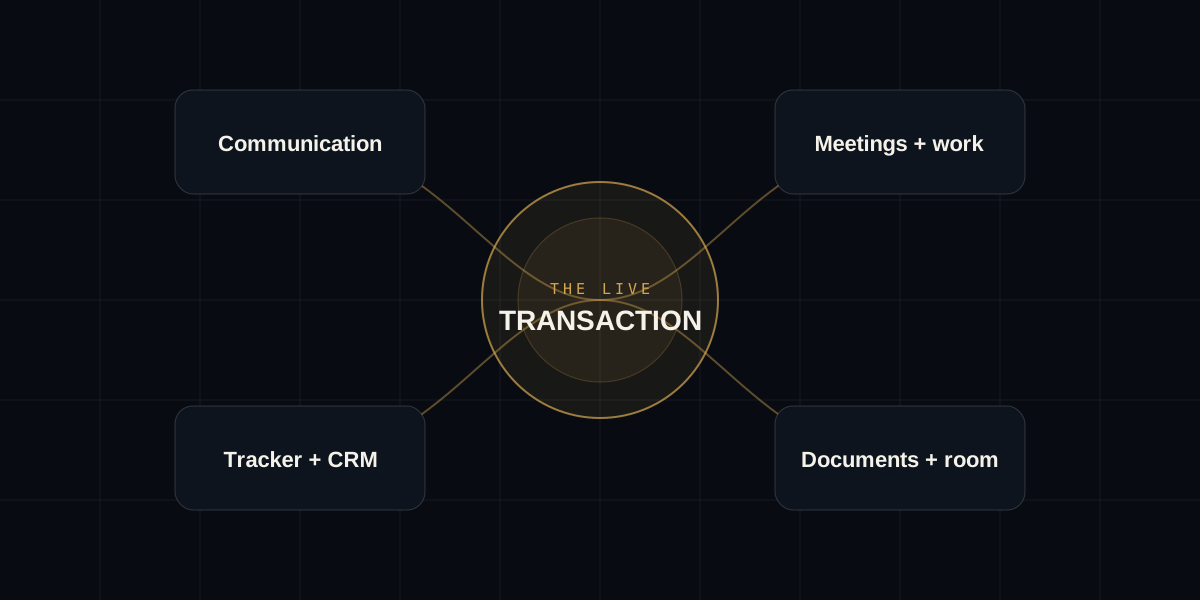
A sell-side process is not one negotiation. It is thirty to fifty parallel buyer conversations, each at its own stage, each moving at its own speed, all funneling toward a handful of bids. The deal team's attention naturally flows to the loud ones: the buyer peppering the data room with questions, the sponsor pushing on management meetings, the strategic whose counsel just marked up the NDA. Loud buyers feel like the deal. They are also the ones who least need attention, because they are already moving.
The dangerous buyers are the quiet ones. The teaser went out nine days ago and nothing came back. The NDA was signed with enthusiasm three weeks ago, and then silence. The CIM was sent and not a single question followed, which either means they are not reading it or they are reading it and cooling. Every banker knows quiet is a signal. The problem is that no system they use can see it.
Silence is invisible by construction
Every tool in the deal stack is built to record events: an email arrives, a meeting happens, a stage changes. Silence is the absence of events, so nothing records it. The CRM has no row for “nothing has happened with this buyer for eleven days.” The inbox sorts by most recent, which is precisely backwards. It is an anti-quiet view, surfacing whoever spoke last and burying whoever went dark. The buyer tracker shows the stage each buyer reached, not how long they have been sitting in it.
So detecting quiet becomes a human memory exercise across fifty threads. The VP scrolls the sent folder, trying to reconstruct who never replied. The Monday meeting devotes twenty minutes to reading down the buyer list asking “where are we with these guys?” per name. Some firms literally assign a junior to walk the tracker row by row. And the cost of a miss is not abstract: a process runs on momentum and competitive tension, and tension only exists among buyers who believe others are moving. Every buyer who drifts out unnoticed makes the auction quieter for everyone left. Deals rarely die from a dramatic no. They die from a dozen unnoticed silences.
The follow-up wave, assembled by hand
When a team does decide to re-engage the quiet buyers, the work is pure assembly. One banker described exactly what he wanted: forty follow-up drafts sitting in his Outlook drafts folder, each one addressed to the right contact at a quiet buyer, referencing where that conversation left off, with the teaser and the NDA reattached so the recipient has zero excuse for friction. He was not asking for anything intellectually hard. He was asking for two hours of tedious, error-prone assembly (look up each thread, remember each state, find each attachment, personalize each note) done for him, with the judgment call of actually sending left in his hands.
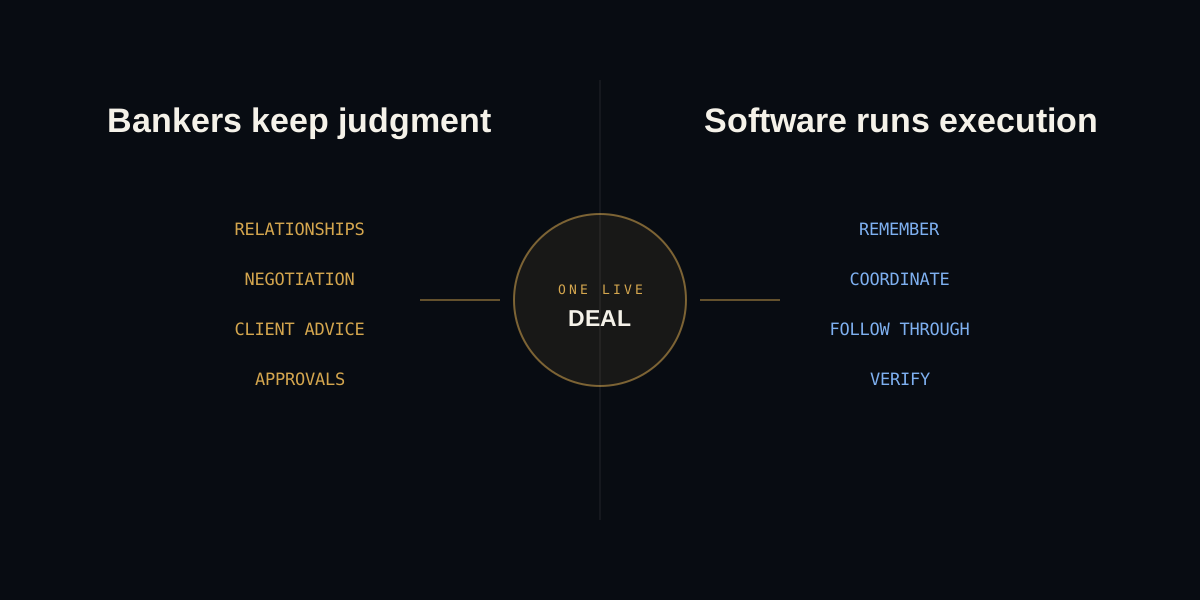
That request is worth taking seriously, because it describes the correct division of labor. The machine's job is to know the state of fifty conversations and prepare the moves. The banker's job is to decide.
What an AI-native process view looks like
The fix is a process view built around a column no CRM has: days quiet. Not a dashboard of activity, but a view of inactivity, and one you can trust, which imposes three requirements:
- Every stage claim carries evidence. “CIM sent, no questions asked” is only actionable if the system can show the send event and the empty thread behind it. A stage without a receipt is a guess, and bankers correctly ignore views built on guesses.
- Quiet buyers surface themselves, with a deterministic reason. Not a model's vibe that a buyer “seems disengaged,” but a checkable fact: teaser sent 9 days ago, no reply; NDA executed, 21 days without a data room login; CIM delivered, zero inbound questions. The reason is computed from the record, so two people looking at the same buyer see the same reason.
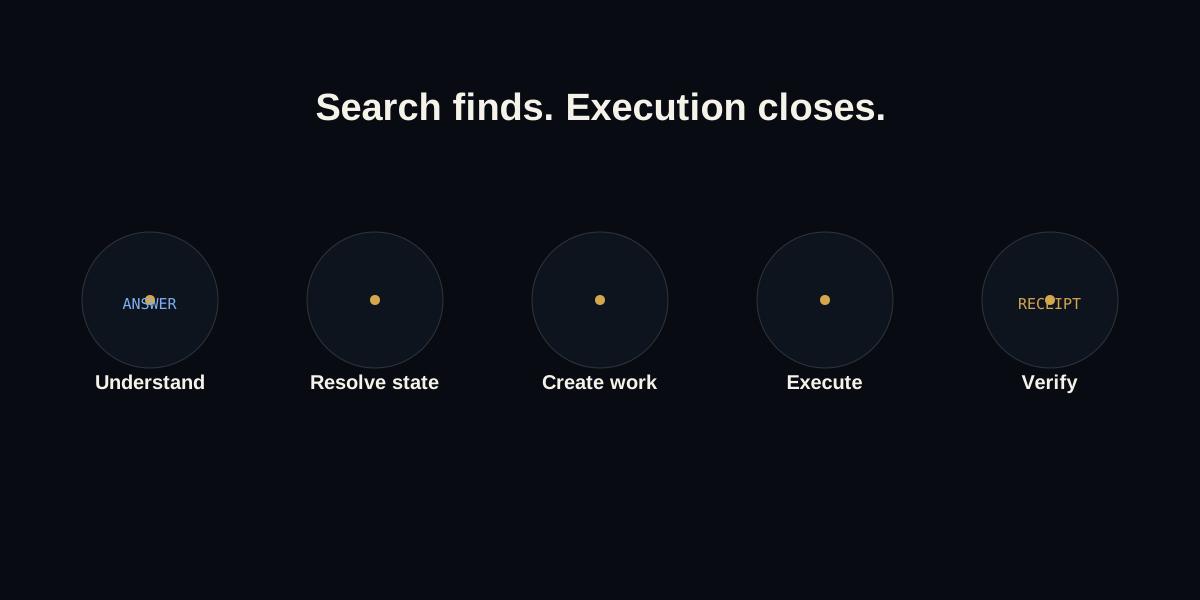
- The response is staged, never fired. When a buyer crosses the quiet threshold, the follow-up draft is prepared (right contact, right context, right attachments) and waits for approval. Drafts, never auto-sent. A banker skims the wave, edits the two that need a personal touch, kills the one where quiet was the right outcome, and sends the rest. What took an afternoon takes minutes, and every send was still a human decision.
Run this loop weekly and the economics of the process change. No buyer drifts out unnoticed, because silence itself now generates a work item. The Monday meeting stops being a roll call and starts being a conversation about the handful of buyers where judgment is actually needed.
What exists today, and what we are building
To be precise about status. The full process-management layer described above (stages as first-class objects, quiet detection across the buyer universe, staged follow-up waves) is in development, not shipped. What it stands on is live today: buyer trackers that stay current as a byproduct of email and meetings, evidence backed CRM updates written with approval and verified with read-back receipts, and weekly updates rendered from the approved record. That ordering is deliberate. A days-quiet view is only as good as the last-touch data underneath it, and last-touch data is exactly what the live layer keeps true. The design of the process layer is on the process page.
Fifty conversations, and the ones that kill the deal are the ones not talking. If you want the quiet ones to surface themselves, with the reason attached and the follow-up drafted, book a demo, or read how the buyer tracker keeps itself current in the meantime.