At the median mid-market advisory firm, sponsor coverage is one person. One business development professional maps thousands of private equity buyers, preps every management call, keeps conference schedules straight, and maintains the CRM that nobody else at the firm touches. The job is a flywheel (map buyers, prep calls, run processes, capture what buyers said, refresh the map), and every tool on the market serves exactly one arc of that loop. Nothing closes it. That is why one-BD-person firms run on memory, spreadsheets, and heroic recall, and why the CRM underneath them quietly rots: at one mid-market advisory firm on DealCloud (~25 bankers), 77% of buyer records were unmatchable to live processes and 58% of sponsor records had not been touched in over a year before anything changed.
The job description nobody writes down
The formal title is Director of Business Development, or Head of Sponsor Coverage, or sometimes just “VP.” The actual job is being the firm's working memory of the buyer universe. In the lower middle market that universe is enormous relative to headcount: thousands of PE firms with active funds, each with a fund size, check size, EBITDA range, sector appetite, and a handful of deal professionals who rotate every few years. A team of one is expected to know which two hundred of the eight thousand matter for the mandate that signed last Tuesday.
The flywheel looks like this in practice:
- Map buyers. Build and maintain the sponsor universe (fund sizes, check sizes, sector criteria, current deal professionals) so a credible buyer list exists for any mandate.
- Prep calls. Before every sponsor call, reconstruct the relationship: last contact, what they said they wanted, what the firm has shown them, what closed since.
- Run processes. Turn the map into outreach: buyer lists, teasers, NDA chases, conference schedules with thirty meetings in two days.
- Capture what buyers said. Every call produces new intelligence: revised check sizes, a new platform in the space, a partner who just left.
- Refresh the map. Feed that intelligence back into the record so the next buyer list starts smarter than the last one.
Each turn of the wheel should make the next one cheaper. In reality, the last two arcs almost never happen, because they are pure data entry with no deadline attached, and the person responsible is already on the next call.
Why every tool serves one arc and nothing closes the loop
The market has an answer for every individual arc. Data providers sell the raw buyer universe. The CRM stores whatever someone types into it. Notetakers transcribe calls. Email tools send outreach. But the flywheel only compounds if intelligence flows between the arcs (if what a sponsor said on Tuesday's call changes Thursday's buyer list), and that connective work is exactly what none of them do. The transcript sits in one app; the criteria fields sit in another; the person in the middle is the integration layer, and the integration layer has eleven other jobs.
The numbers show what happens when a human is the only thing closing the loop. At that same firm on DealCloud, the baseline before any automation: over 50,000 blank fields across the sponsor and buyer universe, and only 7% of sponsor investment-criteria fields filled. This was not negligence. One person cannot simultaneously run three live processes and backfill fund sizes for eight thousand records. This is the broader industry condition too (in Validity's 2025 survey of 602 organizations, 76% said less than half their CRM data is accurate and complete), but it bites hardest where coverage is a team of one.
What changes when the flywheel runs on one verified memory
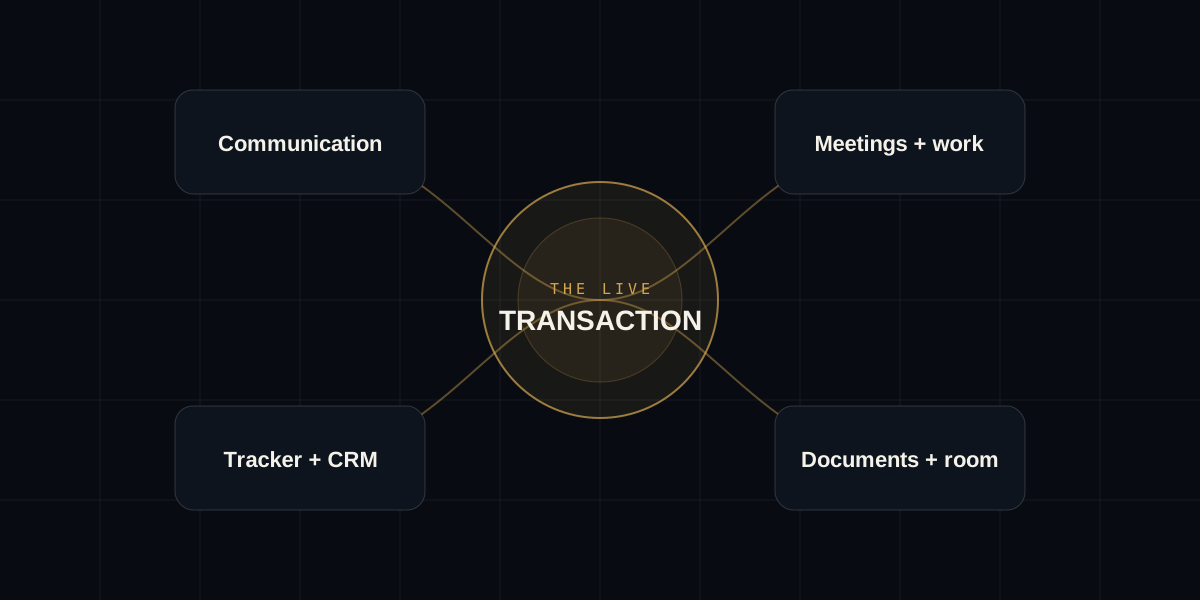
The unlock is not another point tool. It is making every arc of the loop read from, and write back to, a single verified record, what we call a Deal Brain: deal and relationship memory where every fact carries its evidence, and every change to the system of record is approved by a human before it lands. Concretely, for the one-BD-person firm, four things start running on the same memory:
- Pre-call briefs. Sourced meeting prep that assembles the relationship history before every sponsor call, instead of a 6 a.m. scramble through the inbox.
- Cited buyer lists. Lists where every inclusion carries its reasoning and its source. In one live deployment, a 54-buyer cited list for a live mandate, with 10 shortlisted, each name defensible in front of a client.
- CRM enrichment at machine scale. The backfill work no human was ever going to do: 40 sponsor records enriched in one week from SEC filings and firm websites, each update approved before it wrote to DealCloud.
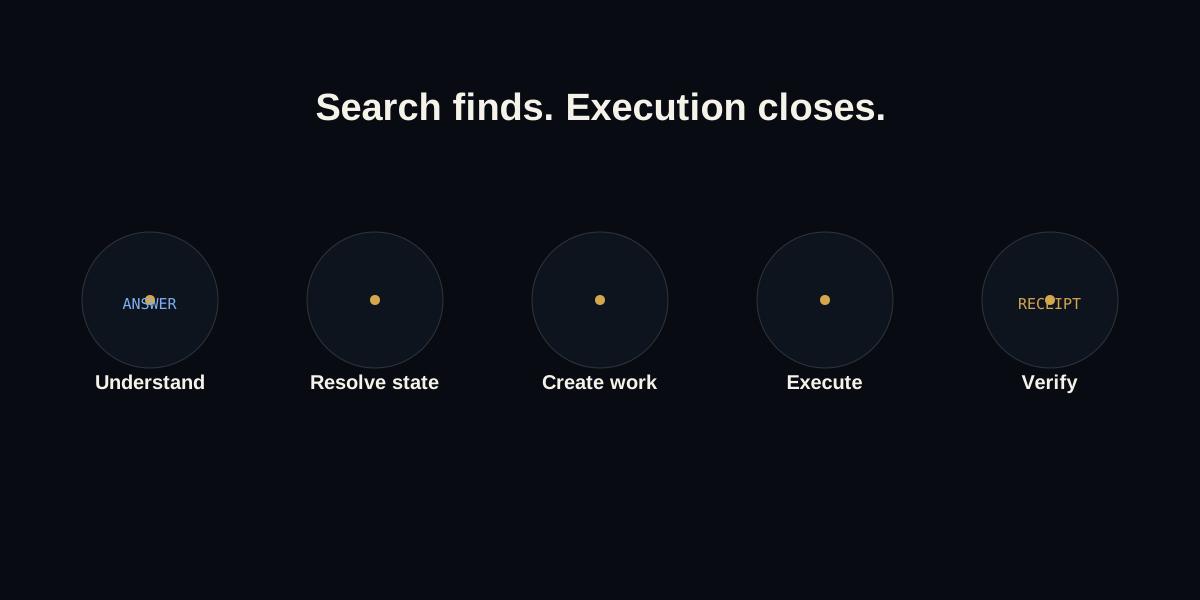
- Call capture that lands in the record. A notetaker whose output is not a transcript in a silo but proposed, evidence backed CRM updates, so what the buyer said actually refreshes the map. See how the notetaker-to-CRM loop works.
Over 60 days of daily use on a single seat, that loop produced 145 verified CRM updates approved (a 96% approval rate on what the system proposed) and roughly 73.5 hours of work automated, measured from completed logged work items. Not “the CRM is fixed.” A specific, counted set of records that are now true, current, and cited.
Showing your work upward
There is a second problem unique to the team of one: nobody sees the work. When coverage is a department, activity is visible in meetings and pipelines. When coverage is one person, the MD's view of BD is whatever surfaces in hallway conversation. The role needs a scoreboard: something a managing director can open, understand in ninety seconds, and forward.
Verified memory makes that report nearly free, because it is a view over work that already happened rather than a document someone has to assemble. In the same deployment, 15 client-ready weekly coverage report exports went out in a single week, each one reading directly from approved records, each number traceable to its evidence. The BD person stops being the only witness to their own coverage.
The team of one, with leverage
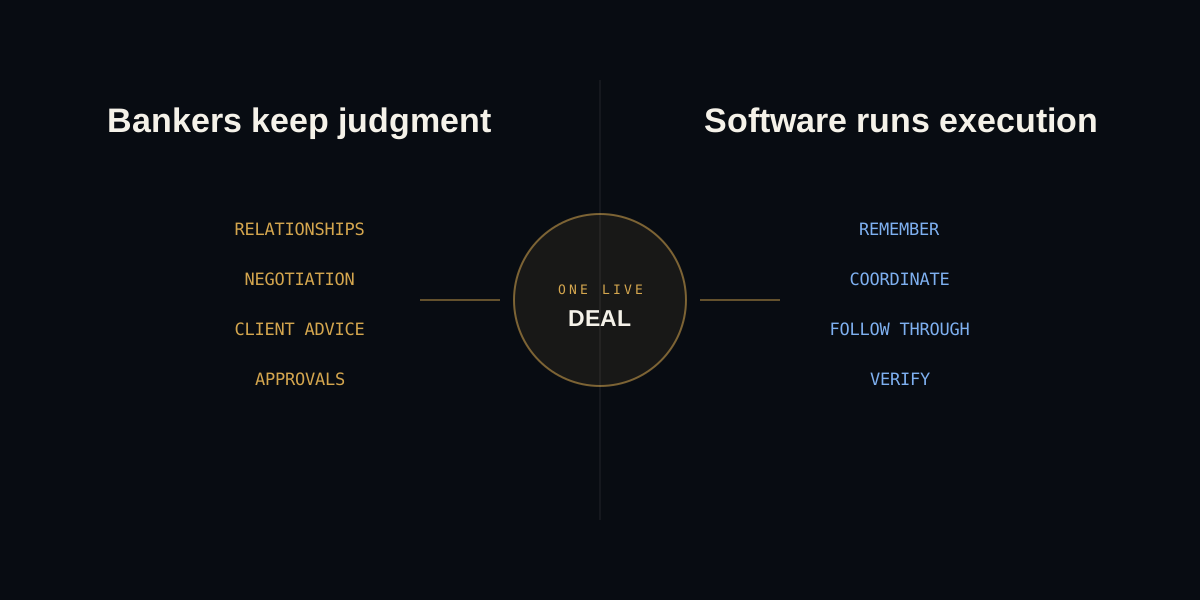
None of this replaces the person. Judgment about which sponsor to call, what to show them, and how to read a lukewarm “send us the CIM” stays exactly where it belongs. What changes is that the connective tissue of the flywheel (the mapping, the prep, the capture, the refresh) runs continuously instead of in stolen hours, with a human approving every write. That is the difference between a team of one covering what one person can remember, and a team of one covering eight thousand sponsors with a memory that compounds. For the full picture of how this fits a sell-side shop, see our investment banking overview.