The IC deck said margin expansion. Three hundred basis points over the hold, driven by pricing and procurement. Three years later, ask anyone at the firm how that thesis actually played out (not the fund-level IRR, but the specific claims the committee underwrote) and you will get a shrug, a war story, or a scramble through old board decks. Private equity's memory problem is not that facts go missing on a single deal. It is longitudinal: the reasoning that justified an investment and the reality that followed it are never systematically compared, because they live years apart and the people who could connect them have often moved on.
A hold period is a memory leak
Consider everything a firm learns across one deal's life, and where each piece ends up:
- Diligence findings (the customer-concentration worry, the QofE adjustment that got argued down, the churn cohort nobody fully resolved) live in a closed data room and a consultant's PDF that no one opens after close.
- The underwriting itself (the model assumptions, the value-creation plan, the risks the IC memo waved through) is frozen in a deck that becomes archaeology the day the deal signs.
- The hold generates board decks quarter after quarter, lender calls, operator changes, add-on evaluations. Each is a snapshot, none connected to the last, so nobody can see the trajectory without manually rebuilding it.
- The people rotate. The associate who lived in the model leaves for another fund; the principal absorbs the work; by exit, the team selling the company is often not the team that bought it, and the reasoning went with the org chart.
The result is a firm that is superb at remembering outcomes (the returns are audited, the track record is sacred) and structurally unable to remember reasons. Which is exactly backward, because reasons are what transfer to the next deal. Outcomes do not tell you whether the thesis was right or the market was kind.
The question the record should answer
Here is the shape of question a fund's memory ought to handle: “Last time we underwrote big margin expansion in a business like this, what did we actually get?” And the answer should be specific: you underwrote three hundred basis points and got eighty percent of it, pricing delivered and procurement did not, here is the board deck where the miss first showed up, with every claim citing its source document. That is not reporting; the fund administrator already does reporting. It is the firm's accumulated judgment made queryable, so that the next IC debate is pressure-tested by what the firm actually experienced rather than by whoever in the room remembers loudest.
The same longitudinal record answers the quieter questions that eat associate weeks. What did diligence say about this exact risk before we bought? How has the board deck told the story of this KPI over eight quarters, and where did the narrative change? Which lender was constructive when the last portfolio company tripped a covenant, and which banker actually knew the buyer universe at exit? Relationship recall matters as much as document recall: the operator who fixed the last messy carve-out, the advisor who was useless, the co-investor who moved fast. When the deal team turns over (and it will), that recall should be firm property, not a departed principal's speed dial.
Why this has to be built cited-first
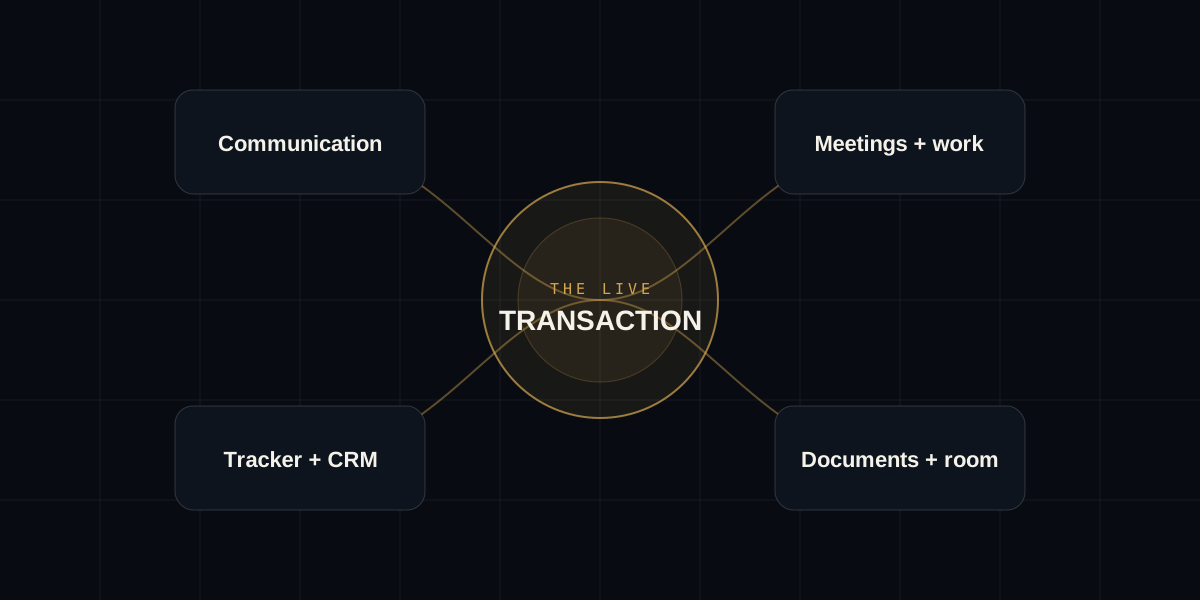
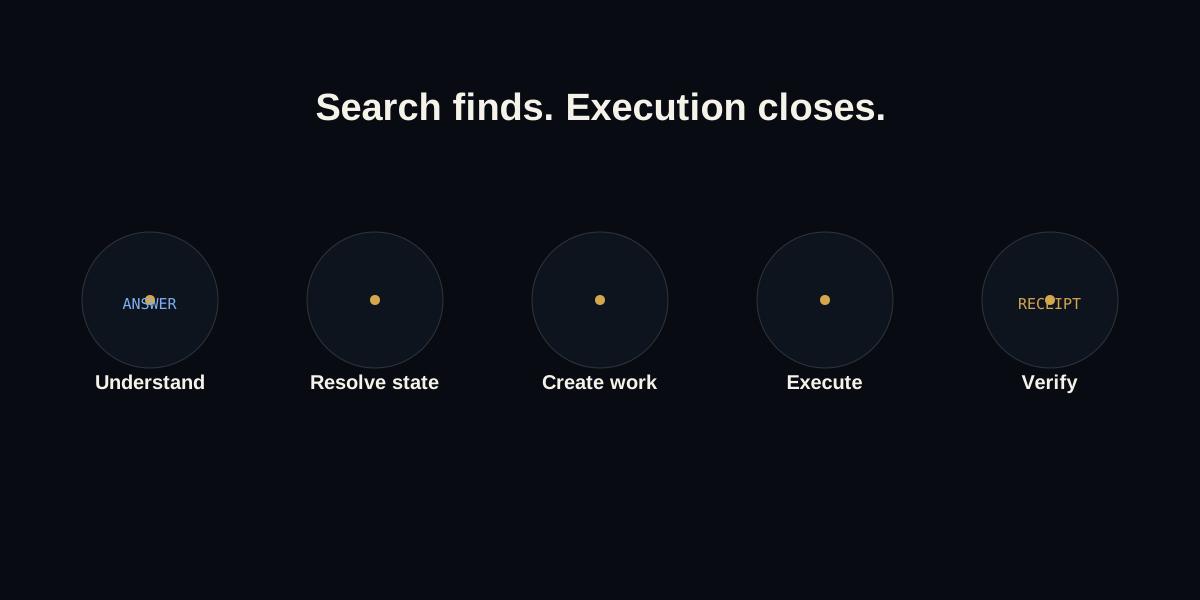
An uncited version of this record would be worse than none. If the system says “pricing underdelivered” and cannot show the board page it read that from, no partner will stake an IC argument on it, nor should they. So the discipline is the same one we apply everywhere: every fact carries its evidence (the value, the quote, the source, the date), humans approve what enters the record, and answers arrive with citations attached. We laid out how per-deal memories connect into firm-wide memory in From Deal Brains to a Company Brain; the hold-period record is that same architecture given a time axis. The memory starts accumulating in diligence (when the density of learning is highest and the least of it survives) and simply never stops: through close, through every board cycle, through refinancing, to exit. By the time the firm underwrites the next deal in the sector, the record of the last one is sitting there, diffable and sourced.
Note what this implies about where the value concentrates. Sell-side advisory is a volume business: many processes, many buyers, leverage comes from breadth. A concentrated PE portfolio is the opposite: a handful of companies held for years, where a single better-informed underwriting decision or one avoided repeat mistake is worth more than any amount of workflow speed. For funds, the unit of value is the deal, not the volume. That is why the memory has to be deep on each deal rather than shallow across many.
What is live, and what is in development
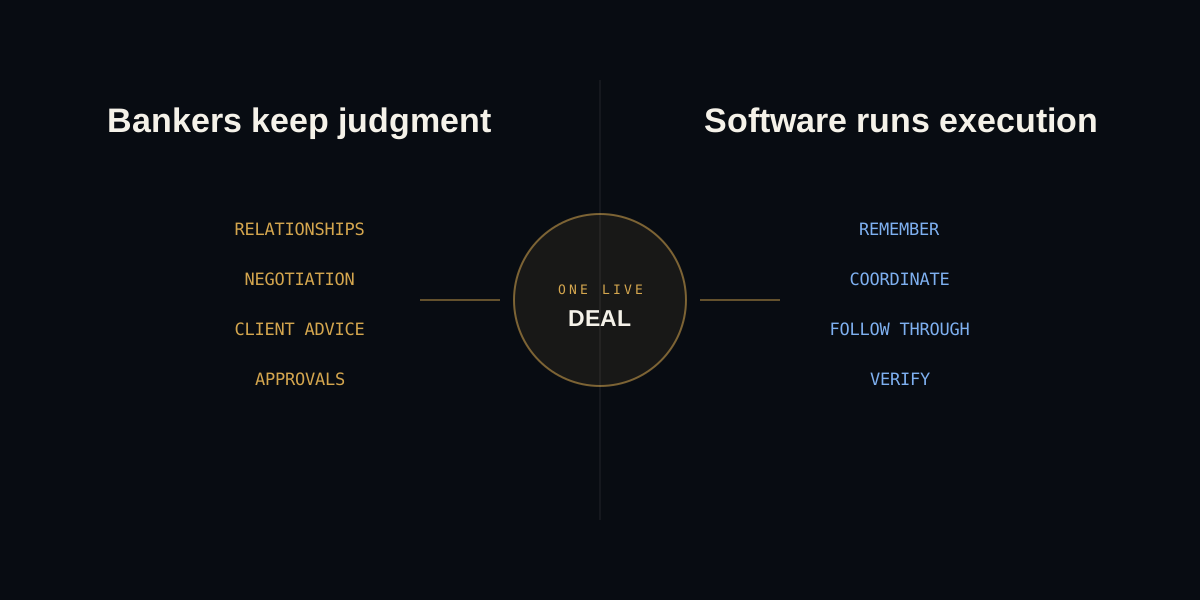
Plain labeling, in both directions. Live today: the evidence backed CRM trust layer. That means capture from email and meetings, staged updates approved by humans, and writes to Salesforce or DealCloud verified with read-back receipts (Dynamics and Affinity per deployment), plus meeting intelligence: briefs before the call, cited records after it. At a mid-market advisory firm on DealCloud (~25 bankers), that loop produced 145 approved updates at a 96% approval rate over 60 days from one seat. In development: the portfolio and hold-period views described above, and per-deal cited memory in its diligence Q&A shape: ask the deal record a question, get an answer with sources. We label these as in development because a product whose premise is verifiability does not get to blur that line in its own marketing.
The sequencing is deliberate. The hold-period record is only as trustworthy as the capture and approval machinery underneath it, and that machinery is what is running in production now. Every quarter a fund operates on it is a quarter of reasoning banked, so that three years from now, “what did we underwrite versus what did we get” is a query, not an archaeology project. How the pieces fit is on the process page, and the buy-side view is at Arvya for private equity. If you want to see where the hold-period views stand, call us.