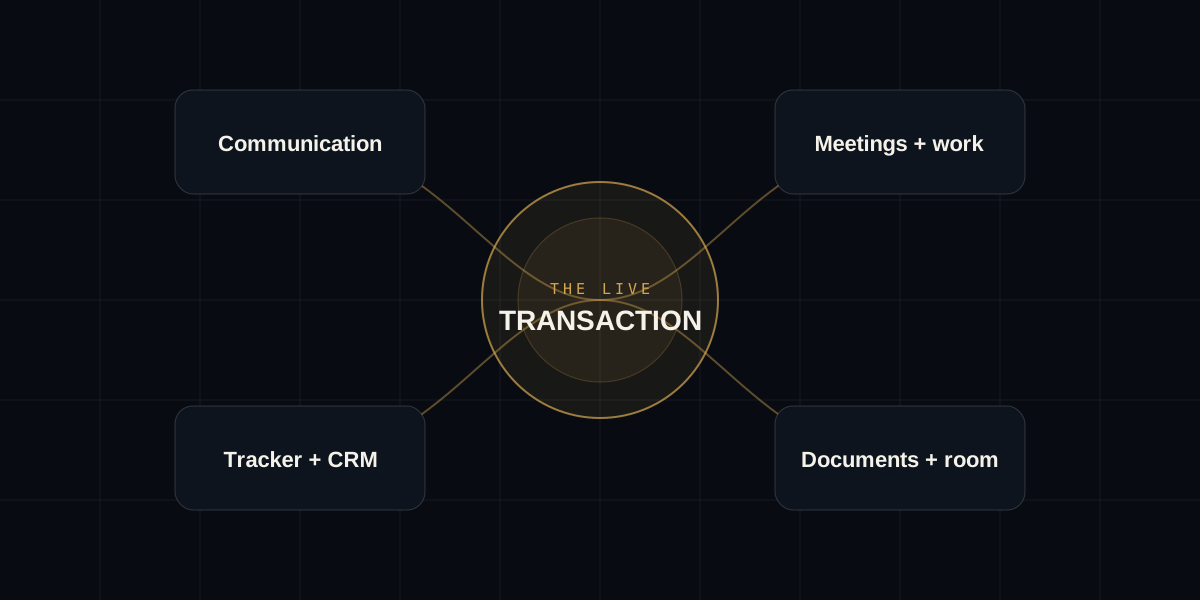
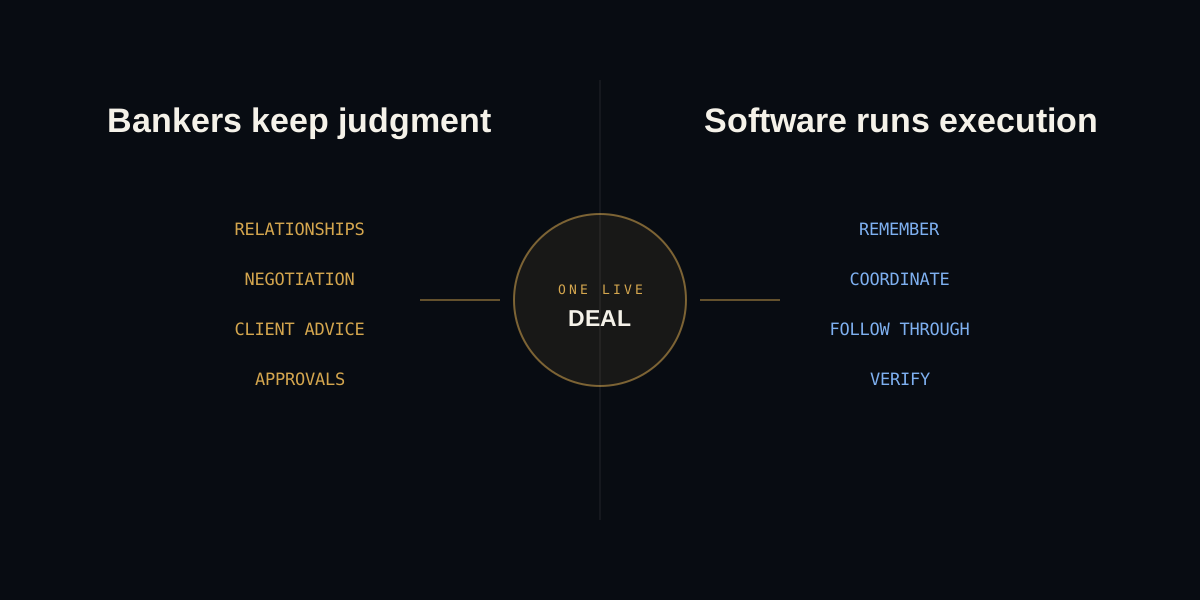
Every deal a firm runs generates memory: which buyers engaged, what they said, why they passed, who knew whom, what the thesis was, and how the process actually went. Almost all of it evaporates. It lives in one banker's inbox, one analyst's tracker, one conversation nobody wrote down, and when the deal closes or the person leaves, it is gone. The alternative is to make each deal build a verified, cited memory, a Deal Brain, and then connect them. Connected Deal Brains become a Company Brain: firm-wide memory of every buyer conversation, relationship, thesis, and process the firm has ever run, queryable, with every answer carrying its sources. The per-deal Deal Brain is live in production today. The Company Brain is what we are building on top of it now.
Institutional memory has a resignation problem
Advisory firms sell judgment, but they run on memory, and that memory is employed at will. When a VP who ran sponsor coverage leaves, the firm does not lose a seat; it loses the only complete map of which two hundred buyers matter, which ones are serious, and which partner at which fund said “call us when you have something over $10 million of EBITDA.” The CRM was supposed to be the insurance policy against this, and it failed almost everywhere. At one mid-market advisory firm on DealCloud (~25 bankers), 58% of sponsor records had not been touched in over a year and only 7% of sponsor investment-criteria fields were filled. The industry pattern is the same: in Validity's 2025 study of 602 organizations, 76% said less than half their CRM data is accurate.
So the actual institutional memory is people, and it walks out the door a few times a year. Every departure is a partial amnesia event. Every new hire spends months relearning what the firm already knew.
Why cross-deal memory compounds
A single deal's memory is useful. Connected deal memory is a different asset class, because deal intelligence is almost never consumed on the deal that produced it:
- The pass is next deal's first call. A buyer who passed on one process (too small, wrong geography, timing) told you exactly what they want. When the mandate that fits shows up eighteen months later, that pass reason is the most valuable line in the buyer list. Today it lives in a dead email thread, if anywhere.
- Relationships outlive processes. The sponsor your healthcare team met in 2024 is the same firm your industrials team is cold-emailing in 2026. Without shared memory, the firm introduces itself to the same people over and over, and looks smaller than it is every time.
- Process knowledge is reusable. How long diligence took, which buyer types moved fast, what killed the last three deals in a sector: every process the firm runs is training data for the next one, if anyone can actually retrieve it.
- Theses accumulate. Every pitch and every CIM encodes a view on a market. A firm that can query its own past theses starts every new pitch ahead of one that starts from a blank page.
This is why memory is the compounding asset in advisory work. Deals are episodic; the firm's knowledge of buyers, owners, and markets is the thing that should grow monotonically, and at most firms it does not, because there is nowhere trustworthy for it to accumulate.
Verification is the prerequisite, not a feature
Here is the uncomfortable part: an unverified firm-wide memory is worse than no memory at all. It is a rumor mill at scale. If the record says a sponsor's check size is $25 to 50 million and nobody knows where that came from or when, then a banker who acts on it is gambling with a client relationship, and a banker who ignores it has just proven the system useless. Scale that doubt across every record and you get exactly the CRM everyone already has: 77% of buyer records unmatchable, over 50,000 blank fields, at that same firm's baseline. Aggregating ten deals' worth of untrusted data does not produce a Company Brain. It produces a bigger pile.
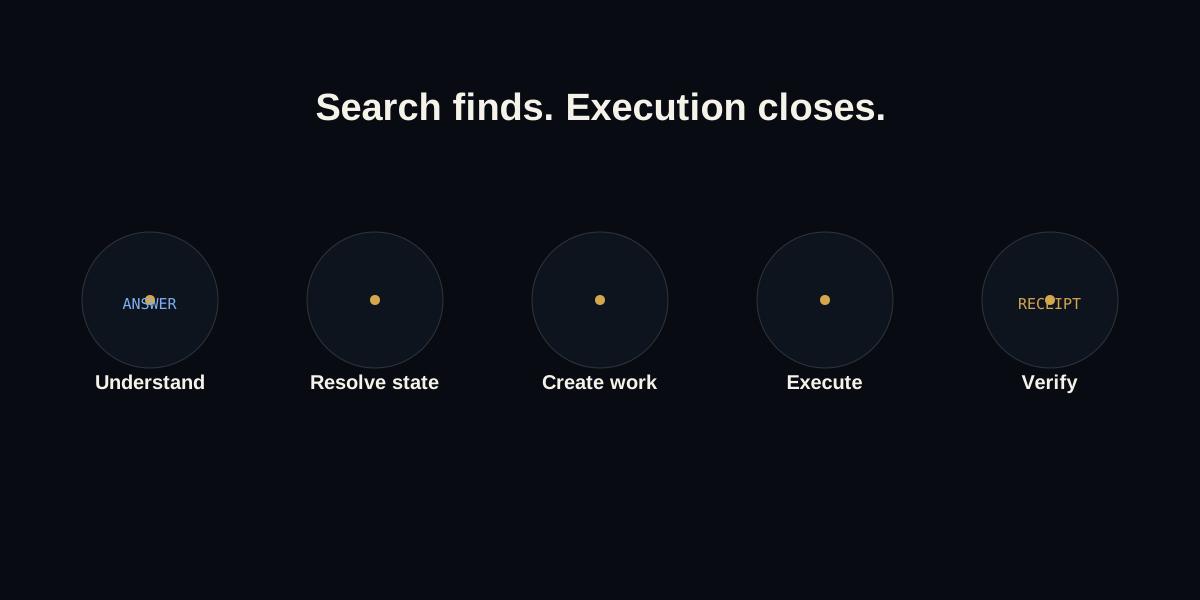
So the Deal Brain enforces a rule: every fact carries its evidence (the quote, the source, the date), and every write to the system of record passes through a human approval gate, with the record read back afterward as a receipt. In one live deployment (one seat, 60 days of daily use), that discipline produced 145 approved CRM updates at a 96% approval rate, plus 40 sponsor records enriched in a single week from SEC filings and firm websites, each one approved before it landed. That is what makes the memory load-bearing: when a fact is challenged, it answers with its source. The notetaker-to-CRM loop is the same principle applied to live calls: what a buyer said becomes a cited, approved record instead of a transcript in a silo.
From many brains to one
Once each deal builds verified memory, connecting them is the natural next move, and it is the move we are building now, in development. The Company Brain is the layer where those per-deal memories merge: the same buyer entity across every process it ever touched, the same relationship across every banker who ever held it, every thesis and every outcome, resolvable and queryable with citations intact. Alongside it, we are building relationship and warm-path mapping (who at the firm actually knows the person you need), diligence Q&A over the deal record, and MCP access so assistants like Claude and Microsoft Copilot can answer questions from the firm's verified memory rather than from whatever a model happens to guess. None of that is shipped, and we will not describe it as if it were. The whole premise of this system is that claims come with evidence.
What you can stand on today
The honest sequencing: the Company Brain is only as good as the Deal Brains beneath it, and those are live now: per-deal verified memory feeding sourced pre-call briefs, buyer trackers, cited buyer lists, bulk enrichment, weekly client updates, and approval-gated writeback with receipts, running against Microsoft 365, Salesforce, and DealCloud inside the firm's own tenant. Every deal a firm runs on this system is a deposit into memory that no departure can withdraw. The firms that start depositing now are the ones whose Company Brain will have something in it. For where this fits a buy-side shop, see our private equity overview.