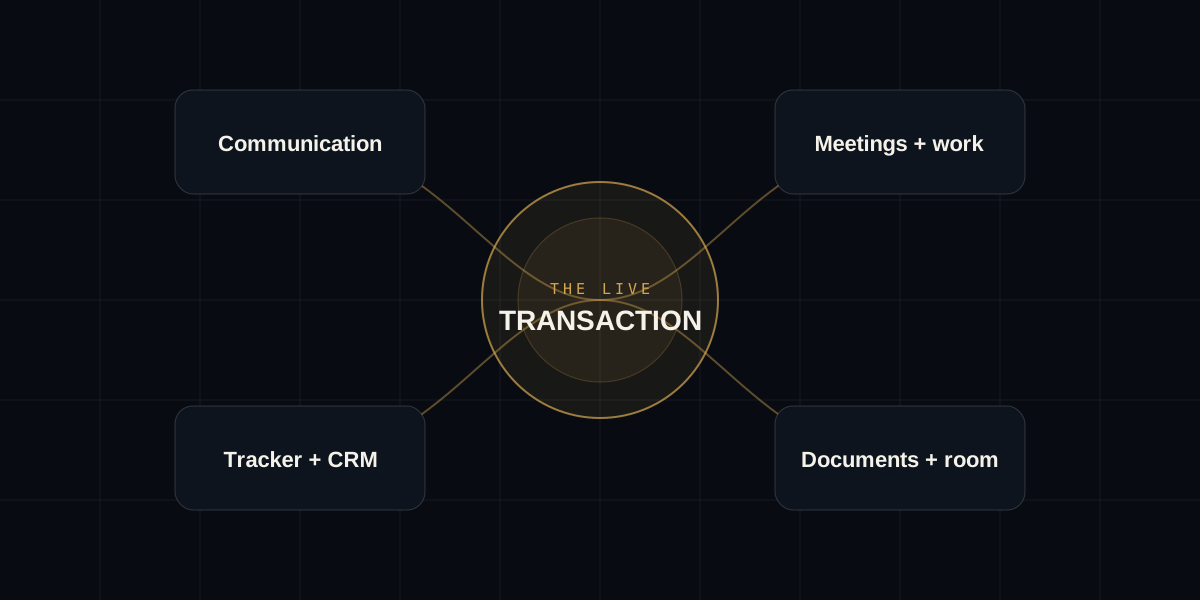
Look at what a live deal actually consists of inside a firm. There is a CRM record with fields about the company and the buyers. There is a data room full of permissioned documents. There is an Excel tracker on the VP’s desktop with the real buyer status. There is a task list somewhere, a folder of meeting notes, and a weekly update that gets rebuilt every Friday. Six surfaces, six vendors or formats, six versions of the truth. And underneath all of them, one object: the deal.
The claim of this essay is simple. The CRM record, the data room, the tracker, the task list, the notes, and the weekly update were never different products in any deep sense. They are six views of the same underlying object, and they were only ever separate because the software of the last thirty years could not hold the object itself.
Why the deal got split into six products
Software built before AI could automate storage but not understanding. So each vendor picked the slice it could store. The CRM vendors could store structured fields, so they sold a database and asked humans to fill it. The VDR vendors could store permissioned files, so they sold a filing cabinet with an audit log. The notetakers could store transcripts. Nobody could store “the state of the process,” because state is meaning, and extracting meaning from email, calls, and documents required a human. The human in question was an analyst, and the retyping between systems became a job description.
The result is familiar to anyone who has run a process: the six views disagree, and reconciling them is manual. The CRM says the buyer is at the NDA stage. The tracker says the CIM went out. The data room shows they never logged in. Each system is honestly reporting its own slice, no system sees the whole, and the Monday meeting exists to rebuild the whole by hand.
In the age of AI, the deal gets one living record
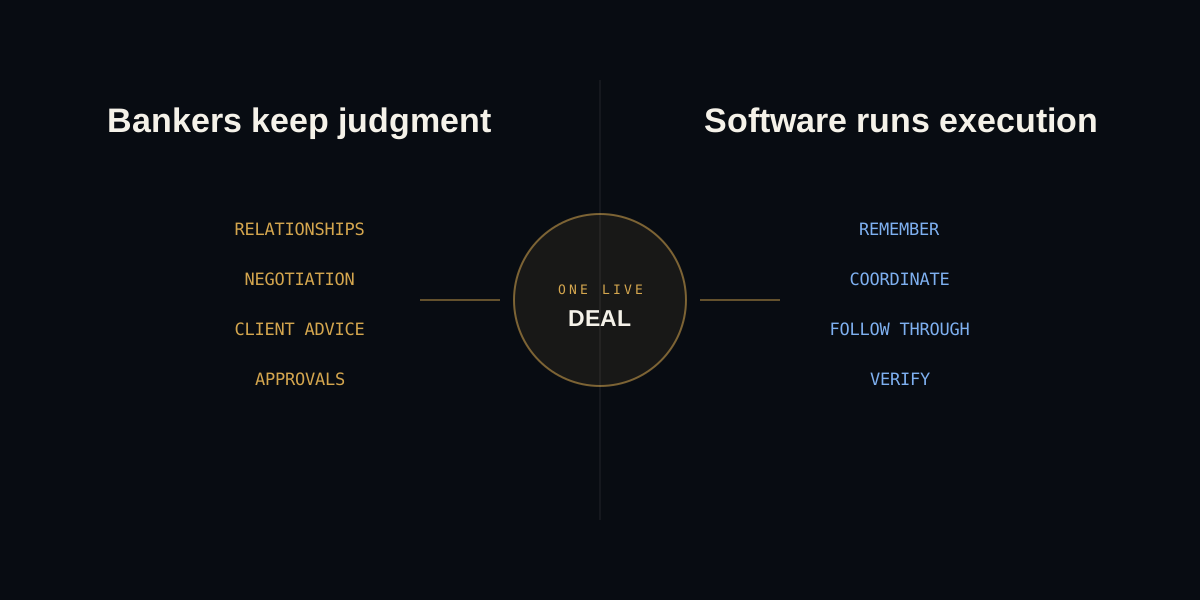
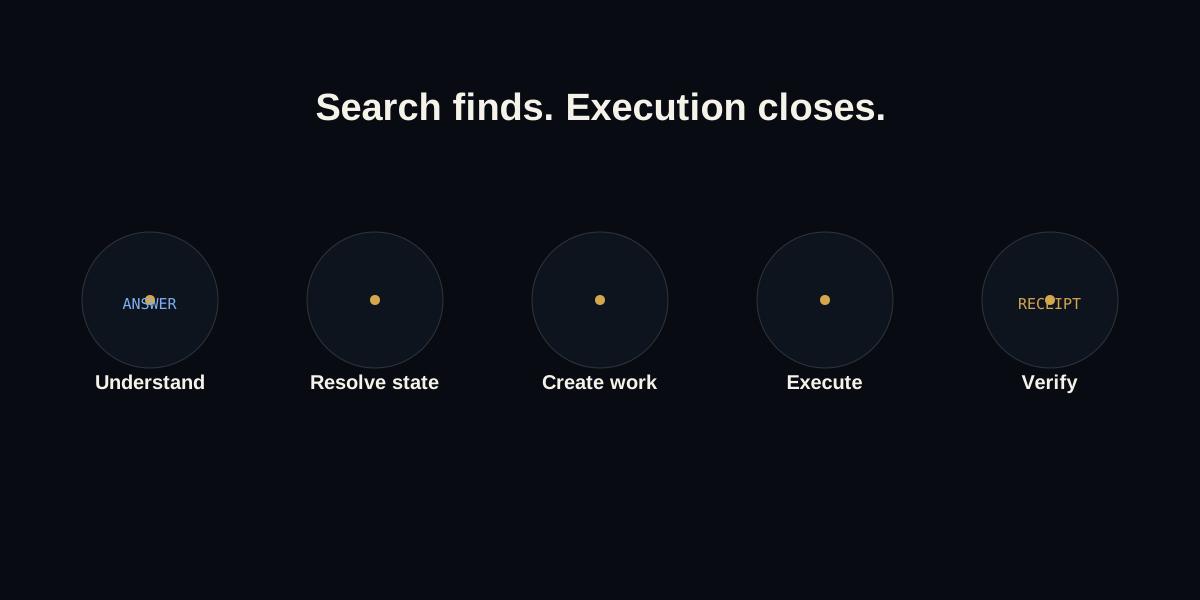
What changed is that software can now read the sources directly. Arvya builds one verified memory per deal, a Deal Brain, from email, meetings through its own Notetaker, the CRM, trackers, documents, and the data room. Every fact in it carries evidence: the message, the transcript quote, the document it came from. Agents assemble the record, and a human approves every write into the systems the firm owns. That approval discipline is not overhead. It is how the record earns the right to be the truth, a case we make in full in Every Approval Is an Asset.
At the firm level the same collapse happens once more: many Deal Brains connect into one firm memory, a Company Brain, so the question “what did this buyer tell us across every process we have ever run” becomes answerable. To be precise about status: the Deal Brain and the workflows on it are live today. Company Brain, like the Process Room and PE portfolio views, is in development with design partners and we label it that way everywhere.
The old surfaces become projections
Once one living record exists, the six old surfaces do not disappear. They change role: they become projections of the record instead of competing authors of it.
- The CRM stays, because the firm owns it and compliance, reporting, and ten years of history live there. But it stops being where truth is authored. Approved facts project into it: every write is human approved, read back, and receipted. This is live today for DealCloud and Salesforce, with Dynamics and Affinity per deployment.
- The Excel tracker becomes a rendering. The banker keeps their format; the record fills it. Live today as buyer trackers and cited buyer lists.
- The weekly update writes itself from approved state instead of being reassembled from six sources. Live today.
- The meeting notes become memory. The Notetaker turns calls into proposed CRM updates with evidence, gated on approval. Live today.
- The data room and the task list are the Process Room’s territory: documents that file themselves, watermarked CIM distribution, one diligence request list, stages with receipts. In development, described at /process.
“We will never rip out our CRM or Datasite”
Correct, and you should not. This is the part skeptics get right and the conclusion they get wrong. The collapse of the deal stack is not about which logos you keep. Keep DealCloud. Keep Datasite. They are good at what they store, your firm has years invested in them, and Arvya writes into them rather than around them. The collapse is about where the truth lives. Today the truth lives nowhere, which is why six systems can disagree and nobody can say which one is right. The point of one living record is that the question “where does this buyer actually stand” has one answer, with evidence attached, and every other surface is derived from it. You keep the systems. Nobody has to live in them anymore.
One object, one record
The software industry sold the deal in pieces because pieces were all it could hold. That constraint is gone. The deal is one object, and it deserves one record: verified, evidence backed, human approved, running in your own tenant, with raw email and transcripts never stored. The old surfaces become what they always should have been, views. The architecture behind this is laid out at /platform, and the process layer we are building on top of it is at /process. If you want to see where it stands, call us.