AI has rebuilt writing code, customer support, sales prospecting, and legal review from first principles. Deal management, the software category that runs investment banking and private equity, has barely moved. A live M&A process in 2026 still runs on a CRM the team does not trust, a data room that is a filing cabinet with permissions, buyer trackers rebuilt in Excel for every mandate, and a Monday meeting where humans reconstruct status from memory. The category resisted because the trust bar is brutal: one wrong fact in front of a client can cost a mandate. That bar is now clearable: not with autonomy, but with verified memory, evidence attached to every fact, and a human approval gate in front of every write. Deal management is the last major professional software category AI has not actually rebuilt, and the rebuild has started.
The stack that time forgot
Look at what a deal team actually touches in a week. The CRM (DealCloud, Salesforce, or whatever the firm bought years ago) is nominally the system of record. In practice it is a write-only archive: at one mid-market advisory firm on DealCloud (~25 bankers), 77% of buyer records were unmatchable to live processes, over 50,000 fields sat blank, and 58% of sponsor records had not been touched in more than a year. This is not one bad firm. In Validity's 2025 study of 602 organizations, 76% said less than half their CRM data is accurate.
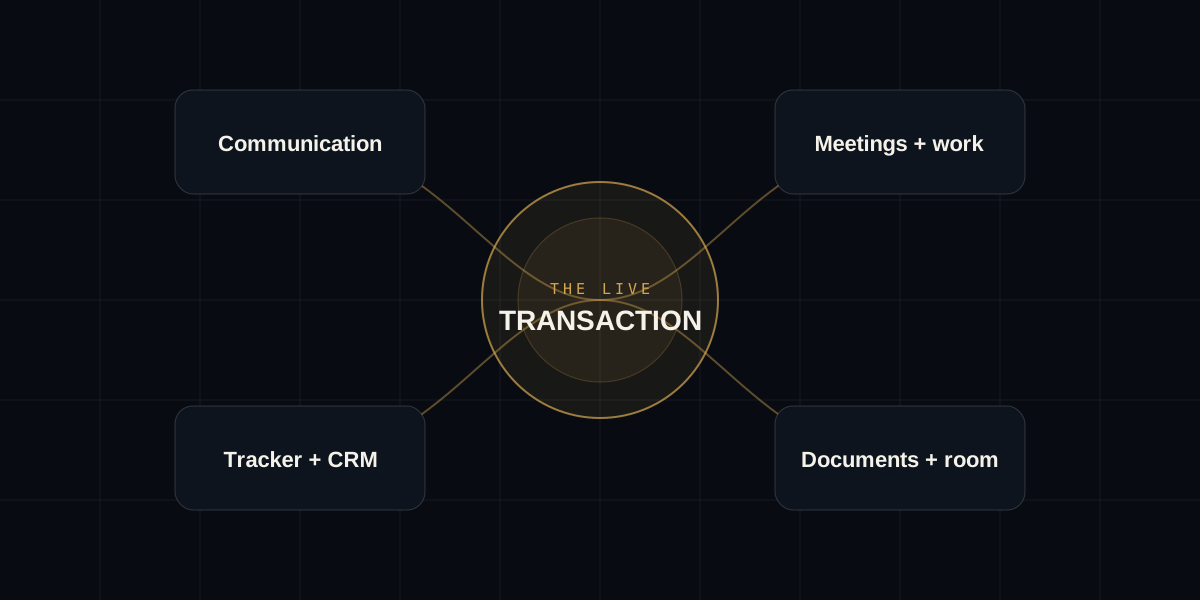
So the real work migrates elsewhere. The buyer tracker is a spreadsheet, rebuilt per deal, emailed around until three conflicting versions exist. The data room is a place documents go, not a system that knows anything about them. Status lives in people's heads and gets serialized once a week into a deck for the Monday meeting. Every one of these is a workaround for the same missing thing: a deal memory the team actually believes.
Why AI skipped this category
The categories AI rebuilt first share a property: errors are cheap or checkable. Generated code fails a test suite. A support draft gets reviewed before it ships, and a bad one costs an apology. Deal management is the opposite case, for three compounding reasons:
- The trust bar is a mandate, not a metric. Tell a client a buyer passed when they actually asked for the CIM, or email the wrong fund size to a sponsor, and the cost is not a bad KPI. It is the relationship. A tool that is right 90% of the time is unusable, because nobody knows which 10% to distrust.
- The data is scattered by design. The truth about a deal lives across email threads, call transcripts, tracker spreadsheets, the data room, and the CRM: five systems that do not talk. Any AI that reads only one of them is confidently wrong about the others.
- Compliance forbids the shortcut. The consumer-AI move (ship your data to a vendor's cloud and let a model loose on it) is a non-starter for regulated deal teams handling MNPI. The architecture has to live inside the firm's own tenant, or it does not get deployed.
Generic copilots hit all three walls at once. So the category got chat interfaces bolted onto old systems, and the actual workflows stayed manual.
What makes it solvable now
The unlock is not a smarter model. It is an architecture built for the trust bar instead of around it. Three pieces, together:
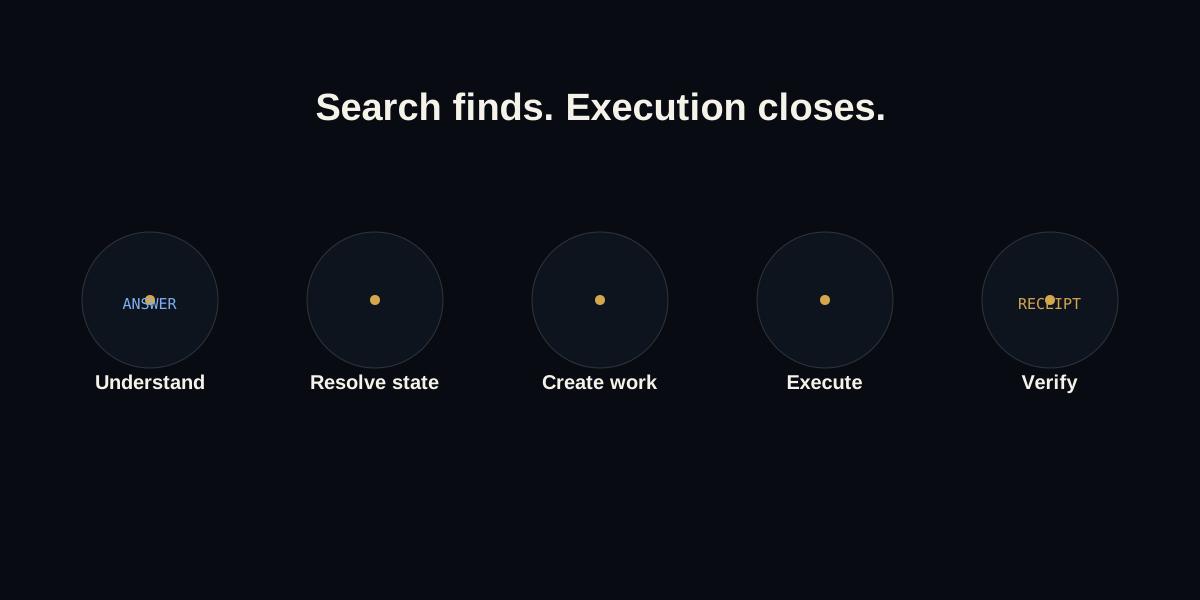
Verified memory. Every fact the system holds (a check size, a pass reason, a buyer's stated appetite) carries its evidence: the quote, the source document, the date. We call the per-deal version a Deal Brain. A fact without a citation is not a fact yet; it is a proposal.
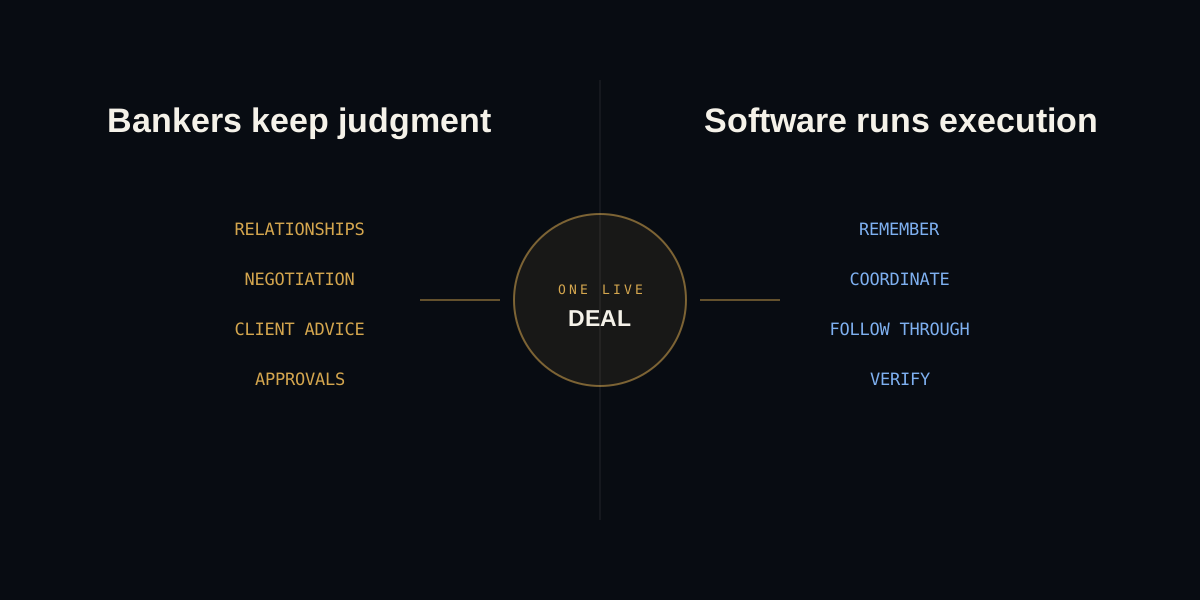
Approval gates on every write. Nothing reaches the CRM or a client without a human saying yes. This inverts the usual AI failure mode: instead of hoping the model is right, the banker reviews a proposed update with its evidence inline and approves or rejects in seconds. In one live deployment (one seat, 60 days of daily use), that loop produced 145 approved CRM updates at a 96% approval rate, and roughly 73.5 hours of work automated, measured from completed logged work items. The 4% that got rejected is the point: the human caught them before the record did.
Receipts, in the firm's tenant. After a write lands in DealCloud or Salesforce, the system reads the record back and shows you what actually changed: a receipt, not a promise. And the whole thing runs inside the firm's own environment, vendor-neutral across CRMs, because a trust layer that requires ripping out the system of record is just another migration project.
The rebuilt category: every workflow is a view over one memory
Once a deal has verified, cited memory, the tools that used to be separate products collapse into views over it. The pre-call brief is the memory filtered to one relationship, assembled before the call instead of scrambled for at 6 a.m. The buyer tracker is the memory filtered to one process, with no more parallel spreadsheet. The weekly client update is the memory serialized for an audience, generated from approved records rather than assembled by an analyst at 11 p.m. The buyer list is the memory queried against a mandate, with every inclusion carrying its reasoning. In that same deployment, that meant a 54-buyer cited list with 10 shortlisted, each name defensible in front of a client.
None of these are features stapled to a CRM. They are what deal management looks like when status is a byproduct of work instead of a separate chore, the same shift developers got when their tools started knowing what the code actually does.
Where this actually stands
Honesty about the state of the rebuild matters more in this category than any other, so here it is. Live today: the per-deal Deal Brain; sourced pre-call briefs; a notetaker that turns calls into evidence backed CRM updates a human approves; buyer trackers; bulk CRM enrichment (40 sponsor records enriched in one week from SEC filings and firm websites, in that same deployment); cited buyer lists; weekly client updates; and approval-gated writeback with receipts, live against Microsoft 365, Salesforce, and DealCloud.
In development: process management for deal teams, relationship and warm-path mapping, diligence Q&A over the deal record, a firm-wide Company Brain built from connected Deal Brains, and MCP access so assistants like Claude and Microsoft Copilot can answer from the firm's verified memory instead of guessing. We say “building” because it is being built, not shipped. The same evidence standard we apply to a CRM field applies to our own claims. The category is getting rebuilt either way. The only question is whether it gets rebuilt on verified memory or on vibes. For how we think about that choice, see how Arvya is different. If you want to see where it stands, call us.