The best AI notetaker for a deal team in 2026 depends on one question: what do you need to happen after the summary? Granola, Fireflies, Otter, Zoom AI Companion, and Microsoft Teams Copilot recaps all produce competent transcripts, summaries, and action items, and for a solo user who just wants notes, any of them is enough. But a deal team's notes are supposed to become CRM state: buyer feedback logged, criteria updated, next steps assigned. Generic notetakers stop at a summary in an app; some offer CRM “sync” of notes as attachments. What none of them do is propose field-level CRM updates backed by evidence, route them through human approval, write them to DealCloud or Salesforce, and read the record back as a receipt. That gap, not transcription quality, is the real comparison axis for deal teams.
The field, fairly described
Every tool below is good at its actual job. The differences are about which job that is.
- Granola. A polished personal-notes experience that augments what you type during the call. Excellent for individuals who want their own enhanced notes; the output is a document, not structured CRM data.
- Fireflies and Otter. Mature meeting-recording platforms with transcripts, summaries, action items, and integrations that can push notes into CRM records. The push is note-level (a summary attached to a contact), not verified field-level updates.
- Zoom AI Companion and Teams Copilot recaps. Built into platforms you already pay for, which makes them the default for many firms. Recaps and action items live inside the meeting platform; getting anything into the CRM remains a manual step.
- Affinity Ascend. Launched July 22, 2026, with a Data Update Agent included free on Affinity's Scale tier, drawing on public data for enrichment. Notably, per Affinity's own announcement, Ascend shipped without a first-party notetaker, so the call itself is not a source it captures directly at launch. We compare it in depth in Arvya vs. Affinity Ascend.
- Arvya Notetaker. Part of a verification loop rather than a standalone product: it joins the call as a visible participant, captures what was said, and stages evidence backed CRM field updates for a human to approve, then writes them and confirms the result.
What happens after the summary
Here is the honest lifecycle of a generic notetaker summary on a deal team. The call ends. A tidy recap arrives with five bullets and three action items. Everyone reads it, nods, and moves to the next call. Two weeks later, the sponsor's revised EBITDA range, the buyer's pass reason, and the promised follow-up all live in that summary, and nowhere else. The CRM still shows the state from before the call. Industry data says this is the norm, not the exception: a 2025 Validity study (n=602) found 76% of respondents believe less than half their CRM data is accurate.
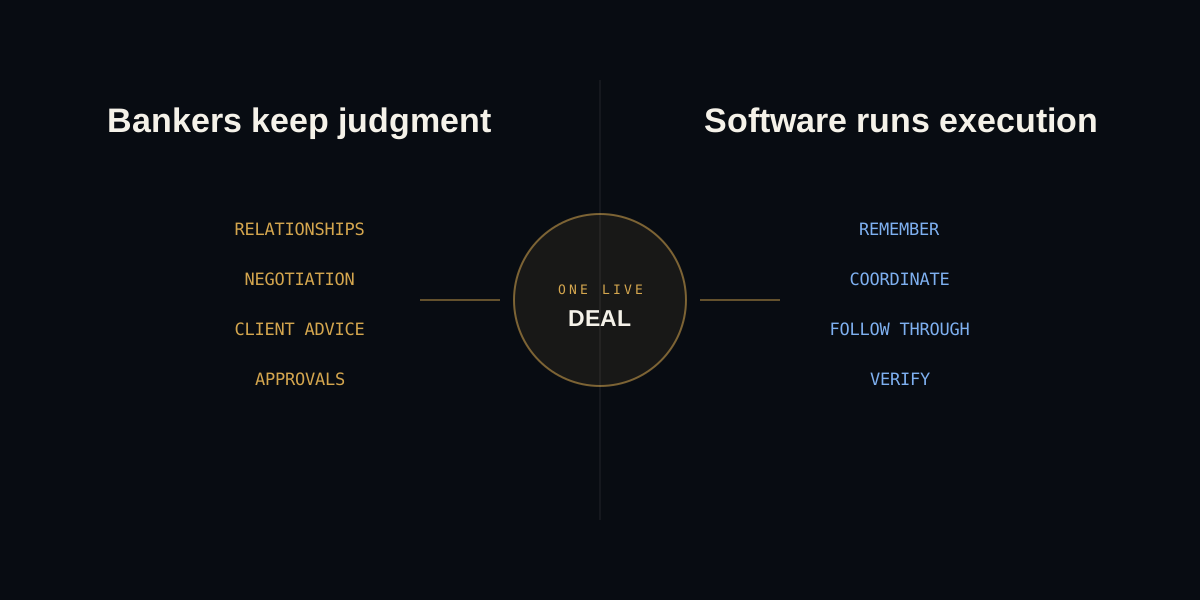
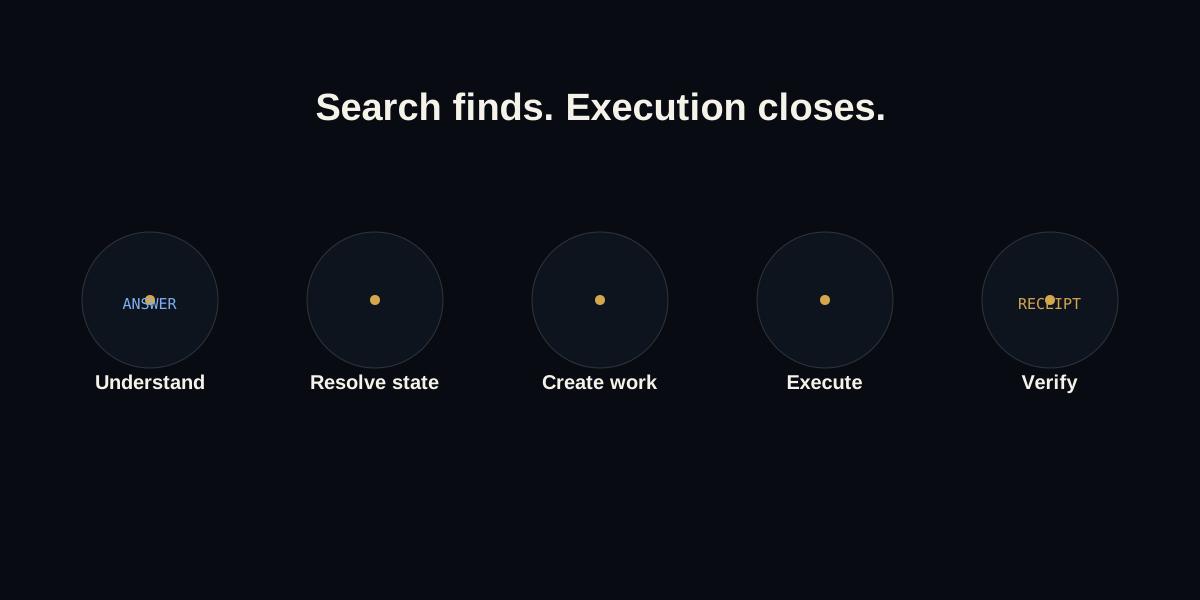
The structural difference with Arvya is that the summary is an intermediate artifact, not the end product. After the call, Arvya proposes specific field updates (this sponsor's check size, this buyer's status, this next step with an owner), each paired with the transcript excerpt that supports it and the current CRM value it would change. A person approves or rejects each one. Approved updates are written to the CRM and read back, so the receipt shows what the record actually says now, not what was sent. That last step, read-after-write verification, is the piece the “sync” integrations skip. The full workflow is described in our AI notetaker use case.
The compliance angle nobody puts on the pricing page
Deal conversations are sensitive by definition, and how a notetaker joins the call matters as much as what it produces. The Arvya Notetaker joins as a visible, named participant. Every attendee can see it is there, which keeps recording consent explicit rather than buried in a settings toggle. Just as important is what happens to the recording: raw transcripts are processed and discarded rather than stored, with only structured metadata and the evidence excerpts behind approved updates retained, in an append-only audit log. For firms whose compliance teams have rejected AI tools before, that architecture, not the summary quality, is usually the deciding factor.
The other half generic tools skip: before the call
A notetaker only helps after the meeting starts. But the highest-leverage minutes on a deal team are the ten before the call, when someone is frantically searching old email threads and half-trusted CRM notes to remember what was last shown to this buyer. Arvya treats the notetaker as one half of a loop: when a meeting hits the calendar, a sourced pre-call brief arrives (who the people are, every prior interaction, deals already shown, open commitments), built on the verified fields the notetaker's approved updates created last time. Each call makes the next brief better. A standalone notetaker, however good, cannot close that loop because it never touches the record of what came before.
When a simple notetaker is genuinely enough
Fair is fair: not everyone needs the loop. If you are a solo advisor who keeps your own notes, an operator who wants searchable meeting history, or a team that does not run its process out of a CRM at all, Granola or Otter will serve you well at a fraction of the ceremony. The verification machinery earns its keep only when the CRM is the system of record for a team, when a wrong or missing field costs someone a bad call, a duplicated outreach, or a stale buyer list.
Where the machinery does apply, the results are measurable. In one live deployment, a mid-market advisory firm on DealCloud (~25 bankers), a single seat approved 145 verified CRM updates in 60 days at a 96% approval rate, with roughly 73.5 hours of work automated as measured from completed work items. Each of those updates started life as something said on a call or written in an email, and ended as a confirmed CRM field with evidence attached. That is the honest test to run on any notetaker you evaluate this year: not “how good is the summary,” but “thirty days from now, does the system of record know what happened on this call, and can it prove it?”