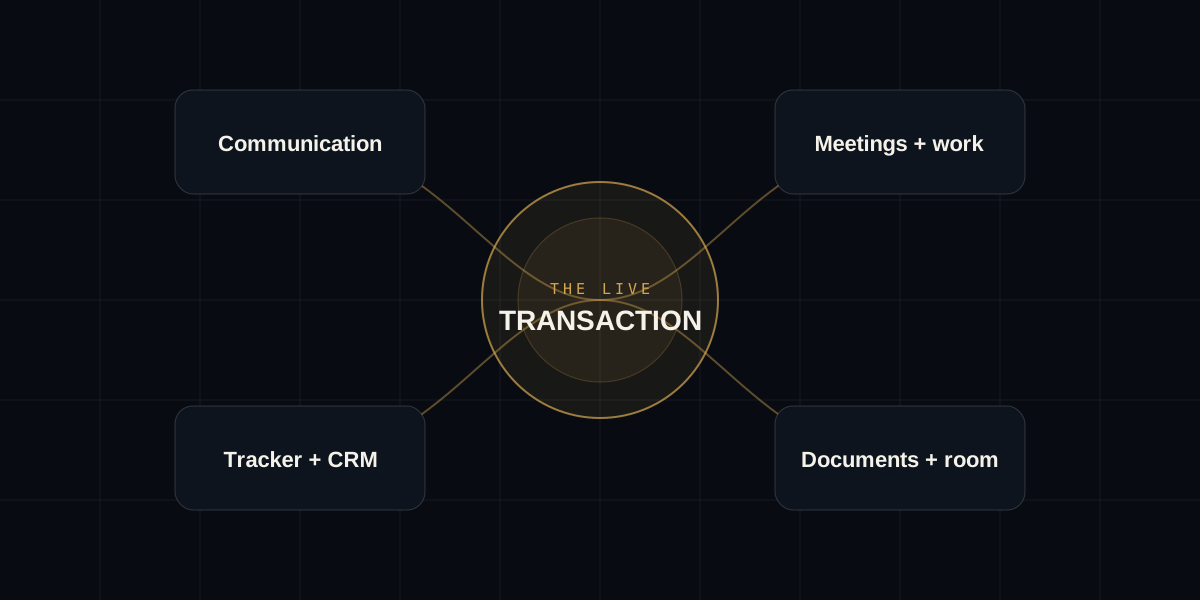
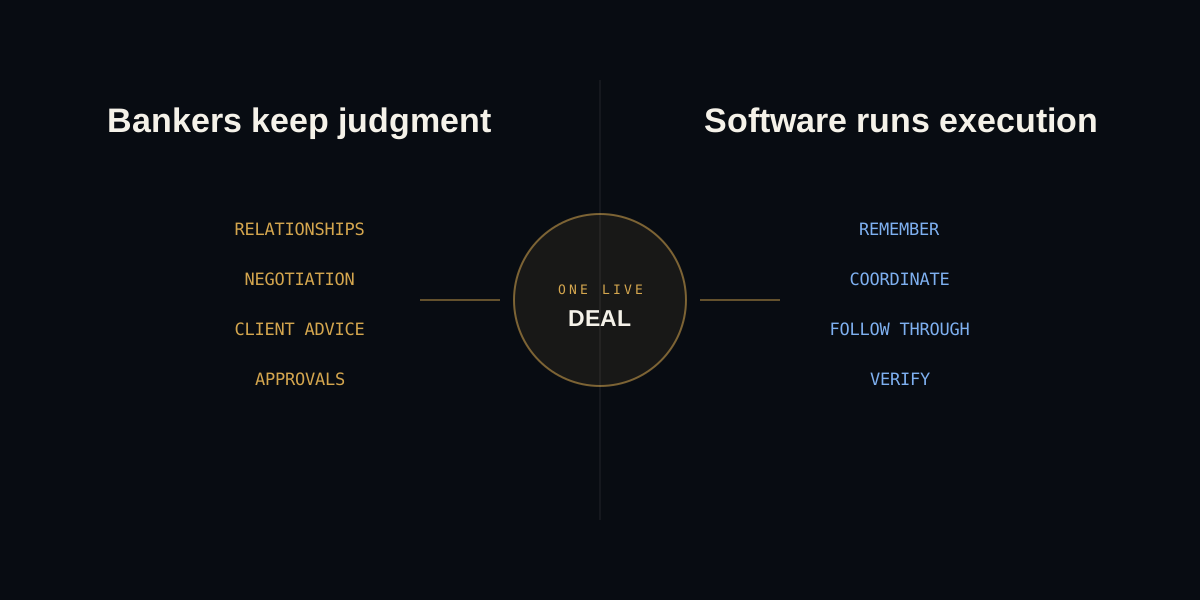
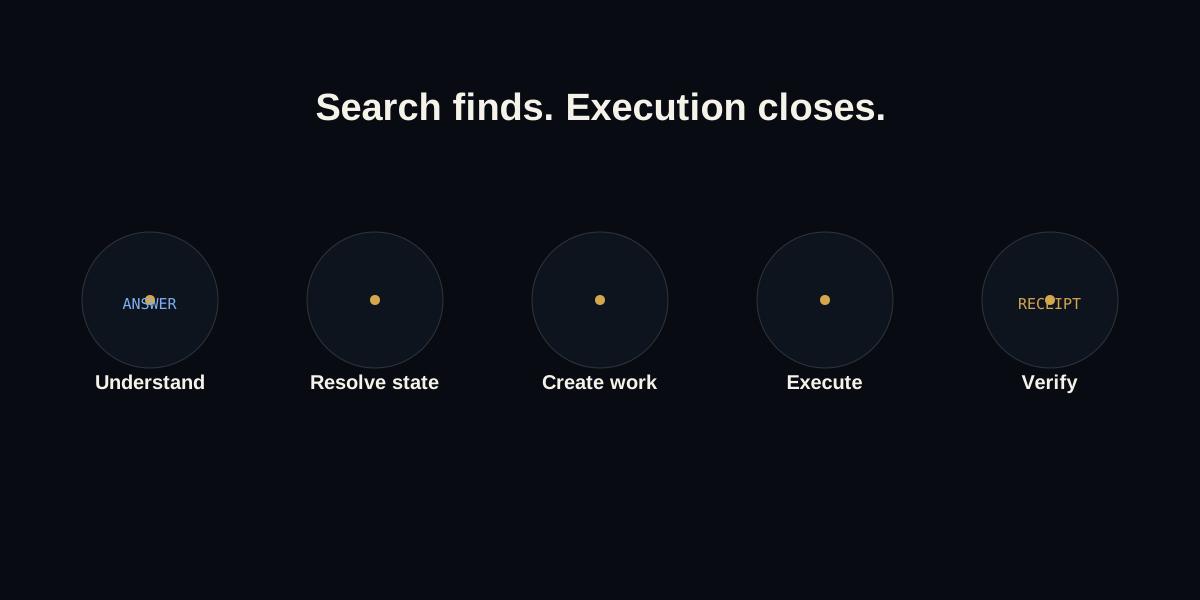
Deal firms are building their own AI agents (Copilot Studio bots, custom GPTs, internal assistants wired to the CRM) and discovering the same two failures in the same order. First, the read problem: an agent reasoning over a CRM where most records are stale does not fail loudly; it confidently repeats stale answers with perfect grammar. Second, the write problem: an agent that pushes unverified state into the system of record is a compliance incident on a timer. The fix is not a better agent. It is a verified data layer between the agents and the CRM: evidence-checked reads, approval-gated writes, receipts confirming what actually landed, and an audit trail for all of it. That layer is infrastructure, not another app: it serves the firm's own agents just as it serves Arvya's.
The agent-building wave inside deal firms
This is no longer a hypothetical. Mid-market advisory firms and PE shops now have a technically curious partner or an internal ops lead assembling agents with the tools Microsoft and OpenAI hand them for free: a Copilot Studio agent that answers questions about the buyer universe, a custom GPT that drafts outreach from CRM exports, a bot that summarizes pipeline for Monday meetings. The instinct is right. These firms run on institutional knowledge, and agents promise to make that knowledge queryable. In Intapp's 2024 survey, reducing manual data entry was the number-one thing dealmakers wanted AI for. The demand pull is real, and the builders inside these firms are responding to it.
Then the agents meet the data, and the excitement curdles. Because every one of these agents sits directly on the CRM, it can only be as good as the CRM is true.
The read problem: confident answers from stale records
Here is what the substrate actually looks like. At one mid-market advisory firm on DealCloud (~25 bankers), the measured baseline: 58% of sponsor records stale by more than a year, 77% of buyer records unmatchable to live processes, over 50,000 blank fields, and only 7% of sponsor investment-criteria fields filled. That firm is not an outlier: in Validity's 2025 survey of 602 organizations, 76% said less than half their CRM data is accurate and complete.
Point an agent at that and something worse than an error happens. A human opening a stale record brings skepticism with them: they notice the last-touched date, they sanity-check against what they remember. An agent brings none of that. Ask it which sponsors fit a $15M-EBITDA industrials deal and it will synthesize a fluent, well-structured answer from criteria fields that are 93% empty and contacts who changed firms a year ago. The failure is invisible precisely because the output is articulate. Stale data in a database is a dormant liability; stale data spoken by an agent becomes an answer someone acts on.
The write problem: agents that touch the system of record
The read problem embarrasses you. The write problem is the one that should scare you. The obvious next step for any internal agent builder is closing the loop: letting the agent update the CRM with what it learned. But in a regulated deal business, the CRM is not a scratchpad. It feeds client reporting, conflicts checks, and the firm's record of who knew what when. An agent writing unverified inferences into that system, with no evidence trail and no human decision point, creates records nobody can stand behind, and no way to distinguish them from records a person vouched for. When a regulator, a client, or a court asks “why does this record say the sponsor passed,” the answer cannot be “a language model inferred it.” Most firms sense this and quietly leave their agents read-only, which caps the value at answering questions about data that was already stale.
What a verified data layer actually does
The structural answer is a layer between agents (anyone's agents) and the system of record, enforcing four guarantees:
- Evidence-checked reads. Facts served to an agent carry provenance (where each value came from, when, and what supports it), and records get checked against outside sources like SEC filings and firm websites, so drift is caught rather than compounded into answers.
- Approval-gated writes. No agent writes to the CRM directly. Proposed updates queue with their evidence attached, and a human approves or rejects each one. Every record that changes has a person who decided it should.
- Receipts. After an approved write, the layer reads the record back from the CRM and confirms what actually landed. “The agent said it updated the record” and “the record is updated” become the same verified statement.
- An audit trail. Every proposal, decision, write, and read-back is logged: the difference between an AI experiment and infrastructure a CCO will sign off on.
This pattern holds up under real use. In one live deployment, 60 days of daily use on a single seat produced 145 verified CRM updates approved at a 96% approval rate, with 40 sponsor records enriched in one week from SEC filings and firm websites, every write human approved, every one receipted. The details of the approval-first design are in how Arvya is different, and the in-tenant deployment model in security.
Why vendor-neutral is a requirement, not a preference
A trust layer only works if it sits above whatever system of record the firm actually runs, and deal firms run everything. DealCloud dominates one slice of the market, Salesforce another, and plenty of firms live on Microsoft Dynamics. A trust layer welded to one CRM is just a feature of that CRM, and it inherits that vendor's incentive to keep you locked in rather than to keep your data true. Arvya runs live against Salesforce and DealCloud today, with Microsoft Dynamics 365, Affinity, and PitchBook (on customer-owned credentials) configured per deployment. The layer's guarantees are the product; the CRM underneath is a detail. The full argument is in why vendor-neutral matters.
Infrastructure, not another app
The framing that matters most for anyone building agents inside a firm: this layer is not competing with your Copilot Studio bot. It is what makes your bot safe to ship. The same verified memory that powers Arvya's own agents(pre-call briefs, buyer lists, coverage reports) is the substrate your internal agents can read from and propose writes through, with the same evidence, approvals, and receipts applied uniformly. Keep building agents; the wave is correct. But sequence it honestly: an agent stack is a pyramid, and the bottom layer is data the agents can trust. Firms that build the trust layer first get compounding returns from every agent they add on top. Firms that skip it get fluent answers from records that stopped being true a year ago, delivered faster than ever.