For the past decade, private equity firms have been trying to make generic CRM platforms work for deal management. Salesforce, Dynamics 365, and the rest. The pitch was always the same: one platform to manage all your relationships, pipeline, and communications. Just configure it to your needs.
The results have been consistently disappointing. Industry data suggests that CRM adoption rates at PE firms hover between 20 and 40 percent. For many firms, the number is even lower. The CRM becomes a reporting tool that senior leadership checks quarterly, while the deal team continues to do the real work in Outlook, Excel, and their own notes.
In 2026, something is finally changing. PE firms are abandoning the "configure a generic CRM" approach and moving toward purpose-built deal intelligence platforms. This is not a technology trend. It is a recognition that the fundamental assumptions behind generic CRM design do not match how private equity actually works.
Why Generic CRMs Fail in Private Equity
The root cause is not bad technology. Salesforce is an extraordinarily capable platform. The problem is a fundamental mismatch between how generic CRMs model the world and how PE firms actually operate.
The Contact vs. Deal Problem
Generic CRMs are built around contacts and accounts. Every interaction is logged against a person or a company. PE deal workflows are built around deals. A single deal might involve 40 different buyers, each with multiple contacts, interacting with multiple members of your deal team, across multiple stages of a multi-month process. The contact-centric model of a generic CRM creates friction at every step.
When your VP asks "where do we stand with the Apollo deal?" the answer requires synthesizing information from dozens of contacts, hundreds of emails, and weeks of activity. A generic CRM can tell you the last time someone logged a note on the Apollo opportunity record. That is not the same thing.
The Data Entry Burden
CRM adoption lives or dies on data quality, and data quality depends on data entry. In a generic CRM, the burden of keeping records current falls on the deal team. After a call with a buyer, someone needs to log the interaction, update the opportunity stage, and add notes about next steps.
In practice, this rarely happens consistently. Bankers and PE professionals are busy people working on time-sensitive deals. When the choice is between updating a CRM record and preparing for a client call, the client call wins every time. Over weeks and months, data quality degrades, fewer people trust the system, and adoption spirals downward.
This creates a vicious cycle: low adoption leads to poor data quality, poor data quality makes the system less useful, and a less useful system drives adoption even lower. Eventually, the CRM becomes an expensive piece of shelf-ware that exists mainly to satisfy a box-checking exercise.
The Context Gap
Even when data is entered diligently, generic CRMs capture data points without capturing context. A CRM record might show that you had a meeting with a portfolio company CEO on Tuesday. What it cannot capture is the nuance of what was discussed, the concerns that were raised off the record, or the follow-up action items that emerged from a sidebar conversation after the formal meeting ended.
In PE, deals are won and lost on context. Understanding why a buyer passed is as important as knowing that they passed. Knowing that a management team is concerned about earnout structures is as valuable as knowing the bid price. Generic CRMs are not designed to capture this level of qualitative intelligence.
The Real Cost of Low CRM Adoption
When CRM adoption is low, the costs show up in unexpected places:
- Lost relationships when people leave: When a partner or VP departs, their relationships and deal context leave with them. Without a system that captures this information automatically, the firm's network shrinks with every departure.
- Duplicated outreach: When multiple team members reach out to the same contact independently because nobody knew the relationship already existed, it damages the firm's credibility and wastes time.
- Invisible pipeline: Leadership cannot make informed resource allocation decisions when they cannot see the true state of the pipeline. Deals fall through the cracks, and opportunities for cross-selling or introductions are missed.
- Slow onboarding: Every new hire spends weeks building a mental map of the firm's relationships and deal history. In a competitive market for talent, slow onboarding means slower time to productivity.
- Missed timing: In a market where 80 percent of executives plan to maintain or increase dealmaking, missing the right moment to engage a target can mean losing the deal to a faster competitor.
What Purpose-Built Deal Intelligence Looks Like
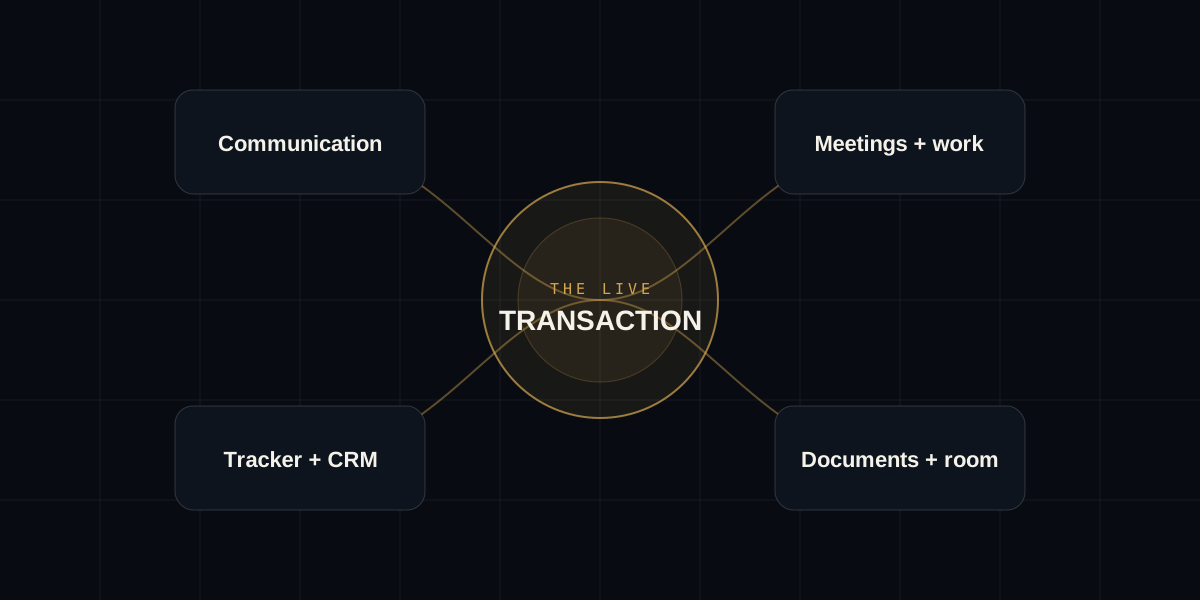
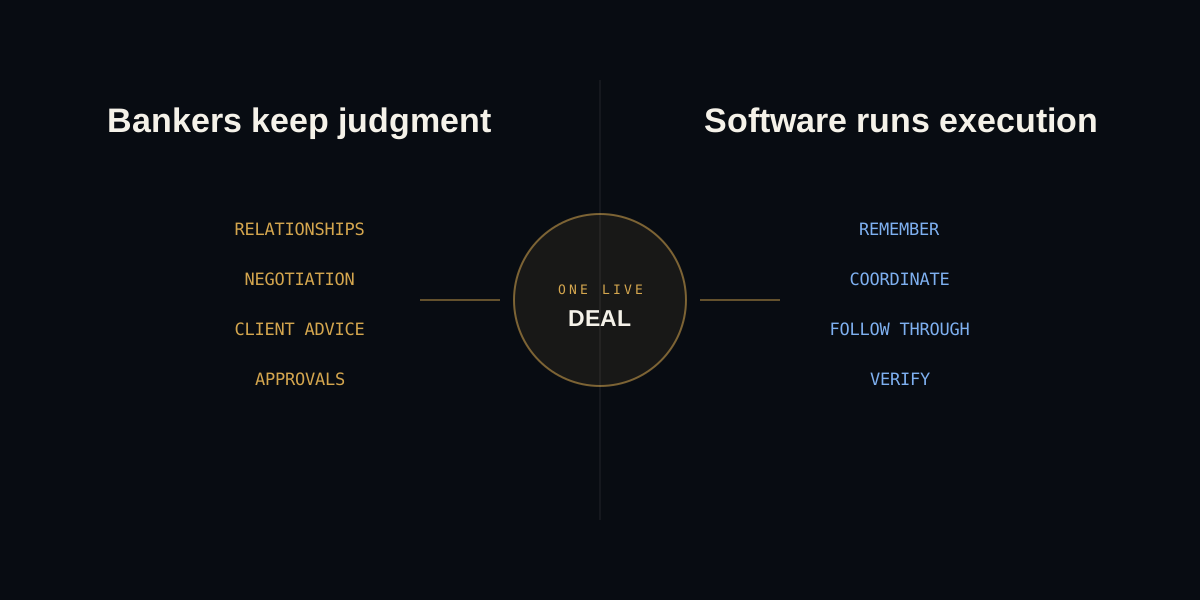
The new generation of deal intelligence platforms addresses these problems by flipping the CRM model on its head. Instead of requiring deal teams to enter data into the system, these platforms capture data automatically from the tools teams already use: email, calendar, documents, and messaging.
Key characteristics of modern deal intelligence platforms:
- Zero manual data entry: Interactions are captured automatically from email and calendar. The system knows who talked to whom, when, and about what, without anyone logging a note.
- Deal-centric organization: Information is organized around deals, not contacts. When you ask about a deal, you get the full picture: all buyers, all interactions, all status updates, all feedback.
- AI-powered synthesis: Rather than presenting raw data, the system synthesizes information into actionable intelligence. "What happened on the Meridian deal this week?" gets a narrative answer, not a list of CRM records.
- Embedded in existing workflows: The best platforms live inside Outlook, Teams, or whatever tools the deal team already uses. There is no separate application to log into.
- Continuous learning: The system gets smarter over time, learning the firm's terminology, deal stages, and communication patterns without manual configuration.
The AI Native Advantage
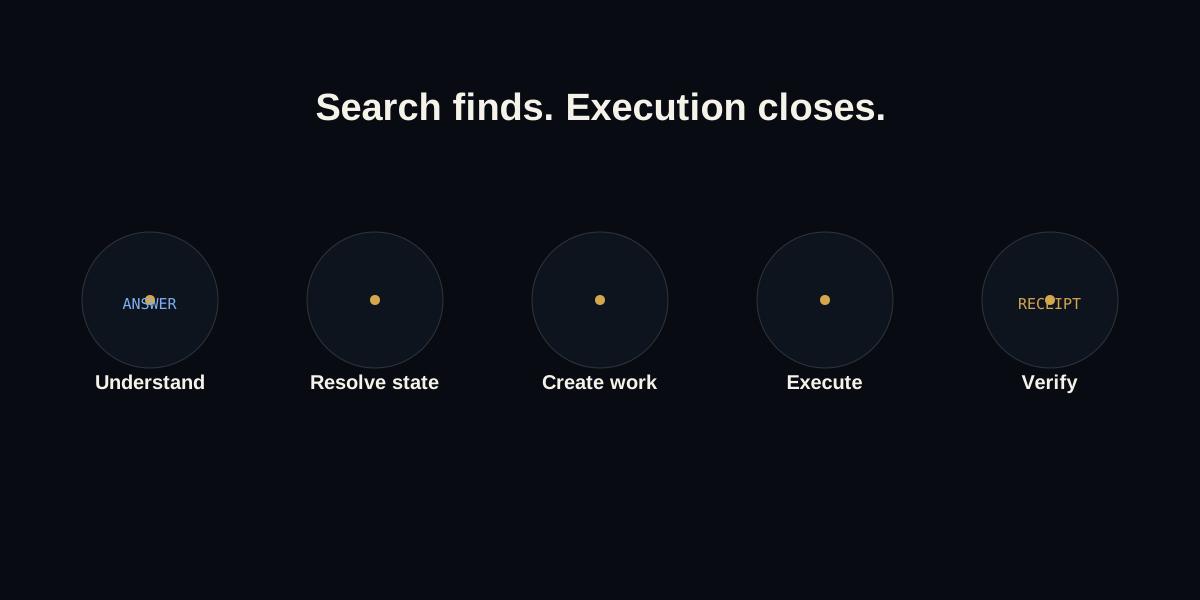
The most important shift in the CRM market is not just moving from generic to purpose-built. It is moving from database-centric to AI native. Traditional CRMs, even purpose-built ones, are fundamentally databases with reporting layers. You put data in, you get reports out.
AI native platforms operate differently. They do not just store and retrieve information. They understand it. They can read an email thread and determine that a buyer's enthusiasm is waning based on changes in tone and response time. They can identify that a contact mentioned at a conference three months ago is now the decision-maker on a live deal. They can draft a follow-up email that incorporates the full context of every prior interaction.
This is the gap that AI native platforms are filling. Not just better data storage, but genuine intelligence about the deals your firm is working on.
How to Evaluate CRM Fit for Your Firm
If your firm is considering a move away from a generic CRM, here are the questions that matter most:
- What is your current adoption rate? If it is below 50 percent, the problem is almost certainly the tool, not the team. People do not avoid useful tools.
- Where does your deal team actually work? If the answer is Outlook and Excel, the right CRM meets them there rather than asking them to go somewhere else.
- What happens when someone leaves? If significant relationship and deal knowledge leaves with them, your current system is not capturing enough context.
- How long does it take a new team member to get up to speed on an active deal? If it is more than a few hours, there is an institutional memory problem.
- Can leadership see the true state of the pipeline without asking? If pipeline visibility requires manual report-building, the system is not serving its purpose.
The firms that are moving first are finding that the switch from a generic CRM to a purpose-built deal intelligence platform is not just a technology upgrade. It changes how the team operates, how quickly new members contribute, and how effectively the firm retains and leverages its collective knowledge.
The era of trying to make Salesforce work for PE is ending. The firms that recognize this and move to tools built for how they actually work will have a meaningful competitive advantage in a market where deals are bigger, faster, and more competitive than ever.
About Arvya: Arvya is an AI analyst platform that embeds inside Outlook and integrates with Salesforce, DealCloud, Teams, and OneDrive. It captures deal activity automatically, builds a continuously updated knowledge base per deal, and lets team members ask natural-language questions about any active deal. Request a demo to see it on your workflow.