Almost every firm in private markets runs on its CRM, and almost none of them trust it. That is not a contradiction anyone admits out loud, but the data is blunt about it. In Validity's 2025 study of CRM data management, 90% of organizations called the CRM the cornerstone of their operations, and 76% said less than half of the data inside it is accurate and complete.
The thing everyone depends on is the thing almost no one believes. That gap is the whole story, and it is not a discipline problem. It is a design problem.
The trust gap is real, and it is expensive
The same study found that 37% of organizations lost revenue as a direct result of poor CRM data, and that companies lose an average of sixteen deals a quarter to bad data. Gartner has long put the cost of poor data quality at roughly $12.9 million per organization per year. These are not rounding errors.
The most telling number is about perception. Sixty-eight percent of executives believe their teams have adequate data, while the people under them spend around thirteen hours a week hunting for basic information, and more than a third quietly admit to fabricating data to tell leadership what it wants to hear. The record looks fine from the top. It is hollow underneath.
It rots because decay is physics, not laziness
Start with the uncomfortable baseline: even a perfect CRM does not stay perfect. B2B contact data decays at roughly 22.5% a year (about two percent every month) as people change roles, firms reorganize, and relationships move. Financial-services data is estimated to rot even faster. A record that was accurate at close is partly wrong within a quarter, with no one having done anything wrong.
Now layer a deal on top of that. A live mandate changes daily: a new buyer enters, a contact goes quiet, a term shifts, a relationship warms. The CRM was never built to keep up with that on its own. It waits for a human to come tell it what happened.
The adoption death spiral
Here is the model every firm is actually running: it asks the most expensive, busiest people in the building to hand-transcribe what just happened in their email and their meetings into a system they do not trust, after the fact, with no proof attached. Predictably, they do not. CRM is the single most notorious adoption failure in enterprise software, and the cause is not mystery. It is manual entry. Sales professionals spend hours every week on data entry and a shrinking fraction of their time actually selling.
So the spiral turns. Manual entry leads to low usage. Low usage leads to incomplete data. Incomplete data leads people to keep the real picture in shadow spreadsheets next to the CRM. And once the truth lives in the spreadsheet, the CRM becomes optional: an expensive system of record that nobody treats as the record. The most common complaints about the category leaders in private markets are not about features; they are about heavy manual entry and interfaces deal teams avoid.
Why "try harder" and "more fields" always fail
Every fix of the last decade has attacked the symptom instead of the cause. More required fields. More training. More dashboards that shame people into compliance. Each one makes the data-entry burden heavier, which makes adoption worse, which makes the data worse. You cannot nag your way out of a structural problem. As long as a human being is the data-entry layer, the record will rot at the speed the humans get busy, which, on a live deal, is always.
What actually fixes it: capture at the source, approve in one click
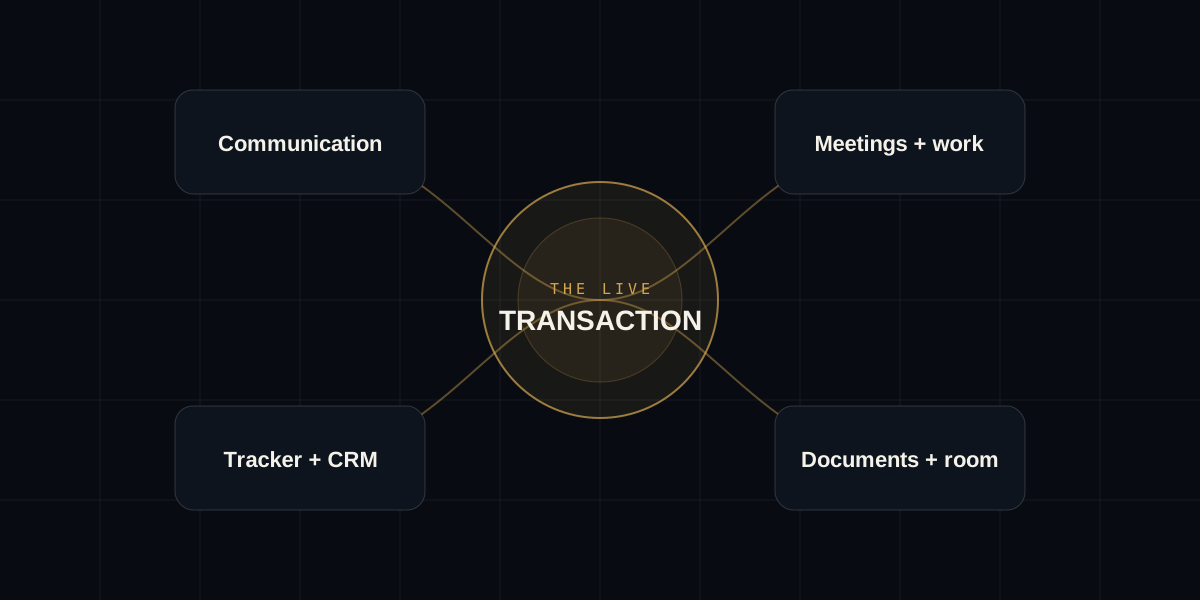
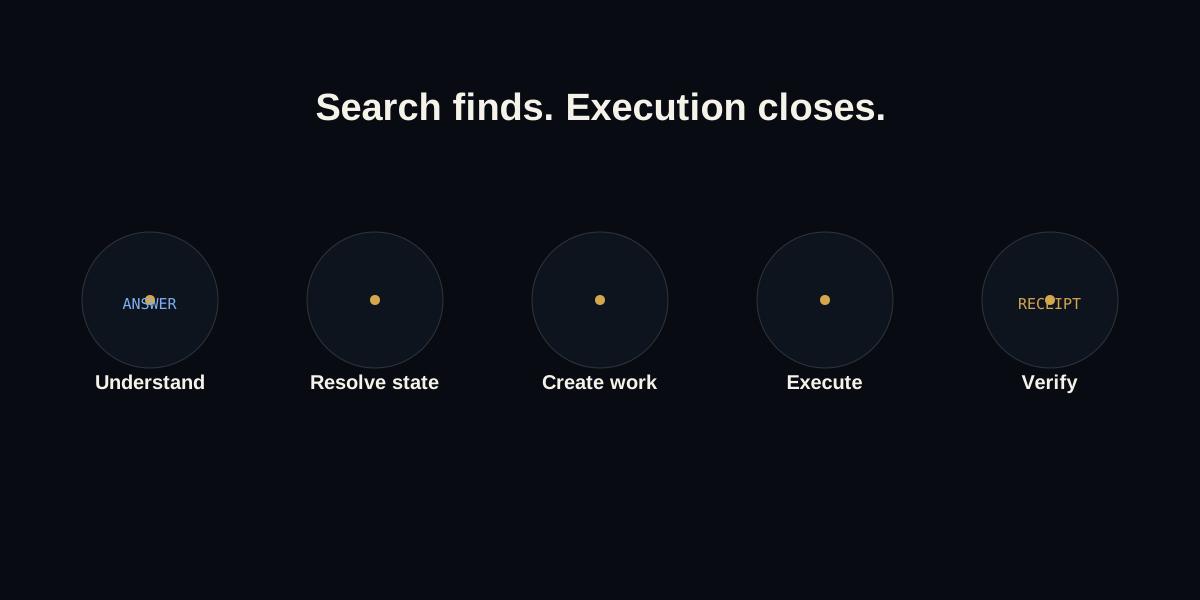
The fix is to invert the loop. Stop asking people to type the record and start assembling it from where the activity already happens: the email, the calendar, the meeting, the data room. Attach evidence to every fact, so a claim in the CRM points back to the exact message or document it came from. Then reduce the human's job from transcription to judgment: not "type what happened" but "this looks right, approve." A one-second yes instead of a fifteen-minute chore.
- Capture, do not request. The system watches the deal activity and proposes the update. The human never starts from a blank field.
- Evidence on every fact. A value with no source is a liability. A value that cites the email it came from can be trusted in one glance.
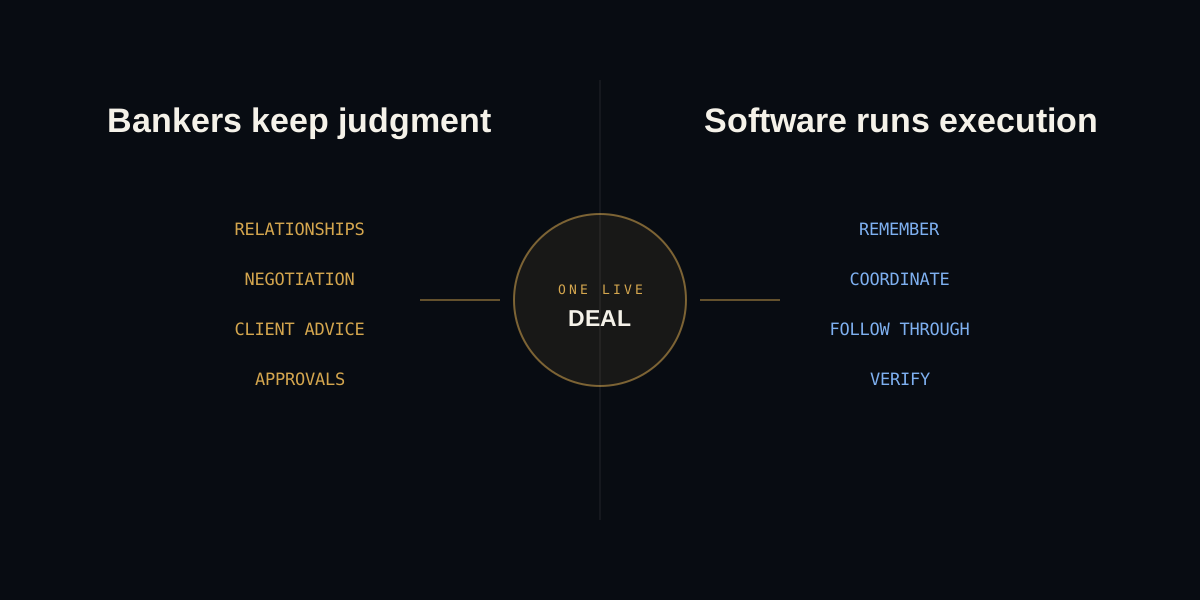
- Approval, not autonomy. Nothing writes to the system of record without a person confirming it. That is what makes the output safe in a regulated business.
Vendors in the relationship-intelligence space report that automatic capture alone saves deal teams well over a hundred hours per person each year. Take the specific numbers as their marketing; take the direction as obviously right. When trusted data is a byproduct of work people already do, adoption stops being a fight.
A CRM becomes the system of record only when people believe what is in it. Belief does not come from enforcement. It comes from evidence. That is the layer we are building at Arvya: a record of the deal that assembles itself, cites its sources, and asks a human to approve before anything is written. Not a tidier database. A record your team can actually trust.