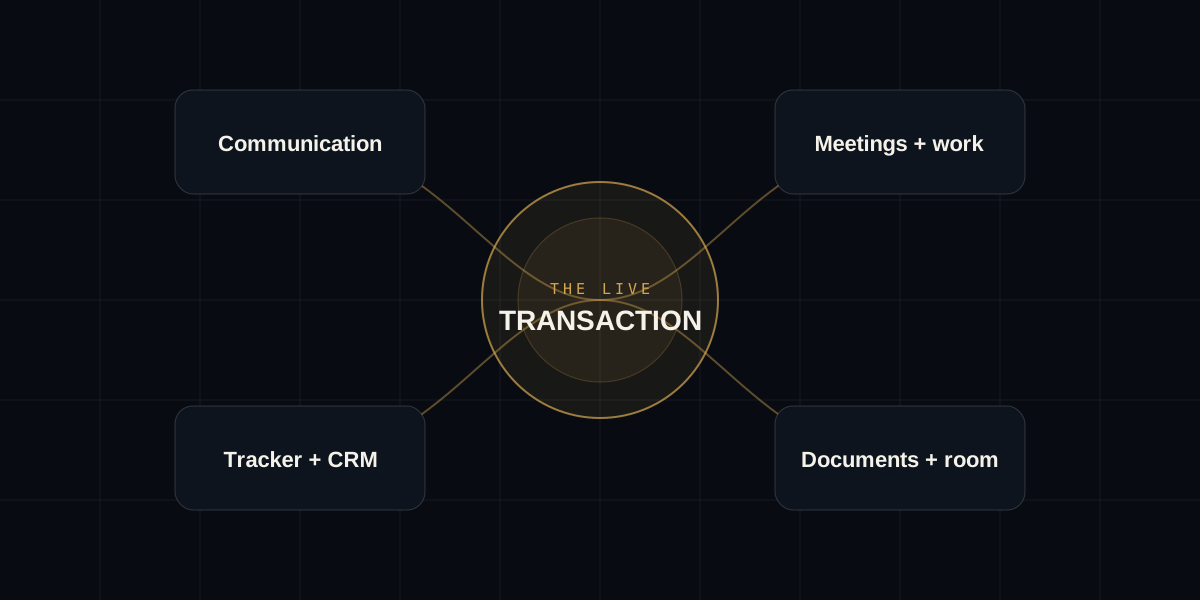
A live transaction is one thing in the real world and six different things in software. Outlook sees messages. The CRM sees firms, contacts, and opportunities. Excel sees rows. The calendar sees meetings. The VDR sees files and permissions. A task tool sees boxes someone remembered to create.
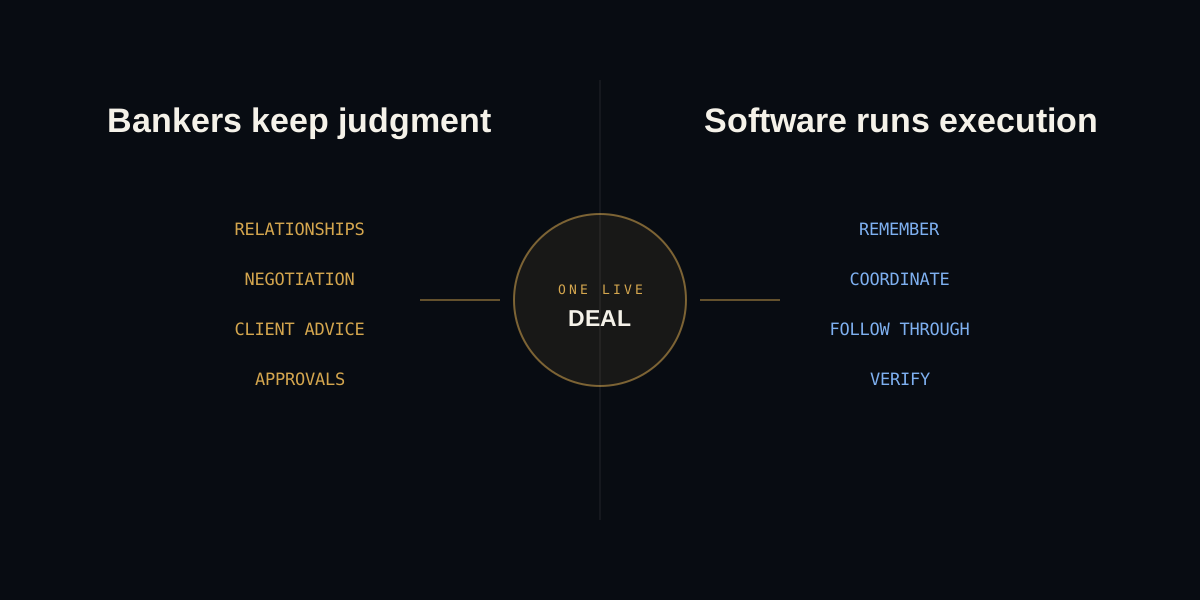
The deal team sees the whole transaction because people continuously reconstruct it. They read the thread, remember the last call, update the tracker, check the NDA, ask who owes an answer, and tell the MD what changed. The software stores artifacts. The banker still runs the process.
The primary object determines the product
Every system is shaped by the object it treats as primary. A CRM is excellent at storing structured records because the record is its center of gravity. A VDR is excellent at controlled document exchange because the room is its center. Neither can reliably answer the operating question: where does the deal stand, what changed, what should happen next, and did it happen?
Those questions require the transaction itself to become a software object. The object must connect buyers, firms, people, communications, meetings, documents, questions, permissions, deadlines, decisions, approvals, and verified actions. An email matters because of the state it changes inside that object.
State is more than a status field
Consider the sentence “please send this over.” The correct next action could be an NDA, a CIM, a management presentation, a diligence response, a revised model, or nothing at all. The meaning depends on who wrote it, which deal they are on, what they are permitted to receive, what version is current, and what the firm has approved.
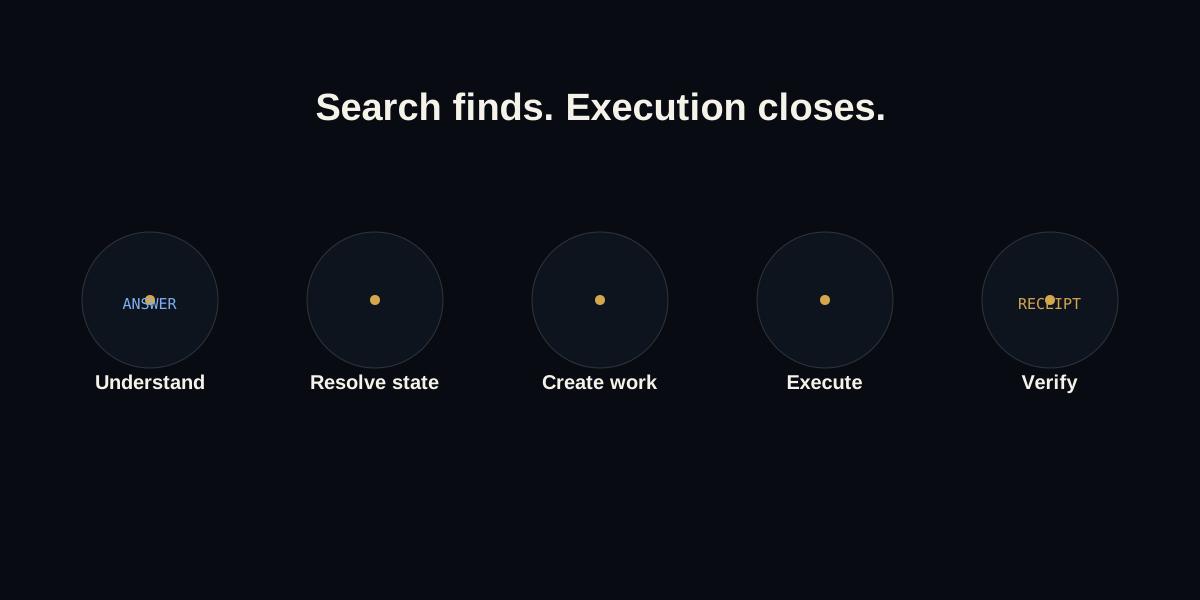
A transaction state engine resolves that context before work is created. An executed NDA can make a buyer eligible for a document. A management-meeting request can create calendar coordination and briefing work. A bid can update a grid and flag a decision. The state transition, not the message alone, determines what happens next.
The old systems become projections
Making the transaction primary does not require ripping out DealCloud, Salesforce, Datasite, Intralinks, Excel, or Outlook. Those systems continue to do what they are good at. Their role changes: they become permissioned views and destinations around one live transaction state rather than competing authors of truth.
An approved buyer-stage change can update the tracker and CRM. A verified NDA can prepare a controlled document release. A completed meeting can create notes, actions, and a client-update line. Each surface stays useful because it is synchronized from the work, not because a person typed the same fact repeatedly.
Why this becomes firm memory
When execution runs through a cited transaction object, the outcome of the work becomes reusable. The next mandate can know why a buyer passed, which sponsor asked the same diligence question, which relationship is actually warm, and what slowed the last process. Memory is no longer a documentation project. It is a byproduct of running the deal.
That is the product direction behind Arvya: a permissioned Deal Brain and transaction state engine, a shared workspace for people and agents, and a closed execution loop that keeps the existing stack aligned. The shortest version is simple: Arvya turns the transaction into software.