Scan the job boards of lower- and middle-market private equity firms right now and a pattern jumps out. AI Enablement Associate. Director of AI Initiatives. Head of AI Value Creation. Forward-Deployed AI Engineer, Portfolio Operations. The listings read almost identically: map workflows across portfolio companies, prioritize use cases by ROI, build or configure AI tools, integrate systems and data sources, drive adoption, measure outcomes, create a repeatable playbook.
The hiring wave is rational. Sponsors are sitting on extended hold periods, exits are slow, and margin expansion has to come from somewhere. The largest firms are getting embedded AI engineering support through direct partnerships with frontier labs. The middle market is responding the way it always does: hire someone smart and hand them the mandate.
Here is the problem with the mandate: it is four jobs wearing one title.
What the role actually requires
Read that job description again as an operating plan instead of a listing. Across a portfolio of eight to fifteen companies, one person is expected to:
- Diagnose: sit with each management team, map how work actually flows, and find the use cases that survive contact with messy data and busy people.
- Build: configure agents, wire integrations into whatever CRM, ERP, helpdesk, and document stack each company happens to run, and get the human-review loop right.
- Drive adoption, which is a political job, not a technical one. Every portfolio company has a skeptical ops lead and a team that has seen tools come and go.
- Measure and report: baselines, time saved, error rates, EBITDA impact credible enough to put in front of an investment committee.
Any one of these is a full-time job at a single company. The AI enablement hire is asked to do all four, across a dozen companies, simultaneously, usually while also fielding every AI vendor pitch that lands on the partners' desks. The predictable result is triage: two or three flagship portcos get real attention, everyone else gets a lunch-and-learn and a license to a copilot nobody configures.
Strategy is no longer the bottleneck. Capacity is.
Two years ago, the constraint in portfolio AI was knowing what to do. That era is over. The use-case catalogs are public, the tooling is mature, and most operating partners can name the five workflows that matter at each company. The constraint now is implementation capacity: the hands-on work of mapping one specific workflow at one specific company, connecting its specific systems, and sitting with its specific team until the thing is adopted.
This is why so many portfolio AI programs stall in the same place: an excellent kickoff, a strong list of prioritized use cases, one or two pilots at the biggest portco, and then nothing, because the person carrying the program has run out of hours.
The model that works: enablement lead plus implementation pod
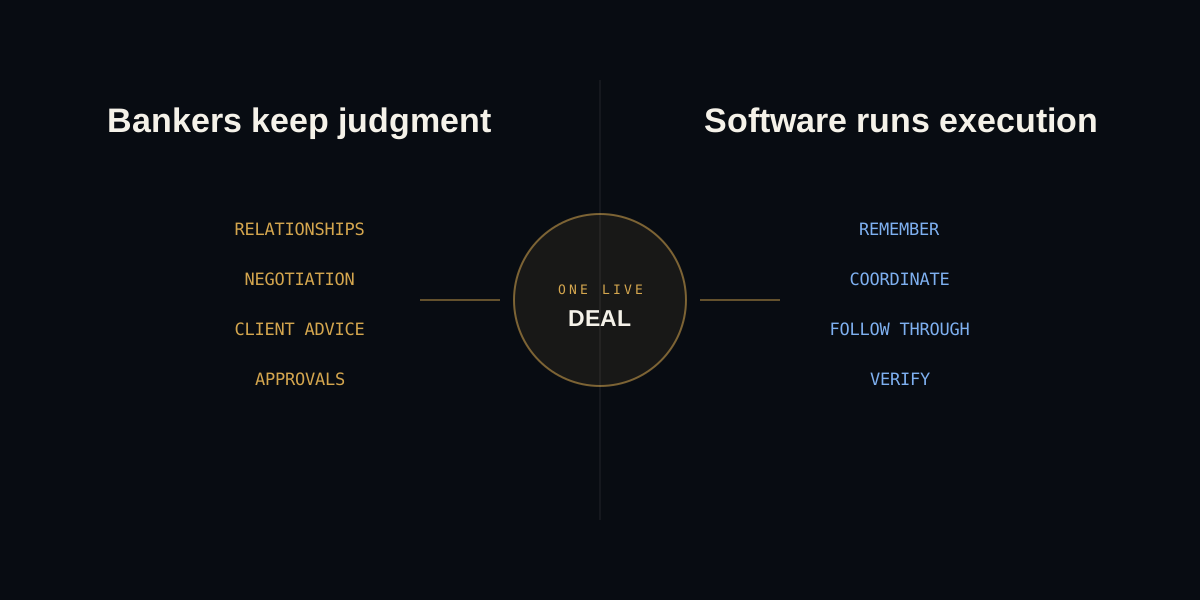
The firms getting real portfolio-wide traction are converging on a two-part structure. The internal AI lead owns strategy, prioritization, vendor judgment, and the relationship with each management team. Behind them sits implementation capacity (internal or external) that does the ground-level work in parallel: one pod at company A wiring support triage, another at company B on finance document intake, another at company C on sales follow-up from call notes.
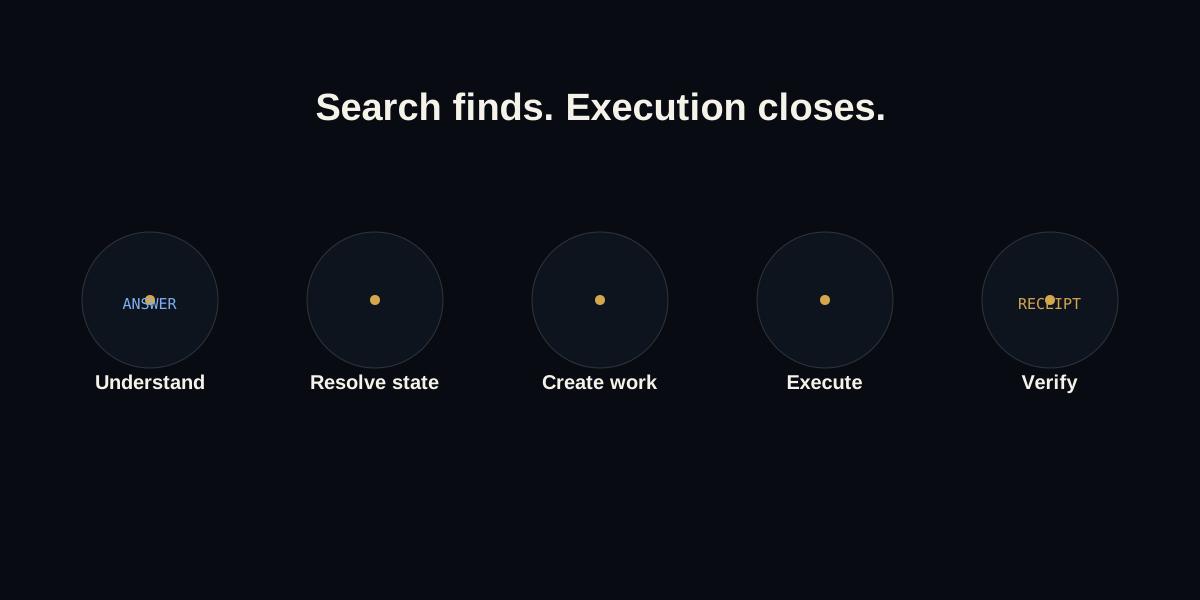
The playbook per company is deliberately small: one workflow, live in 30 to 45 days, with a human approving anything consequential and a measured baseline. Small wins compound across a portfolio in a way one flagship project never does. Ten companies each saving a few hundred hours a year on one workflow is a better program (and a better exit story) than one company with an impressive pilot and nine with a slide.
- The sponsor gets leverage: the enablement lead multiplies instead of drowning.
- The portco gets speed: a deployed workflow this quarter instead of a roadmap item next year.
- The fund gets a repeatable asset: every deployment hardens the playbook (integration patterns, adoption tactics, measurement templates) that makes the next portco faster.
What to ask before adding capacity
Whether the capacity is a hire, a lab partnership, or a firm like ours, the evaluation questions are the same. Does the work happen inside the portco's existing systems, or in a new tool the team must adopt cold? Is there a human review step on anything client-facing or financial? Is there a baseline measurement before the build starts? And is the engagement scoped to a workflow with an owner, or to a "transformation" with a steering committee? The first answers predict production. The second predict a very good demo.
About Arvya: Arvya works with private equity sponsors and their portfolio companies as an applied-AI implementation team: one measurable, human-reviewed workflow per company, built into the systems each company already runs. See how engagements work or book a working session.