MCP, the Model Context Protocol, is the open standard that lets AI assistants like Claude and Microsoft Copilot connect to external tools and data instead of answering from what they were trained on. For deal teams, it matters for one reason: bankers already use these assistants every day, but the assistants know nothing about the firm's deals. The direction Arvya is building with design partners is to expose the firm's verified deal memory over MCP, so the assistant your team already pays for can answer “where are we with the buyer list on this mandate” from cited, permissioned, audited firm memory, rather than from a stale export someone pasted into a chat window. The memory layer underneath is live today; the MCP surface on top is in development.
What MCP actually is, without the jargon
Think of MCP as a standard plug. Before it, every connection between an AI assistant and a data source was a custom, one-off integration, the same situation enterprise software was in before APIs became standard. MCP defines one common way for an assistant to discover what data and actions a system offers, request them with proper authentication, and get structured answers back. Anthropic published it as an open standard, and it has since been adopted across the major assistants, including Microsoft's Copilot ecosystem. The practical consequence: a firm can connect one well-built MCP server to every assistant its people use, instead of waiting for each vendor to build each integration.
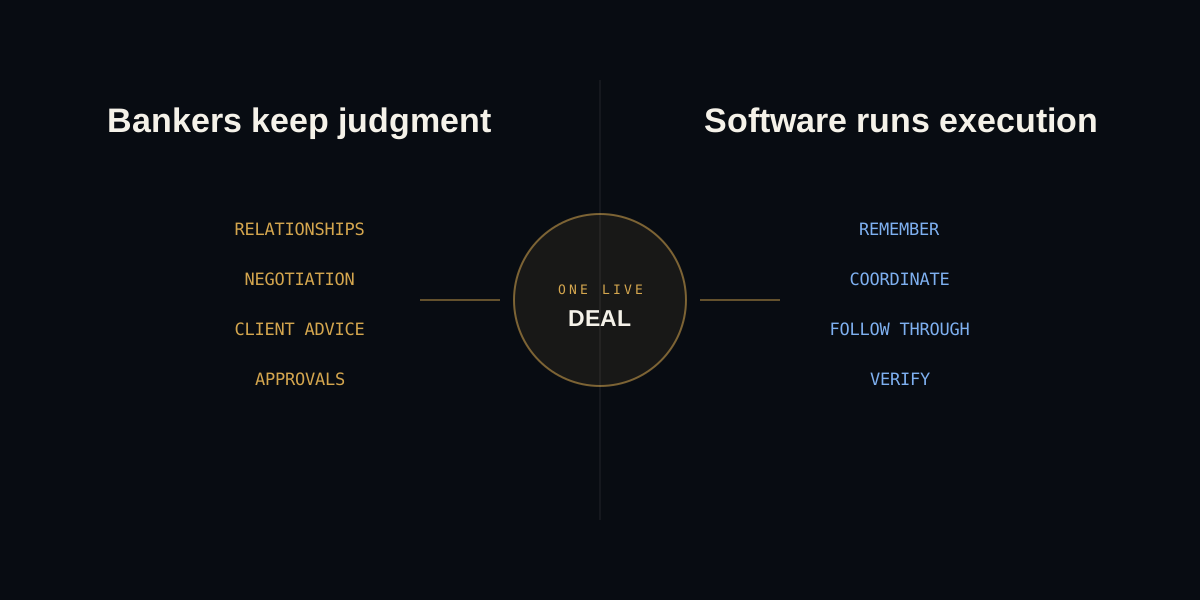
For a banker, the mental model is simple. Today, asking Copilot about a live process is like asking a smart new hire on their first morning: articulate, confident, and completely uninformed about your deals. MCP is how that hire gets access to the file room, with a badge, a permission list, and a log of everything they pulled.
The current state: capable assistants, empty of context
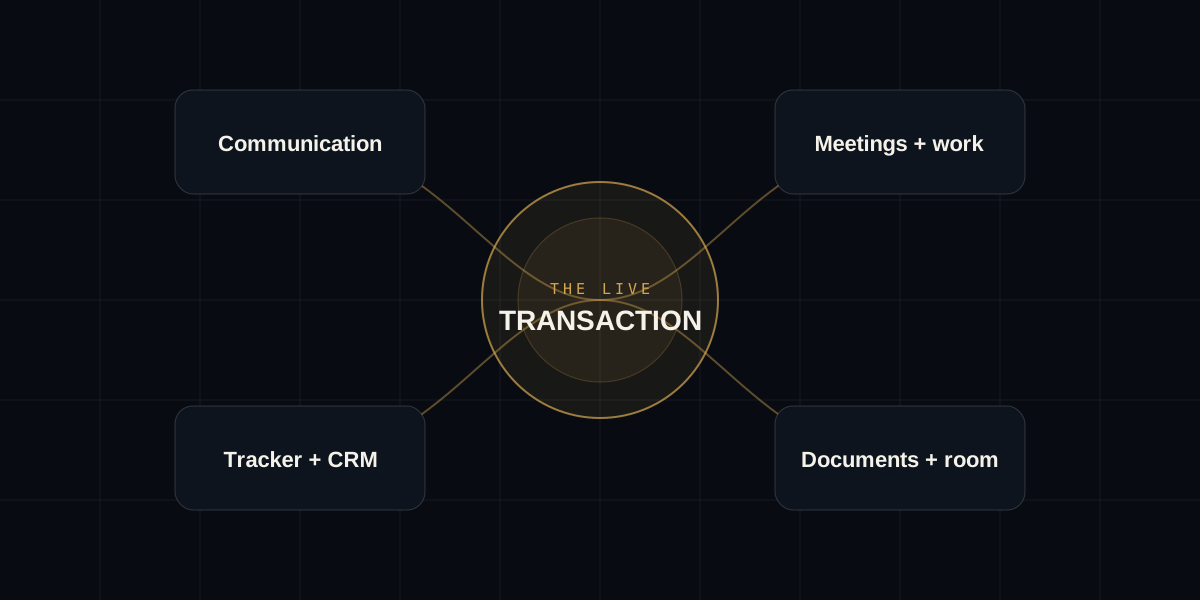
Deal professionals did not wait for permission to use AI. They draft with ChatGPT, summarize with Claude, and live inside Copilot because it ships with the Microsoft tenant. What they cannot do is ask any of those assistants a question about the firm's own work, because the firm's work lives in DealCloud, Salesforce, inboxes, and trackers the assistant cannot see. So people improvise, and the improvisation is worse than nothing: exporting a pipeline report to paste into a chat, feeding an assistant last month's buyer tracker, retyping CRM records into a prompt. The assistant then answers fluently from data that is stale, partial, and stripped of any record of where it came from.
And the underlying data was rarely trustworthy to begin with. In Validity's 2025 study of 602 organizations, 76% said less than half their CRM data is accurate. At one mid-market advisory firm on DealCloud (~25 bankers), the baseline before any automation was 77% of buyer records unmatchable to live processes and only 7% of sponsor investment-criteria fields filled. Pipe that into an assistant over MCP and you have not built firm intelligence. You have built a machine for distributing errors confidently.
Why verification, permissions, and audit are the hard part
The MCP connection itself is the easy 10%. Anyone can stand up a server that lets Claude query a CRM. The hard 90% is making the answers safe to act on in a regulated, conflict-walled business:
- Verification. An assistant reading unverified firm data does not just repeat errors. It launders them, restating a wrong check size or a dead contact with total fluency. Every fact the assistant serves needs a source, a date, and a human approval behind it.
- Permissions. Deal firms run on ethical walls and need-to-know. An assistant that answers any employee's question from any deal's data is not a productivity tool; it is a compliance incident. Access over MCP has to respect the same walls the underlying systems enforce.
- Audit. When a client, a regulator, or an internal review asks “where did this number come from and who saw it,” the answer cannot be a shrug. Every question asked and every fact served needs a log.
- Citations that survive the trip. A cited answer inside one app is easy. Keeping the evidence chain attached when the answer surfaces inside Claude or Copilot, so a banker can click through from the assistant's claim to the underlying email or transcript, is the standard the whole thing has to meet.
This is why we insist the memory layer comes first. Our architecture is in-tenant and approval-first by design (see the security overview), because an assistant is only as trustworthy as the substrate it reads from.
What is live today, and what is in development
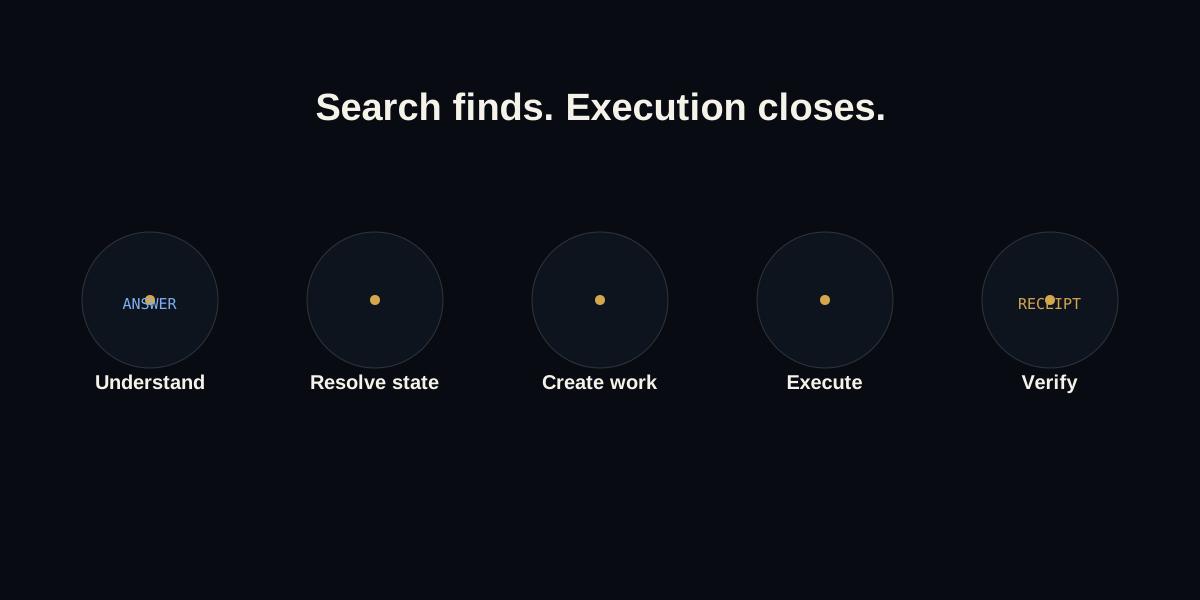
Being precise about this matters more in our category than most. Live today: each deal builds a Deal Brain(verified, cited deal and relationship memory), fed by pre-call briefs, a notetaker that proposes evidence backed CRM updates, buyer trackers, and bulk enrichment, with every write to DealCloud or Salesforce human approved and read back as a receipt. In one live deployment over 60 days on a single seat, that loop produced 145 verified CRM updates approved at a 96% approval rate. That is the substrate: memory where every fact already carries its evidence and its approval.
In development: connecting Deal Brains into a firm-wide Company Brain, and exposing that Company Brain over MCP, with per-user permissions and full audit logging, so Claude, Copilot, and whatever assistant comes next answer from the firm's verified memory. We are building it in that order deliberately. Shipping the plug before the memory is trustworthy would just give every assistant in the firm faster access to bad data. If you want to see where it stands, call us.
The strategic point for firms
The assistants will keep changing. Models improve quarterly, vendors rise and fall, and your firm should not bet its institutional memory on any one of them. What persists is the firm's own verified memory and the open protocol connecting it to whatever sits on top. That is the same vendor-neutral logic we apply to CRMs: the system of record is yours, the memory is yours, and the intelligence layer should plug into your tools rather than replace them. Firms that get their deal memory verified now will be the ones for whom every future assistant works on day one. For how the live foundation fits together, see the platform overview.