Most of the attention in AI right now still goes to the models themselves. New benchmarks. New reasoning techniques. New parameter counts. But if you watch where the real engineering work is happening inside companies that have actually shipped useful AI, the center of gravity has moved somewhere else.
It has moved to context.
Across the startup ecosystem, the teams pushing AI forward inside real businesses are not training bigger models. They are building the layers around the model: memory systems, retrieval infrastructure, agent observability, evaluation, workflow orchestration. The model itself is becoming a commodity. The hard part is feeding it the right information at the right time and making sure it behaves responsibly when it acts.
This shift matters everywhere. It matters more in investment banking and private equity than almost any other industry.
Why Deal Context Is Uniquely Hard
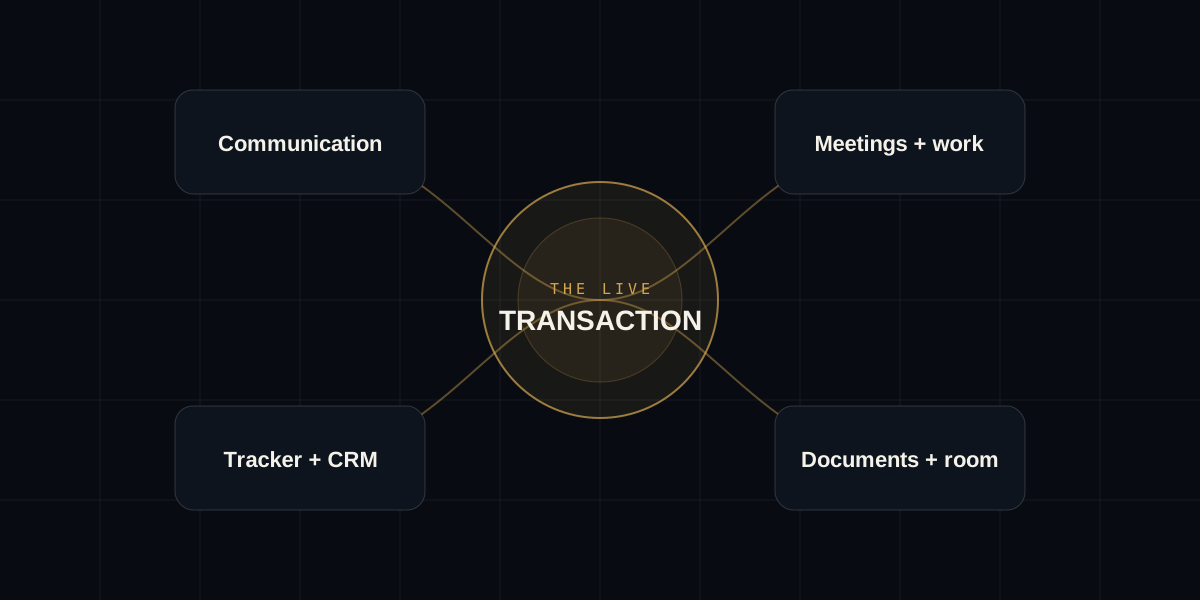
A live deal does not sit in one place. It is scattered across at least seven different systems, and each one holds a piece of the truth that the others do not have.
- Outlook holds the buyer conversation: the actual back-and-forth that defines where each relationship really stands.
- Teams holds the internal discussion: the asides, the disagreements, the working judgments that never make it into a formal document.
- Call transcripts hold the nuance: what management actually said, what the buyer pushed back on, what was promised and what was hedged.
- Trackers hold process status: who has bid, who has gone quiet, what the timeline looks like this week versus last week.
- The CRM holds the formal record: relationship history, prior touches, account ownership.
- The VDR holds diligence activity: which documents each buyer is opening, what questions they are asking, where they are spending time.
- Senior bankers hold relationship memory: who they trust, who they have worked with before, what they would never put in writing.
None of these systems talk to each other in any meaningful way. The gap between them is where most of the real work of running a deal happens: manually rebuilding the picture every Monday, walking new team members through weeks of context, re-explaining the same thing to a partner who has not been in the loop since the pitch.
An Agent Without Context Is Just Guessing Faster
Drop a general-purpose AI into this environment with no access to the actual deal context and you get exactly what you would expect. Fluent-sounding output that is wrong in the specifics. Drafts that reference the wrong buyer. Status summaries that miss the conversation that happened yesterday. Recommendations that ignore the partner's known preferences.
This is what most "AI for finance" demos actually are. The model looks impressive in isolation. The output is clean in a screenshot. But the moment you try to use it on a real mandate, the absence of context makes it untrustworthy.
A model without context is not faster than a junior analyst. It is just confidently wrong at machine speed.
What Changes When Context Is the Substrate
Now imagine the opposite. The AI walking into the deal already knows everything the team knows. It has seen every email the team has exchanged with the buyer. It has the notes from the call last Tuesday. It can see which documents each buyer has spent time in. It knows which questions have been asked, which have been answered, and which are open. It has the partner's prior notes on this kind of process. It knows what was promised on which date and whether the follow-up happened.
With that context, the same model becomes a completely different tool.
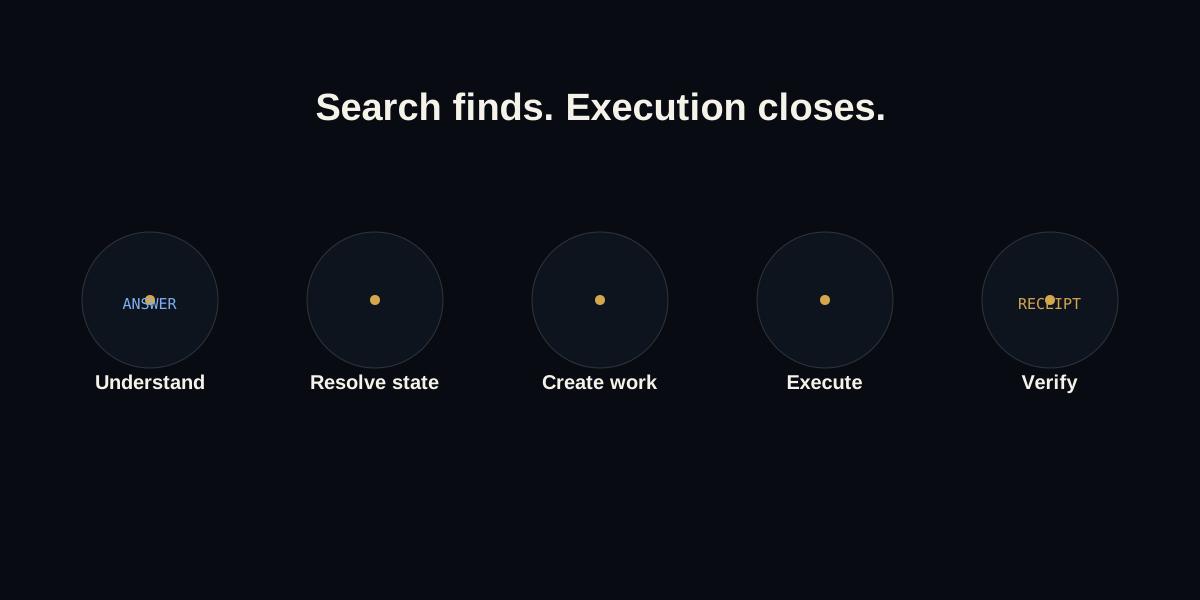
It can draft a process update that actually reflects what changed this week. It can answer a partner's question with citations to the exact email and document the answer came from. It can flag that Buyer C asked about customer concentration two weeks ago and has not been responded to. It can prepare a call brief that pulls in the buyer's prior questions, the relevant data room sections, and the management team's earlier comments on the same topic.
Not because the model got smarter. Because the model finally has what every banker on the deal already has in their head, at machine speed and across every system at once.
Context Is the Moat, Not the Model
The implication is straightforward. In a world where the underlying models are increasingly commoditized (every major lab releases capable models on roughly the same cadence), the durable advantage is not which model you use. It is what your model can see.
The firm that has stitched together a real context layer over its deal activity has a structural advantage that does not go away when the next model comes out. It compounds. Every deal that runs through that layer makes the next deal faster. Every interaction becomes part of the institutional memory. The model swaps in and out. The context stays.
The firm that does not have this layer can buy any AI tool on the market and still get the same answer: helpful on narrow tasks, useless on the things that actually move a deal forward.
What Good Context Actually Requires
Building this layer is harder than it sounds, which is why most attempts to bolt AI onto deal work have not produced much. A few things separate the systems that work from the ones that do not.
- Source-backed outputs. Every answer should cite the email, document, or call it came from. Bankers will not trust a system that produces fluent paragraphs with no provenance. They have been burned by hallucinations and they should be.
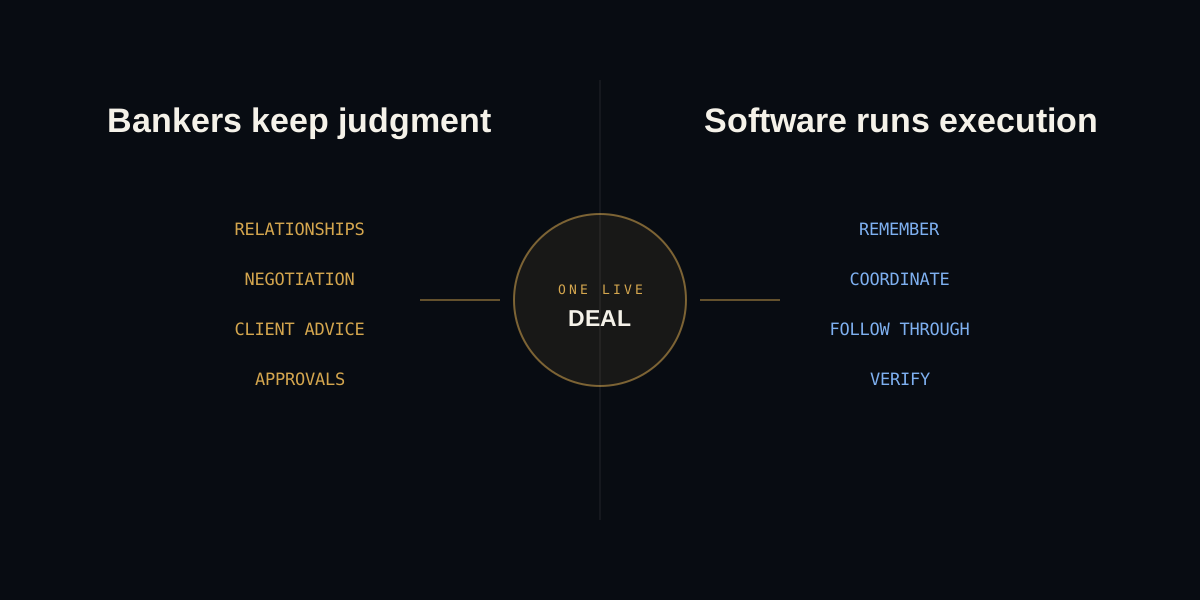
- Human approval before anything important. The system should draft, propose, and prepare. Sending the email, updating the CRM, scheduling the call: those still need a human to say yes. Draft-first is not a limitation. It is what makes the tool usable in a regulated, relationship-driven business.
- Coverage across all the systems, not just one. A context layer that only sees email is not a context layer. It is an email tool. Real deal context lives across seven systems, and the value of the layer scales with how many of them are actually connected.
- Security that meets the bar. Deal data is among the most sensitive information any firm handles. The context layer has to be deployed in a way that meets the firm's security and compliance requirements, not the vendor's preferred architecture.
The Next Two Years
The investment banks and PE firms that move now have a window. They can spend the next eighteen months building the context substrate underneath their deal operations while the rest of the industry is still arguing about which AI tool to pilot. By the time the laggards start, the leaders will have an institutional dataset and operational muscle that takes years to replicate.
This is the pattern every major technology shift in financial services has followed. CRM was the same. Virtual data rooms were the same. The early movers built advantages that compounded long after the underlying technology became common.
The difference this time is that the compounding is faster. Every deal that flows through a real context layer makes the system more useful. Every interaction becomes part of the firm's collective memory. The advantage does not show up in a single quarter. It shows up across the next twenty mandates.
In deal work, context is not a feature on a roadmap. It is the product itself. And the firms that understand that, and act on it, will be the ones that define the next decade of dealmaking.
About Arvya: Arvya builds the context layer for deal teams: a unified memory across email, meetings, documents, CRM, and data rooms, with source-backed outputs and human approval before anything important changes. Request a demo to see what your deals look like with the right context underneath them.