The bulge brackets have made their move. Goldman is building agentic workflows with a frontier lab. Every large bank has an AI program, an AI budget, and an AI headcount number it mentions on earnings calls. The technology gap between a ten-thousand-person bank and a ten-person M&A boutique should, in theory, be widening into a canyon.
In practice, the opposite is available. The work that eats a boutique's analyst hours (buyer lists, market maps, CIM drafts, tracker updates, call notes, diligence Q&A) is precisely the work modern AI handles well. And a small firm can rewire a workflow in weeks, without a model-risk committee, a procurement cycle, and a two-year integration program. The boutique's disadvantage is budget. Its advantage is speed. AI rewards speed more than budget.
One caveat before the stack: the trust bar
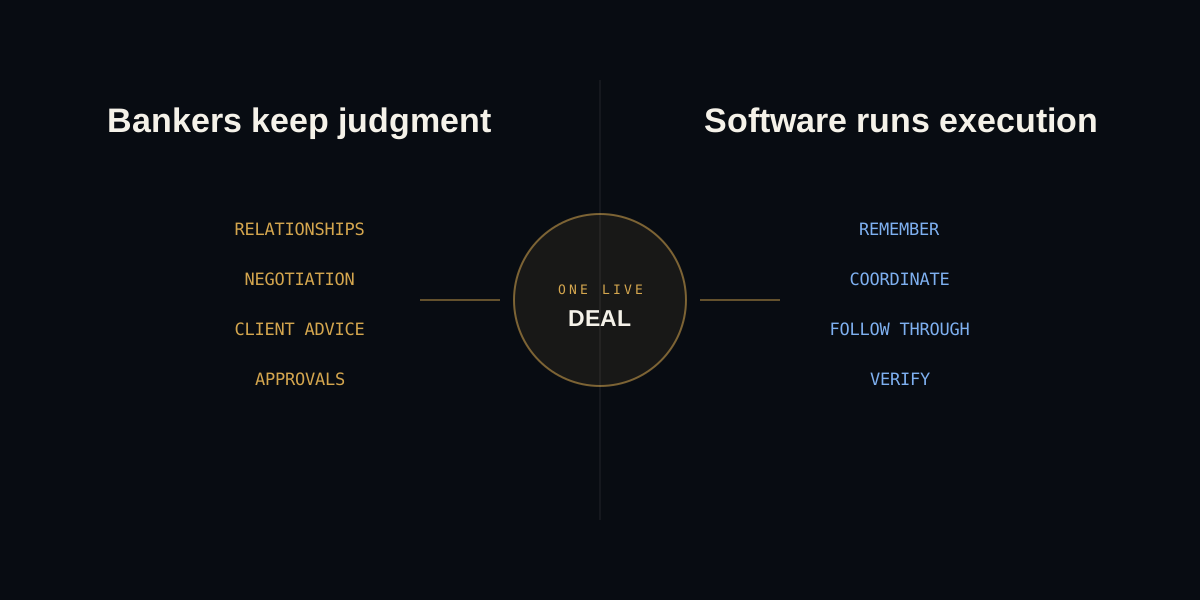
Recent benchmarks of AI on real investment-banking work keep landing on the same result: impressive capability, and outputs that senior bankers still do not rate as client-ready without review. That is not an argument against deployment. It is the design constraint: every workflow below assumes AI produces the draft and a banker approves it. Firms that skip the review step are not being bold; they are putting their name on unreviewed work product.
The stack, workflow by workflow
- Buyer lists and market maps. First-pass universe building from databases, past processes, and the firm's own relationship history, with the analyst curating instead of assembling. The differentiator is the firm's proprietary knowledge of who actually shows up and pays, which lives in old trackers and inboxes. Wiring that memory in is what turns a generic list into your list.
- CIM and materials first drafts. Not push-button CIMs: structured first drafts of the sections that follow patterns (company overview, industry, financial summary narrative) from the data room and management call notes, in the firm's house style. The associate edits instead of staring at a blank page.
- Call notes to CRM and tracker. The call happened; the notes exist; the buyer log and CRM update should not depend on whether the analyst got to it before midnight. Extraction into structured updates, each citing its source, approved in one pass.
- Diligence and VDR Q&A. Buyer question lists answered with citations to the underlying documents, and inbound Q&A triaged against answers the team has already given, instead of an analyst re-deriving the same answer for the fourth buyer.
- Weekly updates and process reporting. The client update assembled from the week's actual activity (outreach, responses, status changes) for the MD to edit and send, rather than reconstructed from memory on Sunday night.
- Research briefs. Company one-pagers, comps context, and industry snapshots as cited drafts, produced in minutes at pitch time instead of hours.
What makes it a stack instead of a pile of tools
A subscription list is not a stack. Three properties separate firms getting compounding value from firms paying for shelfware:
- Grounded in the firm's sources. The email, the calendar, the CRM, the data room, the old deal files. AI that cannot see the firm's actual context produces generic output, and generic output is what clients are already discounting.
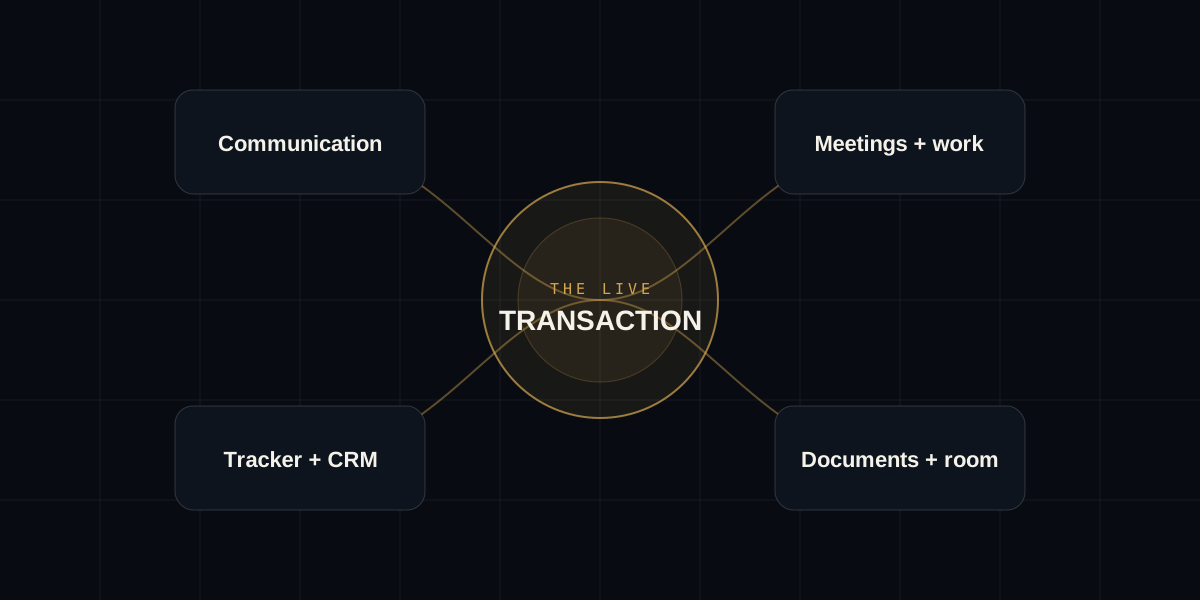
- One shared memory across workflows. The buyer list, the tracker, the call notes, and the weekly update should draw on the same live record of the deal, so every workflow makes the others better. Point tools that each keep their own state recreate the fragmentation you were solving.
- Approval on everything that leaves the building. Drafts are free; sends are governed. A clean approval-and-audit trail is also becoming a client and counterparty expectation, not just an internal preference.
Where to start with five analysts
Not with the CIM. Start where the pain is weekly and the risk is low: call notes to CRM and tracker, then the weekly client update, then buyer-list first drafts. Each is measurable in analyst hours within a month, each has a natural review step, and together they free the time that makes the more ambitious workflows possible. A boutique that deploys three such workflows this quarter will feel like it added an analyst, without the seat.
The AI era does not require boutiques to out-spend the bulge brackets. It requires them to do what they already do best (move faster than the big firms), one governed workflow at a time.
About Arvya: Arvya runs deal-execution workflows for boutique and middle-market advisory teams on one shared Deal Brain (buyer trackers, call notes to CRM, VDR Q&A, weekly updates) inside Outlook and Teams, with a banker approving every write. See how Arvya is different or book a demo.