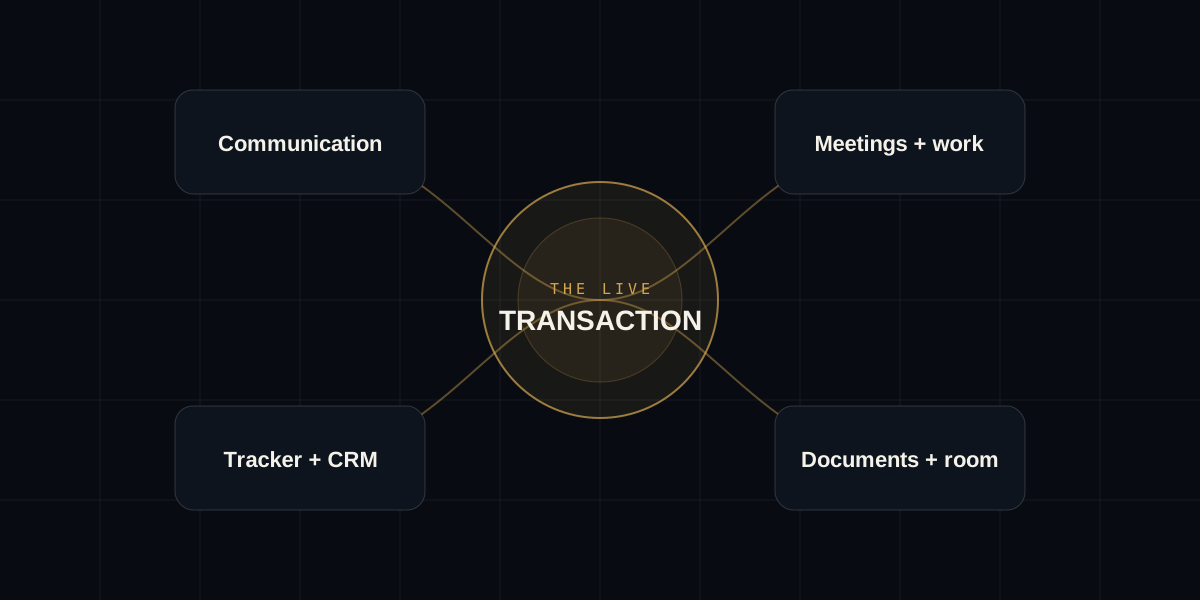
Ask ten bankers what “deal management software” means and you will get ten answers, because the category is really six categories wearing one name. The CRM holds the buyer universe. The data room holds the documents. A project tool or an Excel checklist holds the tasks. A notetaker holds the meetings. Research AI reads the filings. And the process itself, the thing all of those exist to serve, lives mostly in inboxes and in people’s heads.
This guide covers the real options in 2026, each in the lane where it is genuinely strong. Most of these tools are good. The honest problem is not that any of them is bad. It is that a single sell-side mandate still runs across all of them at once.
The short answer
- DealCloud: the CRM standard for investment banking.
- Affinity: relationship intelligence CRM, strongest in venture and growth investing.
- Intapp Celeste and Affinity Ascend: the CRM vendors’ own AI layers.
- Datasite and Intralinks: the data room standards.
- DealRoom: M&A project management, strongest in corporate development.
- 4Degrees: relationship intelligence built for deal firms.
- Hebbia and Rogo: document and research AI.
- Asana, Monday, Linear: excellent generic project tools with no concept of a deal.
- Arvya: one verified record of the deal itself, projecting into the systems you already own.
DealCloud: the IB CRM standard
DealCloud, from Intapp, is the default CRM at mid-market and boutique investment banks for a good reason: it models the objects bankers actually work with. Companies, sponsors, deals, coverage, engagements. It is deeply configurable, and a firm that invests in administration gets a genuinely institutional database. The caveat is the one every DealCloud firm already knows: the system is only as good as what bankers type into it, and bankers do not type. Validity’s 2025 survey of 602 organizations found that 76 percent said less than half of their CRM data is accurate. That is not a DealCloud flaw. It is what happens to any CRM that depends on manual entry. Our full comparison is at Arvya vs DealCloud.
Affinity and 4Degrees: relationship intelligence
Affinity built the strongest version of a real idea: your firm’s network already exists in its email and calendar metadata, so the CRM should read it automatically instead of waiting for someone to log a call. Who knows whom, warmest path in, last touch. It is strongest in venture and growth investing, where relationship velocity is the game. 4Degrees applies the same relationship intelligence approach with a focus on deal firms, including investment banks. Both are honest improvements over manual logging. Their boundary is that they capture the fact of contact, who emailed whom and when, not the content of the process: what stage a buyer is at, what they said on the call, what they committed to. See Arvya vs Affinity for the longer version.
Intapp Celeste and Affinity Ascend: the CRM’s own AI
In 2026 both major deal CRM vendors bundled AI into their platforms. Intapp Celeste drafts updates, summarizes activity, and answers questions inside DealCloud. Affinity Ascend does the same inside Affinity, including meeting capture. If your firm lives entirely inside one of these CRMs, they are worth turning on. They come with two structural limits. Each works only inside its own vendor’s CRM, so the rest of your stack stays dark to it. And each inherits the data underneath it: an AI layer on a CRM whose records the team does not trust mostly gives you faster access to records the team does not trust.
Datasite and Intralinks: the data rooms
Datasite and Intralinks are the standards for running diligence, and they have earned it: granular permissioning, watermarking, Q&A workflows, and audit trails that counsel will accept without argument. Datasite has been expanding along the deal lifecycle with pipeline and outreach tooling. Intralinks is the established enterprise choice, with particular depth in larger transactions and debt. Both are excellent at documents. Neither knows what is happening outside the room: which buyers have gone quiet, what the CRM says, what the banker’s tracker says, or whether the three agree. Our comparison is at Arvya vs Datasite.
DealRoom: M&A project management
DealRoom created a real category: project management built specifically for M&A, with diligence request lists tied to documents, pipeline views, and integration planning in one place. It is strongest in corporate development, where a standing team runs repeatable acquisitions and wants one playbook across them. For a sell-side bank it is a less natural fit: it still depends on people updating it by hand, and it does not watch the email and meetings where the actual state changes arrive.
Hebbia and Rogo: document and research AI
Hebbia and Rogo lead the AI research lane. Hebbia runs structured analysis across thousands of documents at once, which is why it has real adoption in diligence and credit work. Rogo aims squarely at analyst workflows, from research to draft materials, and has won serious bank customers. If the job is “read this data room and extract every change of control clause,” these are the right tools. Their lane is answering questions about documents. They do not hold the state of your process, and they do not maintain your CRM. See Arvya vs Hebbia.
Asana, Monday, and the generic project tools: great software, wrong shape
The generic project tools deserve a fair word: Asana, Monday, Linear, and their peers are excellent software. But they have no concept of buyers, stages, or evidence. A card that says “follow up with strategic buyers” cannot tell you which of the 40 NDAs are actually signed. Deal state in these tools is whatever someone last typed, and keeping a second system current is unpaid work that loses to live deal work every time. That is why deal team boards in generic tools tend to go stale within weeks.
The honest gap: one deal, six systems
Put the lanes together and the gap is visible. Every tool above is good at its slice, and no tool holds the process itself with verified evidence. The CRM has fields nobody trusts. The data room has documents but no state. The tracker has state but no evidence. The notetaker has transcripts nobody rereads. So a single deal runs across six systems, humans reconcile them by retyping, and the Monday meeting exists largely to rebuild, by hand, a picture no system can produce. The failure modes are cataloged on our problems page.
Where Arvya fits: one verified record of the deal
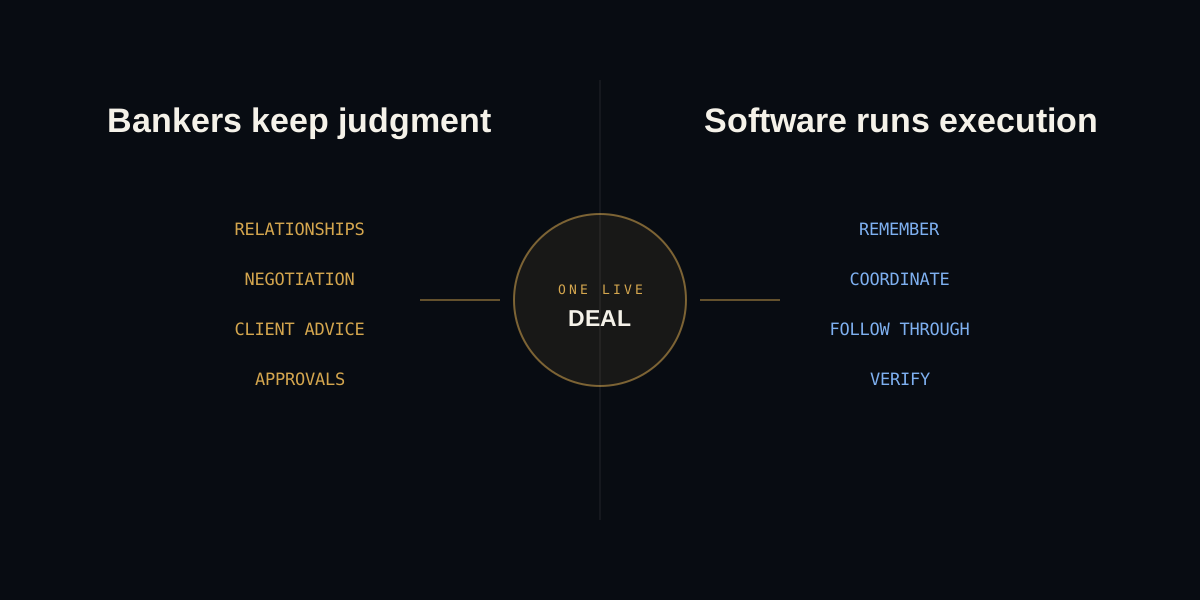
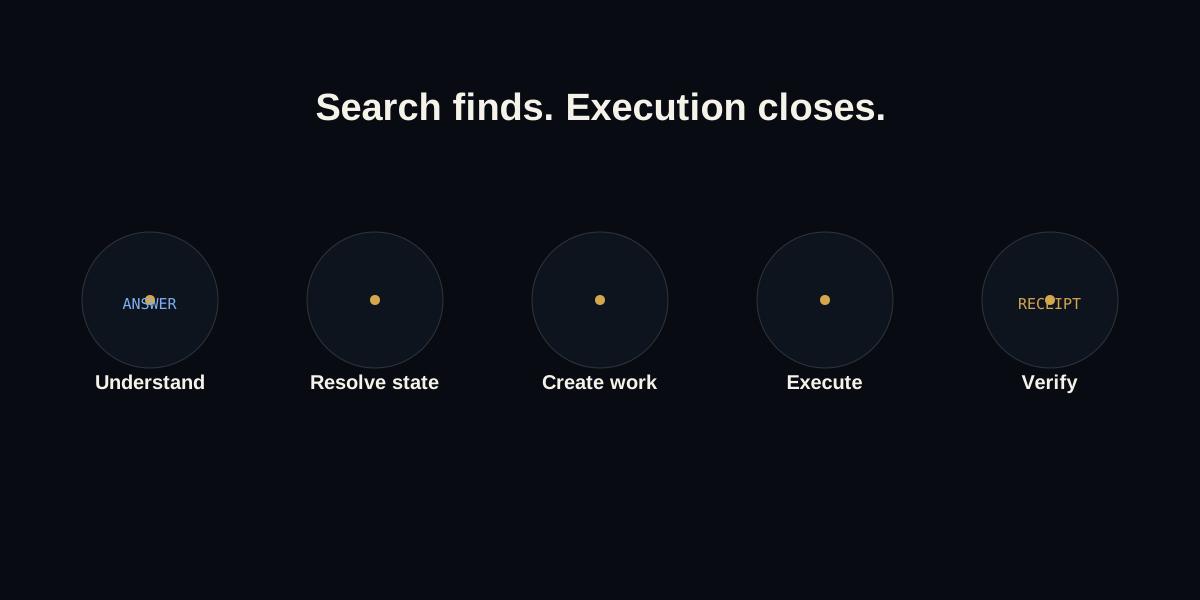
Arvya is deal management rebuilt AI native. Each deal gets one verified memory, a Deal Brain, built from email, meetings through its own Notetaker, the CRM, trackers, documents, and the data room. Agents do the assembling. A human approves every write. Every CRM write is read back and receipted. It runs in your own tenant, and raw email and transcripts are never stored.
Live today: pre-call briefs, Notetaker to CRM writeback with receipts, buyer trackers, bulk enrichment, cited buyer lists, weekly updates, Ask Arvya, data room Q&A, and approval gated writeback to DealCloud and Salesforce, with Dynamics and Affinity supported per deployment. At a mid-market advisory firm on DealCloud, about 25 bankers, a single seat over 60 days produced 145 approved updates at a 96 percent approval rate, a cited list of 54 buyers, and roughly 73.5 hours given back.
In development, and always labeled as such: the Process Room, which is process management on top of the verified record, with documents that file themselves, watermarked CIM distribution, and one diligence request list; relationship mapping; Company Brain; and PE portfolio views. The Process Room is described at /process, and side by side comparisons live at /compare. If you want to see where the in-development work stands, call us.
How to choose
If you need a database of your market, buy DealCloud or Affinity. If you need to run diligence, buy Datasite or Intralinks. If you run corporate development, look hard at DealRoom. If your bottleneck is reading documents at scale, look at Hebbia or Rogo. Those are all reasonable purchases, and none of them conflicts with the last question, which is the one this category has never answered: when a partner asks where every buyer stands, which system can answer with evidence. That is the problem Arvya exists to close.