Enterprise AI has made it dramatically easier to find and summarize information. A banker can ask what happened on a call, search a folder of documents, or summarize a thread in seconds. That is real value. It is also only the beginning of a live process.
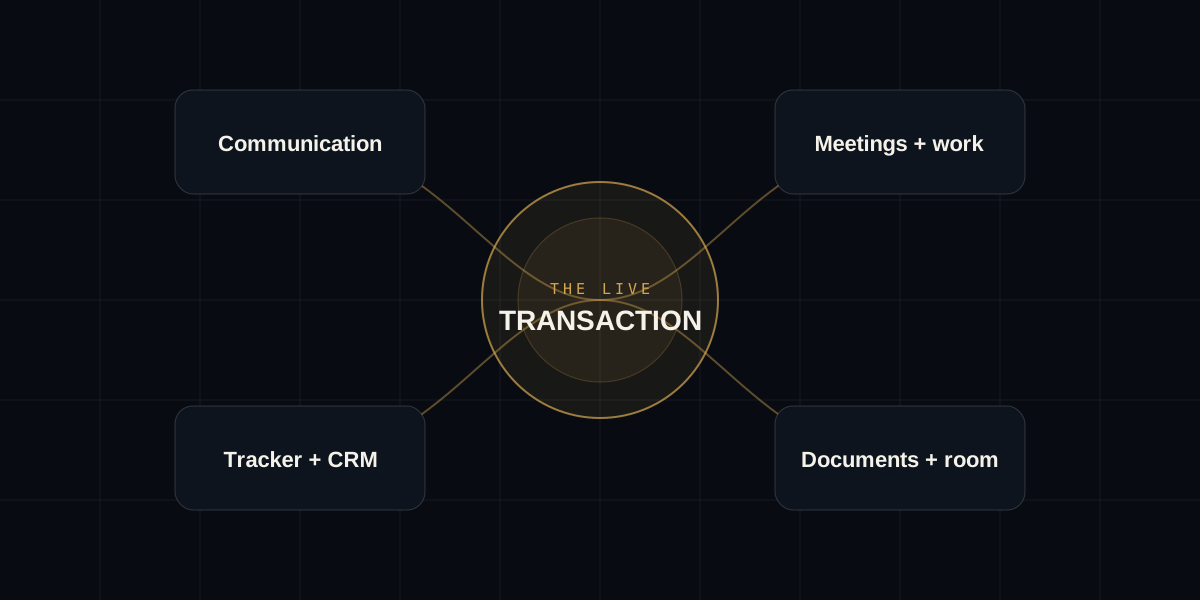
The deal does not move because someone learned that a buyer requested a management meeting. It moves when the state is updated, the right people are coordinated, the brief is prepared, the client is informed, the tracker and CRM agree, and the meeting actually lands on the calendar.
An answer does not own the consequence
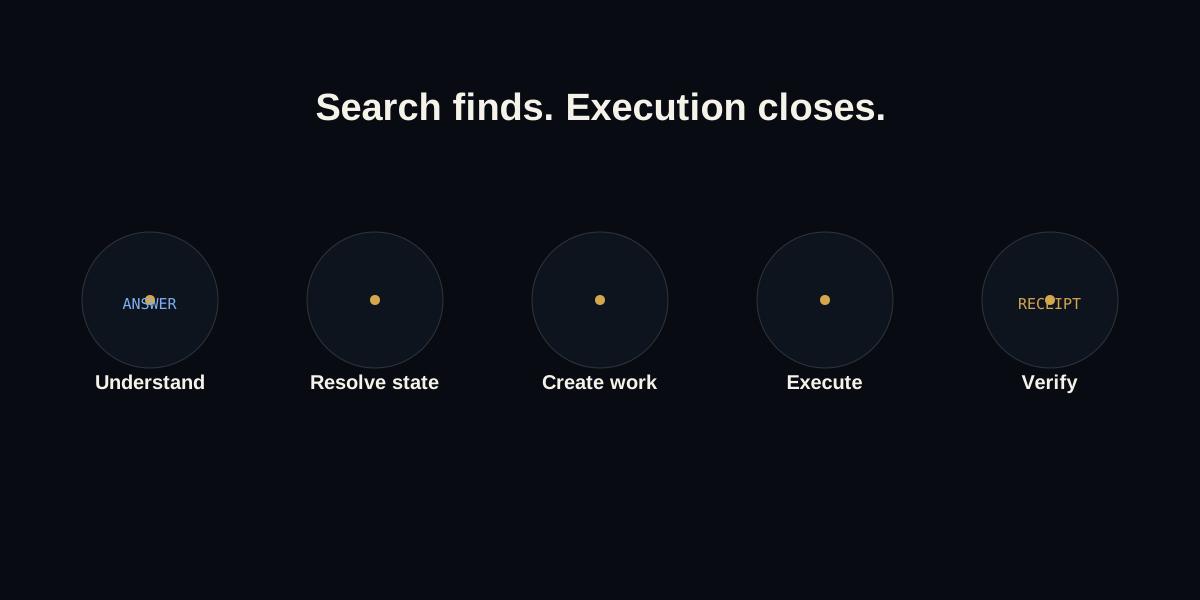
Search products end at the answer. Copilots usually end at the draft. Deal execution continues through an operating chain: understand the event, resolve what changed, identify the next work, assign responsibility, obtain the necessary approval, act in the destination system, and verify the result.
The missing step is consequence. If a model says an NDA is executed, should the buyer receive the CIM? That depends on the signed document, the correct legal entity, the buyer’s permission scope, the approved version, and the firm’s release policy. A plausible answer is not enough to trigger a sensitive action.
The closed loop
A closed execution loop has five parts. First, the system understands an event against the complete deal context. Second, it updates transaction state with the source attached. Third, it creates the task, draft, decision, or permission implied by that state. Fourth, an accountable person approves consequential work. Fifth, the system reads the destination back and records whether the action actually landed.
This is why a transaction state engine matters. The state of the deal creates the next work. The task board does not depend on someone noticing the email and creating a card.
Search still matters
None of this diminishes retrieval. Source-backed search is one of the foundations of trustworthy execution. The system cannot prepare the right action without finding the right evidence, and it should refuse confident answers when the evidence is insufficient or conflicting.
The distinction is product scope. Search helps the banker know. Execution helps the team do. The strongest system connects both: ask where the deal is slipping, receive a cited answer, see what Arvya already resolved, and review the actions that still require judgment.
The practical evaluation question
When evaluating an AI product for a live deal, do not ask only whether it gives a good answer. Ask what happens next. Does the answer update the transaction state? Does the correct owner receive work? Can the firm see the evidence and permission boundary? Is the action approval-gated? Does the product verify the destination afterward?
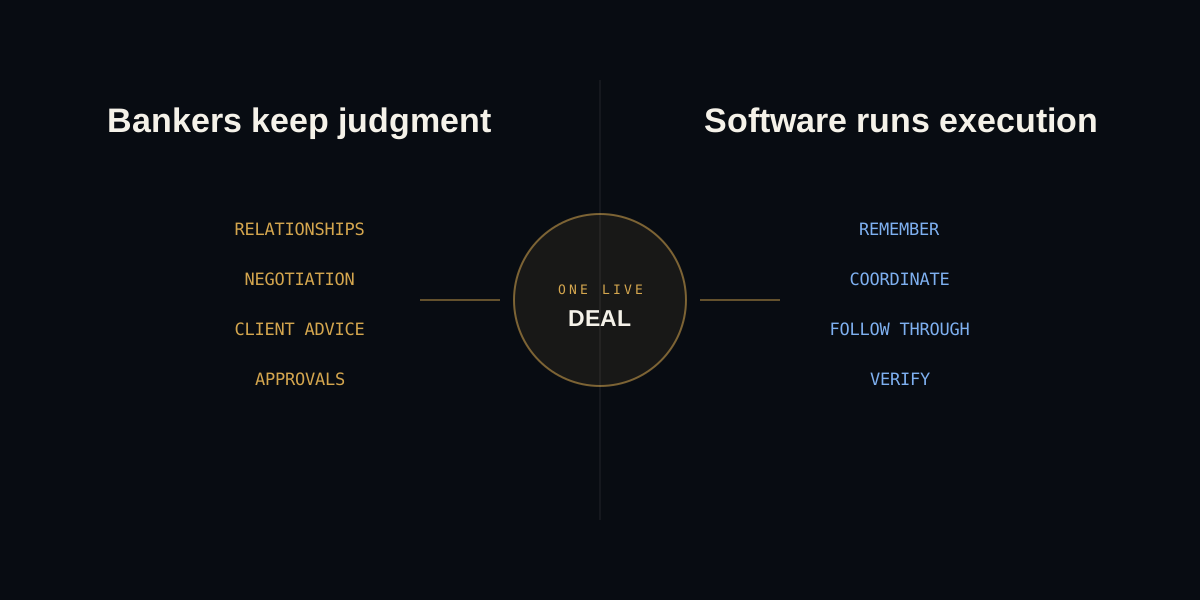
That is the difference between an assistant beside the workflow and a system of action around the transaction. Other AI tools can help bankers do work. Arvya is being built to run the deal.