A private equity firm does not make a decision because a memo says the market is attractive.
The memo matters. The model matters. The diligence reports matter. But the decision is usually formed somewhere wider than the document set: in prior deals, partner memory, management calls, buyer reactions, lender feedback, negotiation posture, and the firm's own sense of what it has learned over many reps.
That is the part of private markets that makes AI both powerful and easy to misunderstand.
If you treat investing as a document search problem, AI looks like a better search box. If you treat investing as a pure judgment problem, AI looks premature. The more interesting truth sits between those two.
Private markets are a memory business before they are an AI judgment business.
The Memo Is the Clean Version
Every deal eventually becomes a clean artifact. The memo organizes the company, the market, the numbers, the risks, the diligence findings, and the recommendation. It creates a shared language for the investment committee.
But the memo is not the full deal.
The real operating history is messier. It includes the reason the team passed on a similar asset last year. The customer call that changed the tone of the deal. The buyer who pushed back on management credibility. The lender who cared less about leverage than retention. The partner who remembered a pattern from a process that never closed. The concern that looked important in week two and became irrelevant by week four.
Some of that context is documented. Much of it is scattered. Some of it never gets formalized because the final artifact needs to be clean, not autobiographical.
That gap between the clean record and the operating history is where AI can become useful.
The Real Problem Is Not Too Little Intelligence
Most firms do not lack smart people. They lack a reliable way to make the firm's own history available at the moment it matters.
A partner does not need software to tell them that management quality matters. They may need the system to remind them that three similar deals in the sector broke on management depth, and that the current memo treats it as a footnote. A VP does not need AI to invent a market view. They may need it to show that the team used a different growth assumption on a comparable deal six months ago. An associate does not need another folder of PDFs. They need to know what changed since the last diligence call and where the open issues actually sit.
That is a different product than an AI investment committee. It is a memory layer around the investment process.
Documents Are Necessary, but Not Sufficient
Many larger firms are already building internal systems over historical documents. That makes sense. Prior memos, diligence reports, board materials, and market studies are valuable. They are also the easiest place to start because they are already stored somewhere.
But document intelligence has a ceiling.
Documents usually capture what the firm was comfortable preserving. They rarely capture the path the team took to get there. They miss the back-and-forth, the hesitation, the debate, the buyer feedback, the process change, the shift in conviction after a call, and the little discontinuities in how a firm thinks about a sector over time.
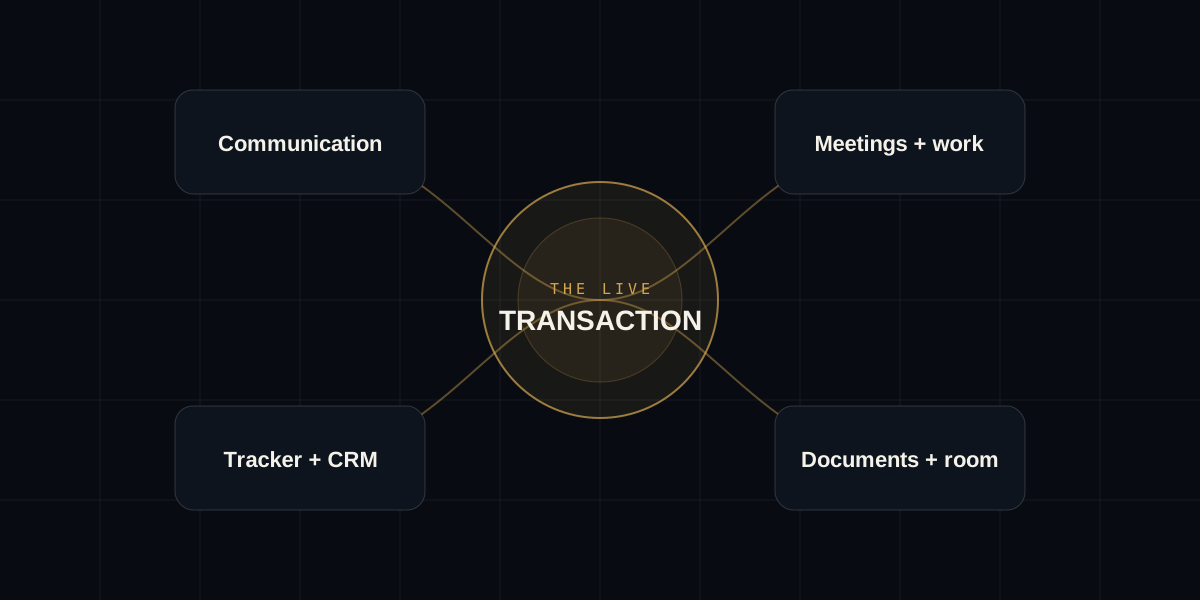
The next layer of value is not just searching the archive. It is connecting documents to the live work around them: email, meetings, transcripts, CRM notes, trackers, VDR questions, buyer updates, lender feedback, and the post-deal lessons that usually disappear once the process ends.
The Two Kinds of Complexity
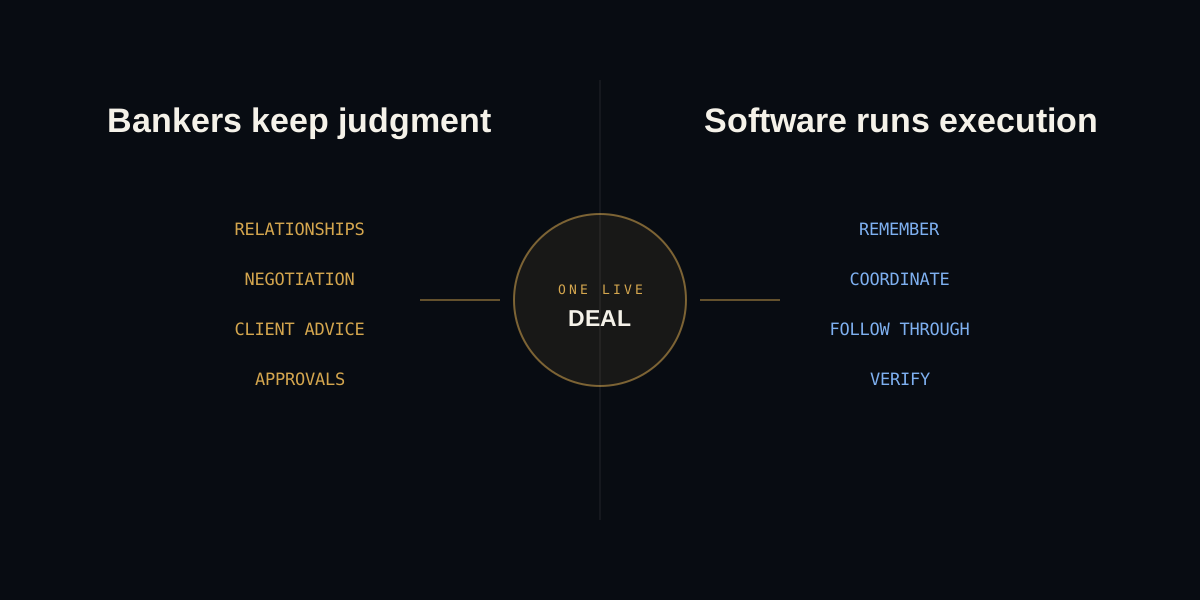
The useful distinction is not human versus AI. It is information complexity versus judgment complexity.
Information complexity is the volume problem. What did we know? Where did it come from? What changed? Which sources support it? What did we believe on similar deals? What was resolved, and what is still open?
Judgment complexity is the human problem. How much risk should we take? Do we trust this management team? Should we bid now or wait? Is the seller posturing? Does this deal fit the firm's temperament? What does the room believe but not want written down?
AI is ready to help with the first problem now. It can gather, connect, cite, compare, and keep context alive across time. The second problem is harder. Some of it may be augmented later, but it is sensitive, social, and deeply tied to incentives. Good software should respect that boundary instead of pretending it can digitize the whole room.
The Boundary Is the Product
The best AI systems in private markets will be careful about what they capture.
More recording is not automatically better. If people believe every hallway thought, tactical debate, or negotiation instinct will be preserved forever, they will speak differently. The decision process may become less honest, not more intelligent.
The goal is not radical transparency. The goal is disciplined memory.
Capture the work products teams already rely on. Preserve the communications that already define the process. Connect the diligence calls, Q&A, buyer feedback, trackers, CRM updates, and final memos. Make it clear what is stored, what is cited, what stays in Microsoft 365, and what requires human approval before anything changes.
In this market, trust is not a feature. It is the permission to exist.
What AI Can Say Before It Can Decide
The most useful AI voice in private markets may not begin with recommendations. It may begin with better questions.
- This deal uses a higher market growth assumption than the last comparable deal. What changed?
- The team previously treated management depth as a gating risk in this sector. Why is it secondary here?
- Three buyers have asked a version of the same customer concentration question. Should this be addressed proactively?
- The lender feedback is converging around the same covenant concern. Is the financing risk now bigger than the memo implies?
- The team passed on a similar asset for churn quality. Has this deal been underwritten on the same basis?
That is not AI replacing judgment. It is AI making judgment more self-aware. It gives the room a better memory of itself.
Why the Mid-Market May Move First
The opportunity will look different by firm size.
Large firms may already have internal teams building document intelligence over decades of archived material. For them, the opportunity is additive: bring the live operating history into that system without forcing the internal team to build every workflow from scratch.
Mid-market firms may have the cleaner opening. They still run complex deals. They still generate significant diligence volume. They still have institutional memory trapped in inboxes, calls, trackers, and partner recollection. But they usually do not have a large internal AI team to stitch it together.
They do not need to become technology companies. They need a layer that meets them inside Outlook, Teams, CRM, Excel, SharePoint, and the deal tools they already use.
The Point
The future of AI in private markets will not be won by the loudest claim about replacing investors. It will be won by the systems that understand how investing actually works.
Judgment is not just a calculation. It is memory applied under uncertainty.
Better memory does not make the decision automatic. It makes the decision better. It helps the firm see its own patterns, contradictions, lessons, and blind spots. It lets a new associate understand the deal faster and lets a partner compare the current moment against the firm's own history.
That is where AI actually fits first.
Not above the investment committee. Around it.
About Arvya: Arvya is building the memory layer for live deal teams. It connects Outlook, Teams, CRM, documents, trackers, and meeting context into deal-specific intelligence that is source-backed, Microsoft-native, and draft-first. Request a demo to see how a live deal looks when the operating history is no longer scattered.