It is Monday morning. The VP running a sell-side process asks the associate for a buyer engagement update. The associate spends 45 minutes scrolling through email threads, cross-referencing a shared Excel tracker last updated Thursday, and pinging analysts on Teams. The answer is already stale by the time it reaches the VP.
This is an open loop. Information goes out. Responses scatter across inboxes and shared drives. Nobody has the full picture without manually rebuilding it. Almost every deal team in the world runs like this.
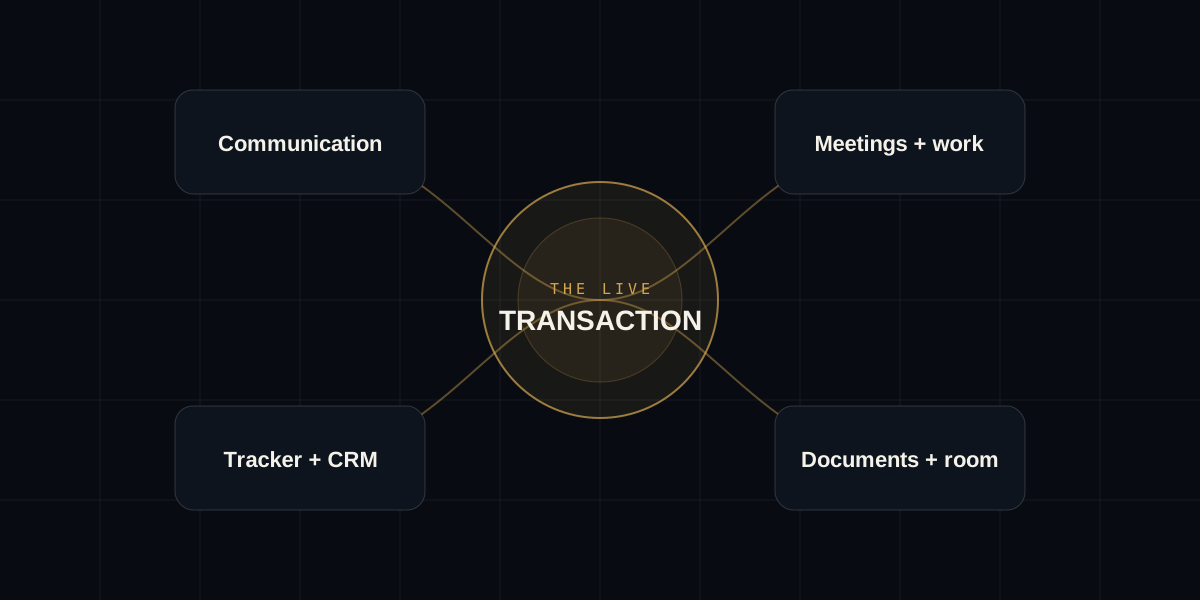
A closed loop is something else entirely. It is not a better spreadsheet or a smarter CRM. It is a system where every interaction (every call, every email, every document opened in a data room) generates knowledge that immediately changes what happens next. The system does not just record. It learns, acts, and accelerates.
Y Combinator recently published a request for startups around this concept. Tom Blomfield, a YC partner, calls it the "Company Brain": "Every company has critical know-how scattered everywhere. Some of it lives in people's heads. Some of it is buried in old email accounts, Slack threads, support tickets, and databases. But AI agents can't operate like that." His argument: every company needs a system that "pulls knowledge out of all these fragmented sources, structures it, keeps it current, and turns it into an executable skills file for AI."
Diana Hu, a YC general partner, puts it in operational terms: "In an open loop, you make a decision and maybe check the results weeks later. In a closed loop, the system monitors what is happening, compares it to what should be happening, and adjusts."
That sounds abstract until you see what it looks like on a live deal.
Every Call Becomes a Decision, Not a File
The CEO of a target company mentions during a management presentation that their largest customer contract is up for renewal in Q3. In an open-loop firm, this lives in someone's handwritten notes. In a closed-loop firm, the system immediately connects that statement to the diligence question Buyer A asked last week about revenue concentration. It drafts an updated talking point for the next buyer call. It flags the Q3 renewal as a timeline risk. It adds a follow-up to get the renewal terms from the client. No person had to read their notes and remember to do any of this.
A week later, Buyer C asks about customer concentration. The system already has the CEO's own words, the follow-up data the team gathered, and the context from Buyer A's earlier question. The banker walks in fully prepared, not because they spent two hours building a briefing, but because the system connected dots across three conversations that happened days apart. Information does not sit somewhere waiting to be found. It moves. It connects. It triggers the next thing that needs to happen.
The Deal Never Waits on a Person
One of the most common bottlenecks in any deal is waiting on people. The VP is in back-to-back meetings. The MD has not checked their calendar. The buyer's EA has not responded about scheduling. Every deal has a dozen of these micro-delays at any given time, and they compound into weeks of lost momentum. Scheduling a single management presentation can take six to ten emails across three executive assistants over four days. The deal is paused, not because anything substantive is unresolved, but because humans are routing logistics through their inboxes.
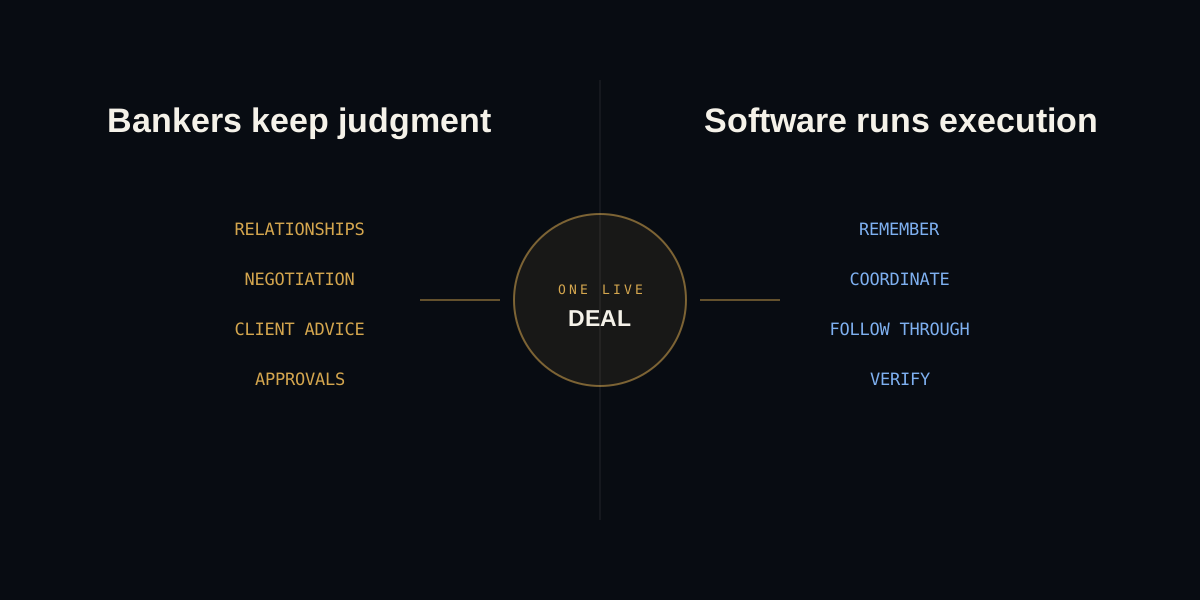
In a closed-loop firm, the system already knows everyone's availability. It knows the buyer requested a management meeting. It proposes time slots, sends the invite, attaches the latest presentation and a briefing on what that buyer has focused on so far, and confirms the dial-in. The banker gets a notification that the meeting is booked and prepped. The same applies to process letters, document routing, and approvals. People make the decisions. The system makes sure those decisions are never bottlenecked by logistics.
Diligence Answers Itself
A buyer posts a question in the VDR about revenue concentration. In an open loop, an analyst searches documents, drafts a response, routes it up the chain for review. The buyer gets an answer 48 hours later. Multiply by 200 questions over four weeks of diligence and you have a full-time job that is mostly finding and routing information.
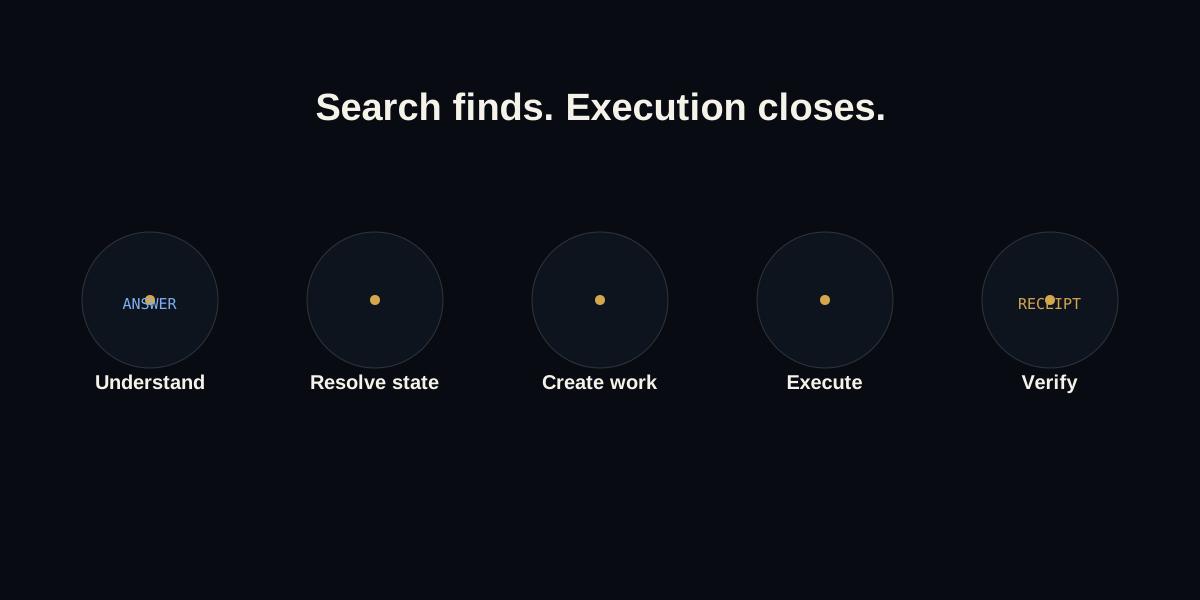
In a closed-loop system, that question does not start a manual search. The system has already ingested the CIM, the financial model, the management presentations, the data room, and every call transcript with the client. It drafts an answer citing the specific CIM page, the relevant management presentation section, and the CEO's comments from the fireside chat two weeks ago. The banker reviews it in 30 seconds. By the third week, the system notices that three different buyers have asked about the same supply chain risk and surfaces it proactively: consider addressing this in the next process update. It is not just answering questions. It is identifying themes and helping the team get ahead of concerns before they become objections.
A Living System That Gets Faster
A closed-loop system is not a static tool. It accelerates. In the first week, it absorbs the CIM, the model, the team bios, the industry context. By week two, it tailors briefing materials to each buyer based on what they downloaded and asked about. By week four, it has mapped every concern from every buyer (Buyer B cares about customer concentration, Buyer D about management retention) and pre-loads each second-round conversation with answers to the specific issues that buyer raised in round one.
By exclusivity, the system holds a complete record of every commitment made and every issue flagged. It knows what was promised on the March 12 call and whether the follow-up was delivered. It holds the deal team accountable, not because someone is maintaining a checklist, but because the system is the checklist. And when the deal closes, none of this disappears. The next deal starts with the institutional intelligence of every deal before it. Every deal makes the system smarter. Every deal makes the next deal faster.
The Shift Nobody Is Talking About
The industry conversation about AI is stuck on the wrong question. Everyone asks "which AI tool should we buy?" The right question is: are we running open loop or closed loop? An open-loop firm can buy every AI tool on the market and still operate the same way it did five years ago. The tools sit on top of the same disconnected workflow. They speed up individual tasks but do not change how information flows through the organization.
A closed-loop firm is structurally different. Calls generate actions, not transcripts. Scheduling happens without email chains. Diligence questions get answered from institutional knowledge. The deal accelerates as it goes because the system learns from every interaction, not just records it. Hu calls it "the connective layer that makes a company legible to AI by default." Not a dashboard. Not a chatbot. The living substrate underneath the deal that captures every signal and turns it into the next action.
The firms that build this layer will not just be faster. They will be structurally different. And the gap will compound with every deal.
About Arvya: Arvya is building the closed-loop intelligence layer for deal teams: a living system that captures every signal from email, calls, documents, and data rooms, and turns it into the next action. The deal gets smarter with every interaction. Request a demo to see it in action.